
Meeting a three-time premiership-winning rugby league player to look at birds on the outskirts of Sydney wasn't exactly on my 2025 bucket list.
Yet, here I am, binoculars in hand, following 27-year-old Penrith Panthers hooker Mitch Kenny into Emu Heights, a leafy suburban haven in western Sydney.
"I like getting outside anyway and going on walks," he says. "It's probably just an addition to that."
As we stroll down the tree-lined track — a hotspot, Kenny explains, for birders (bird watchers) eager to spot diverse habitats in a short walk — he stops frequently to point out our feathery companions.
"There's a little fairy wren bouncing around with one of his missus … they're so cute," he says.
News that makes sense
Your trusted source for staying up-to-date with the world around you. Get free daily news updates and analysis, straight to your inbox.

The hobby was "stolen" from his environmentalist sibling, who first introduced Kenny to the wilds of the Blue Mountains — tracking lizards and snakes, and eventually birds.
"It started out as a joke … but you can't joke [about] birdwatching. You're either going out looking for birds, or you're not," he says.
It was in the mountains that Kenny saw a peregrine falcon, his 'spark bird' — a birder's term for the first species that ignites a lifelong obsession.
"That was my first bird that I was really going out and looking for," Kenny says. "That was like my first time feeling the rush of getting a good get."
'A birdwatching boom'
Birdwatching has long had a quietly devoted following in Australia.
For the inner west–based Sydney Bird Club, that interest became hard to ignore in February 2020, when the group recorded one of its largest turnouts in its five-year history.
Co-founder Stephanie Chambers remembers the moment clearly. "It felt to us like we were on the cusp of a birdwatching boom."
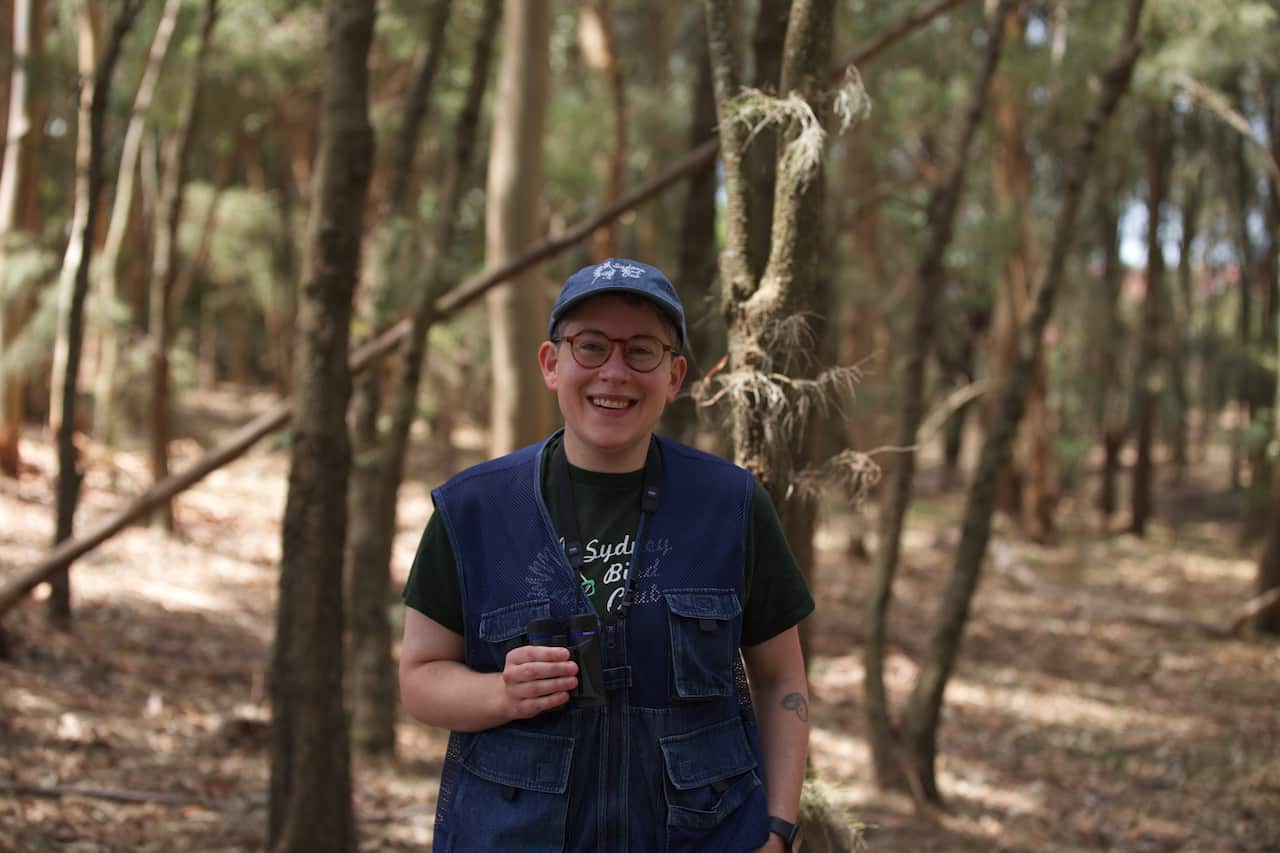
Initially set up as a "club for everyone" to break down barriers in birdwatching, the group has since welcomed an influx of younger members.
"There was a curiosity among people … and I think during the pandemic, it turned into a hardcore passion for a lot of people," they say.
Environmentalist and host of the Death by Birding podcast, César Puechmarin, says birds were "thrown into [people's] orbit" during Australia's COVID-19 lockdowns, as many started noticing birds in their local environments while confined at home.
"You have a generation of people who grew up playing video games or playing games like Pokémon, and this hobby of bird watching fits perfectly," he tells SBS News.
"It's a never-ending hobby. You can't finish it. You can't complete it … There will always be more birds."

Chambers says birdwatching is also a "form of resistance against technology and social media" that allows participants to tap into a world untouched by screens.
"You're not only just watching birds, you're watching seasonal changes, you're observing migrations. And so I think it tunes you into something that you would be without if you didn't. So I think it strikes at the core of who we are as humans," they say.
'Resistance against technology' grows online
The hobby, offering a screen-free escape, has found a new life online, where enthusiasts can share sightings, swap tips, and connect in ways the outdoors alone cannot.
"We were certainly worried in the digital age that people were just on their screens and not out in nature," says senior public relations manager at BirdLife Australia, Sean Dooley, who previously held the Australian record for the most birds seen in one year.
"[But] the naturegram has really taken over, because birds are so beautiful to look at … and that it has attracted a whole tribe of digital natives to it."
Australian creator Birding with Cob, who has gained over 190,000 followers on Instagram posting Pokémon-style bird videos, wants people to "see every bird in the world".
"I think that sometimes young men can be particularly loud in those environments," says Puechmarin, who has seen young birders of all genders accessing information and finding "like-minded people" online.
Finding community
That online community has moved back into the real world for Kenny, who has been out on a number of "bird dates" since he started posting about birds online.
"You meet someone, you talk a bit of s--t, go for a walk and hopefully see a few birds. It's pretty fun," he says.
"I'm pretty keen to go out with someone who knows what they're looking for. And some people are pretty keen to meet a footy player. So everyone wins."
Dooley says this kind of knowledge transfer is important for newer birders who may not understand the etiquette and ethics of the hobby.
"I think when the community find each other, they do start to share of that type of advice. Like: 'Hey, dude, you shouldn't really be going up to that nest, you know, because that, that eagle will abandon the chicks if, if you come too close'," he says.
From birdwatching to environmental action
Kenny says he was always environmentally conscious, but taking up birding has made him appreciate the world around him in a different way.
"Once you get keen on birds, then you start learn which birds are under pressure and the role that you can play in that, and that's when I think you start to make changes in your own life and the way in that you interact with the world," he says.
Dooley says once people get to know what they're seeing, it's like "giving a name to a character in the soap opera that you're watching".
"You start to realise over time that these things that bring you such joy are in trouble.
"People are going to have to do something about it to save the things that bring them joy."
For the latest from SBS News, download our app and subscribe to our newsletter.







