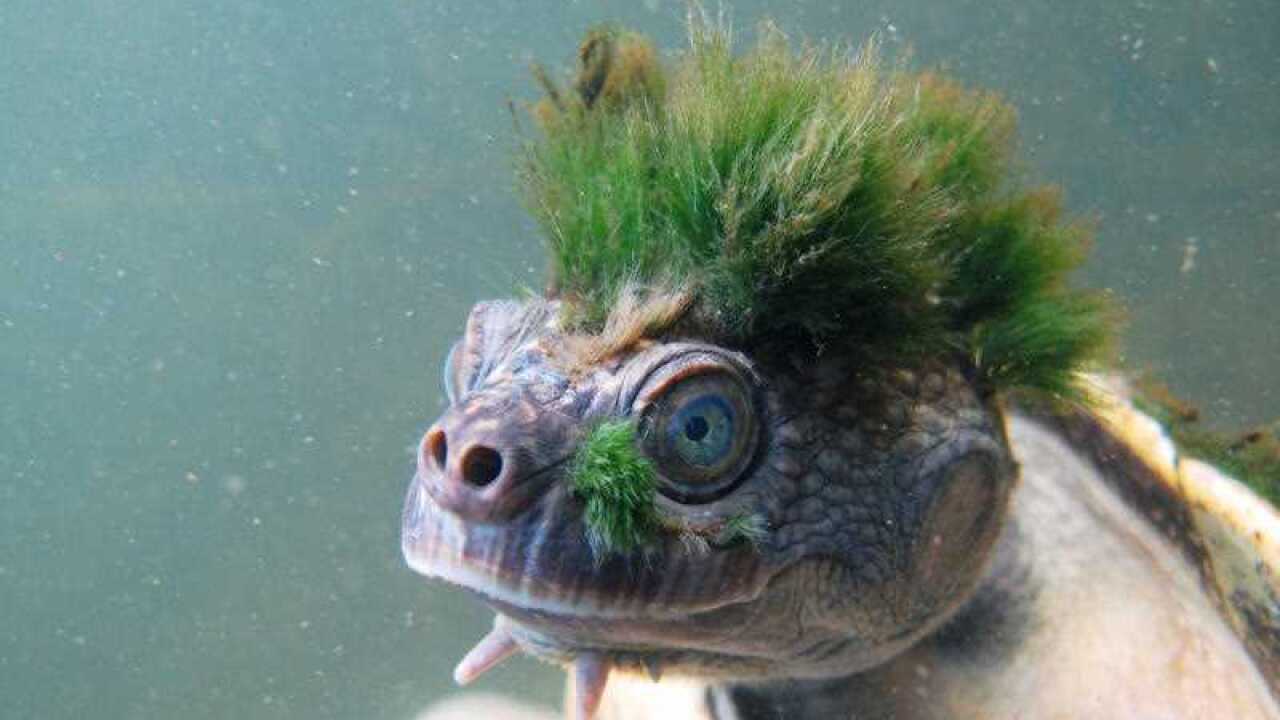
A green mohawked Australian turtle, which breathes through its genitals, made headlines around the world after being added to a new list of endangered reptiles.
With long fleshy barbels under its chin and algae covering its head and body, the Mary River turtle (Elusor macrurus) was suddenly thrust into the international spotlight.
But despite the global attention, conservationists told The Guardian they have been forced to sell turtle chocolates and solicit donations from the United Arab Emirates in their bid to save the turtle from extinction.
News that makes sense
Your trusted source for staying up-to-date with the world around you. Get free daily news updates and analysis, straight to your inbox.
Charles Darwin University researcher Marilyn Connell volunteers with the Tiaro Landcare group that is trying to raise money for the turtle’s protection.
She told The Guardian the group currently doesn't receive government funding but has received grants in the past.
“We’ve been doing this since 2001 and we’ve had a multitude of funding sources, including the federal government. But it’s not reliable and it has come on our own initiative,” she said.
She told The Guardian the group has relied on funding sources outside Australia, including the Mohamed bin Zayed Conservation Fund in Abu Dhabi, and a small donation from Stockholm’s herpetological society. She also said the group sold chocolate turtles to raise money.
The turtle is just one of many weird and wonderful species featured in the Zoological Society of London (ZSL's) Evolutionarily Distinct and Globally Endangered (Edge) Reptiles list.
The Mary River turtle ranks number 30 in the league table of 572 reptiles. Top of the list is one of its cousins, the Madagascan big-headed turtle (Erymnochelys madagascariensis), with an Edge score higher than that of any other amphibian, bird or mammal.
The turtle, which measures up to 40cm, lives in just one location - the Mary River in Queensland. Its docile nature - more hippy than punk - historically made it a popular pet. In the 1960s and 1970s its nest sites were mercilessly pillaged for the pet trade.
For information about donations, click here.







