

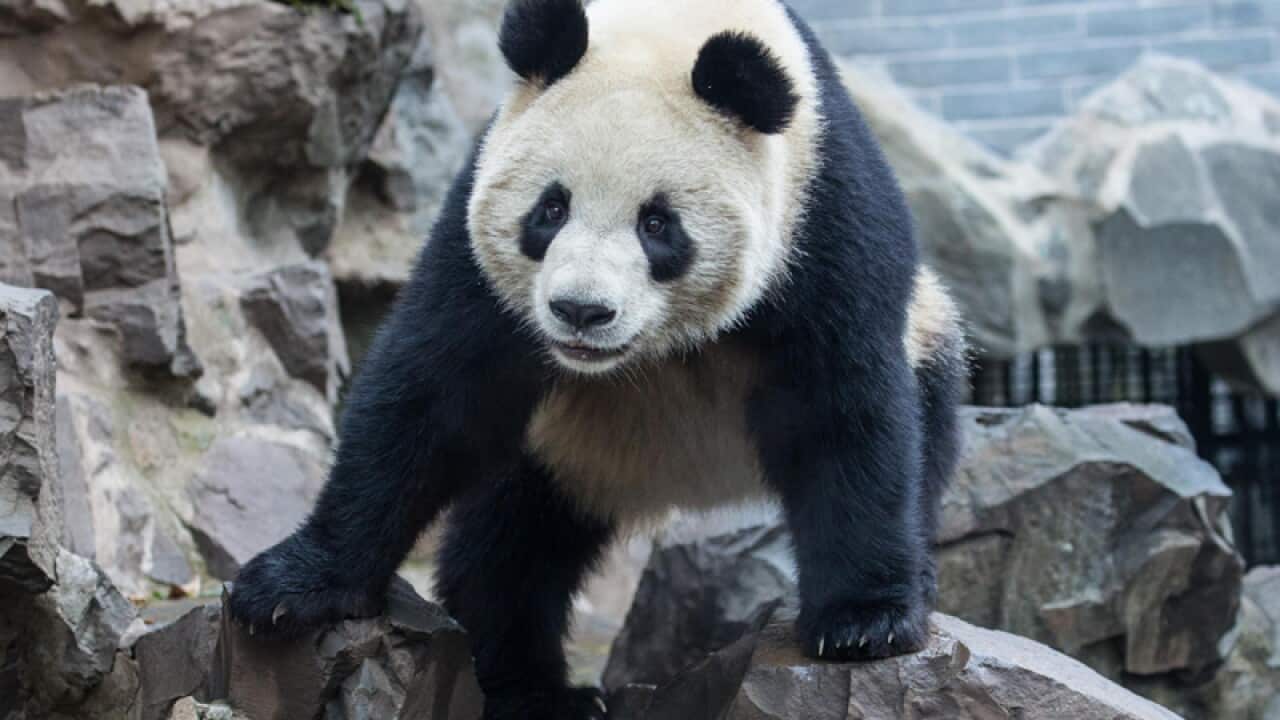
Scientists in China made detailed measurements of the energy used by five pandas in captivity and three more living in the wild. They did this by injecting the animals with a dose of “doubly labeled water” — which is enriched with certain isotopes of hydrogen and oxygen — and then taking a series of blood samples over the next two weeks to track the rate at which it was eliminated from their bodies.
These tests found that the pandas used an average of 4.6 megajoules of energy per day — an amount equivalent to burning about 1,100 kilocalories. For animals that weighed an average of 201 pounds, that’s definitely low, the researchers reported Thursday in the journal Science.
To put that in perspective, they noted that koalas — known for their lethargic lifestyles — use about 69 percent of the energy normally used by animals of their size. Indeed, in terms of daily energy use, giant pandas rival an animal whose name is practically synonymous with laziness: The three-toed sloth expends only 36 percent of the energy expected for a creature of its size, according to the study.
Some large animals save energy by hibernating or by reducing their metabolism and body temperature for short periods by entering a state known as daily torpor. But giant pandas do neither.
To figure out what they did instead, the scientists embarked on panda stakeouts. They observed the pandas in captivity for 100 minutes in a row, taking note of whether they were eating, sitting, sleeping or doing something else. The wild pandas were tracked with GPS-enabled radio collars, allowing researchers to see just how much they were moving.
News that makes sense
Your trusted source for staying up-to-date with the world around you. Get free daily news updates and analysis, straight to your inbox.
They weren’t moving much. In the wild, the pandas were physically active only 49 percent of the time. When they were moving, their average speed was a mere 26.9 meters per hour. That’s only 0.017 miles per hour.
The pandas in captivity were even more sedentary, moving only 33 percent of the time, according to the report. However, since these pandas weren’t wearing activity trackers, the researchers couldn’t gauge their speed.
Other factors probably contribute to their very low metabolism. The researchers noted that an animal’s internal organs play a big role in determining its metabolism — and some of the panda’s key organs are on the small side. For instance, the panda brain is 17 percent smaller than would be expected based on comparisons with other placental mammals, according to the study. Panda kidneys are 25 percent smaller, and the panda liver is 37 percent smaller.
Researchers also measured levels of key thyroid hormones in the five captive pandas and found they were 36 percent to 53 percent lower than in other mammals their size. A genetic analysis revealed a single tiny change in a gene known as DUOX2 that probably hinders production of the key thyroid hormones thyroxine (T4) and triiodothyronine (T3). People who have a nonfunctioning version of this gene suffer from hypothyroidism, according to the study.