LEADERSHIP SPILL
A “leadership spill” is the announcement that the leadership of an Australian Federal Parliamentary Party has become vacant and open for re-election through party voting procedures.
A spill may involve all leadership positions or just the leader, and can be called by the leader themselves, often amidst speculation of a leadership challenge, or an attempt to resolve any conflicting members.
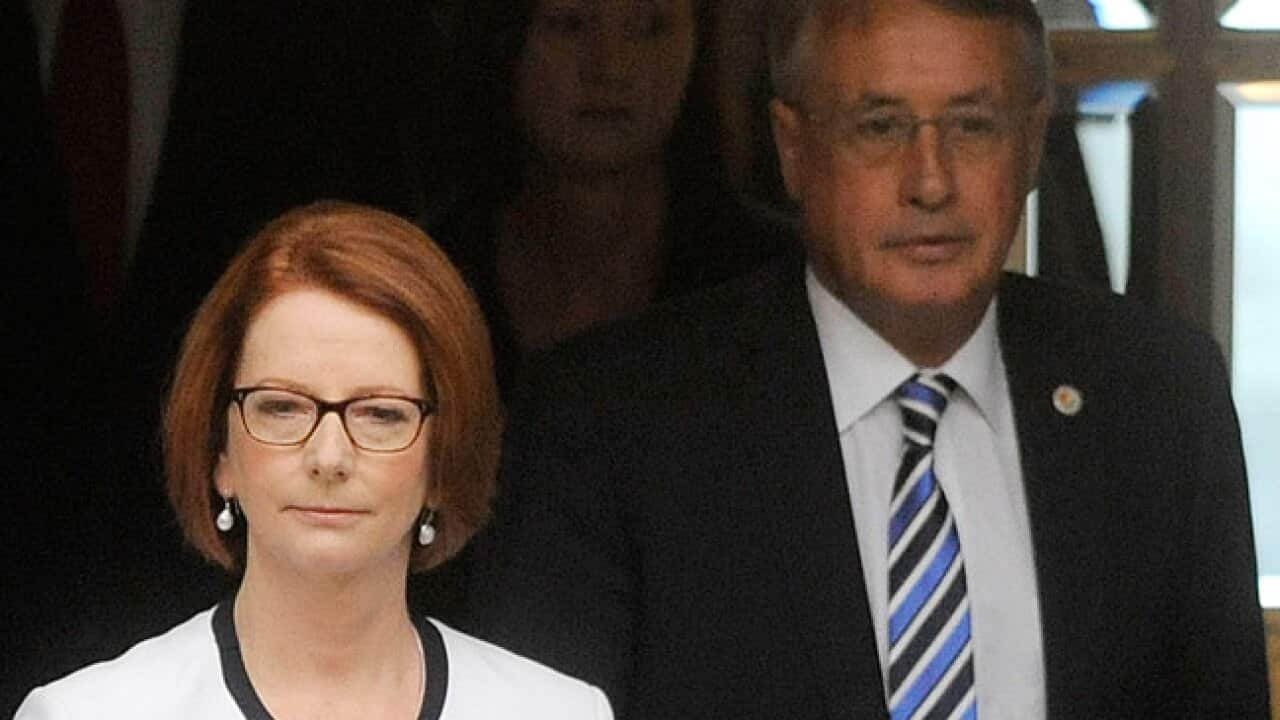
Julia Gillard today announced during question time that there would be a leadership spill of the Labor Party and a ballot to elect the leader and deputy leader, following a request from Minister for Regional Australia, Simon Crean, earlier in the day.
A leadership spill may result in a new leader like when Kevin Rudd was replaced by his then deputy Julia Gillard in June 2010, or confirm the status quo, like Julia Gillard's spill in 2012 where she defeated Kevin Rudd 71 to 31.
News that makes sense
Your trusted source for staying up-to-date with the world around you. Get free daily news updates and analysis, straight to your inbox.
VOTING
Most of the mechanics behind picking the leadership is kept private amongst the party.
What is known is that the leadership spill is brought on by a motion declaring that the leadership of the party be made vacant so can nominate for the leadership to the party room. It occurs at a special meeting of caucus.
Labor members were given less than three hours' notice of the Prime Minister Gillard called it for 4:30pm today during Question Time beginning at 2pm.
Candidates do not require a mover or seconder, but they generally have considered the “numbers” amongst their colleagues before voting takes place.
Once nominations have been received, a secret ballot where federal MPs from both the House of Representatives and Senate are given a vote.
It is taken by a preferential voting system and only those present are eligible to vote.100 party members are set to vote on today's leadership ballot.







