
Shepparton, located in the heart of central Victoria, has developed a reputation of late as an area synonymous with drugs and growing unemployment.
"Anyone from outside of Shepparton ... all they seem to know is about the fruit industry and the ice," says local resident Cameron Hotchkiss.
Since the second World War, waves of immigrants and refugees have arrived in the Goulburn Valley region to seize upon the opportunities and build a new life. But recent events have brought both challenges and new prospects for residents.
A move away from farming
Former university lecturer Dr Katrina Alford was commissioned by the Fairley Foundation to look into the socio-economic profile of the area.
"Shepparton traditionally was right up there. It was very prosperous, it had a very strong industry staple in agriculture and food processing, manufacturing. In the last 25 years for a whole number of reasons, those staples have declined," the economist said.
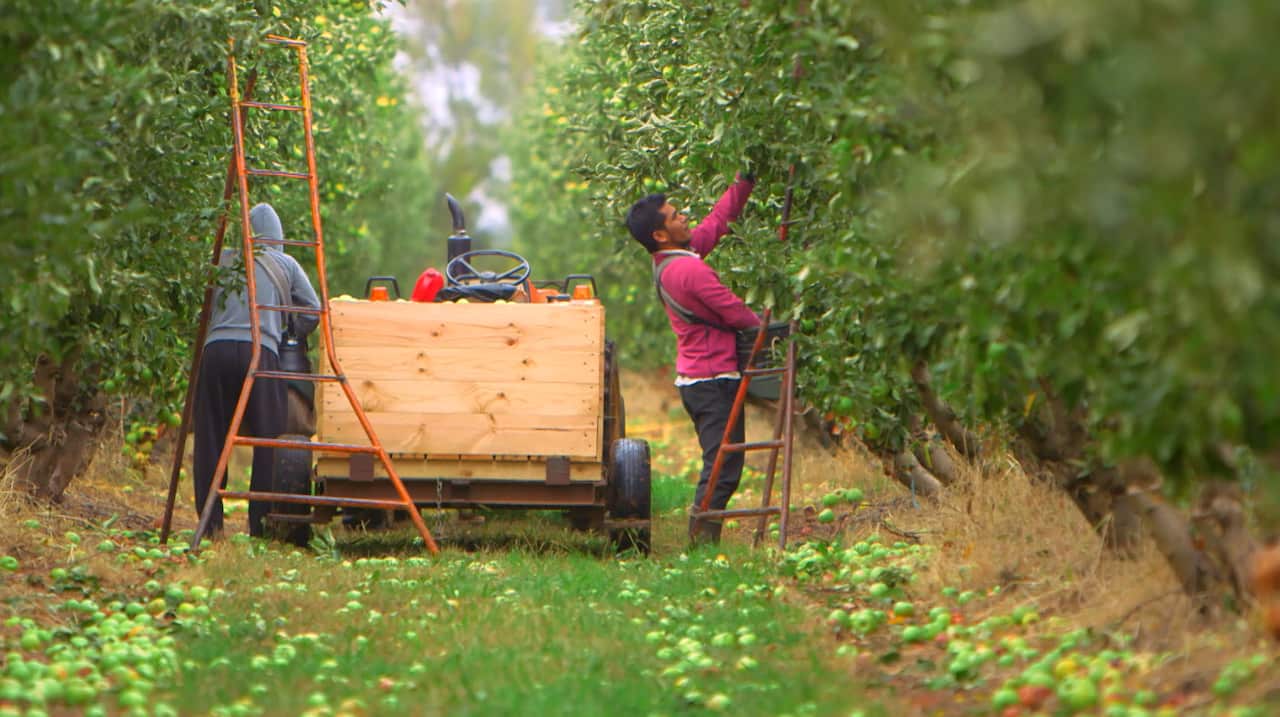
At present, the main industries are agriculture, fruit and vegetable processing and dairy product manufacturing.
Alford cites a move away from farming, in part due to climate change, and the lack of diversification as two of the reasons why the region is not fairing so well.
"This region is becoming warmer, drier, less hospitable. Irrigation footprint will recede because of climate change."
Alford says the brawn to brain transition has missed the Shepparton and the broader Goulburn Valley region.
"The Shepparton economy is not particularly diversified. The economy's economic growth in Shepparton has been very sluggish over the last twenty years so all these individual stories of young people not being able to find jobs, there aren't the jobs. The youth labour market in general has collapsed around Australia, but it's more severe in Shepparton because the economy hasn't grown."

What's the future for Shepparton?
Shepparton's population is predicted to reach 77,000 by 2031. With a shift away from unskilled to skilled jobs, what's the future for these industries and for this town?
Alford believes the region needs to find a niche in which it can excel at.
"This town needs a tertiary education strategy and future and it lacks one. There is a vibrant indigenous community which is being massively under-resourced and under-appreciated."
"It could have a multiplier effect in as much as why don't we address the tarnished image of Shepparton which is really rock bottom. Two, the multiplier effect from arts and culture is quite substantial in terms of income, employment. It becomes a population magnet for people to migrate to."
The current youth unemployment rate is 19.3 per cent, according to the ABS Labour Force Survey. Alford warns early intervention is critical.
"The job services network around Australia doesn't have the capacity to deal with young people transitioning from school. The overwhelming evidence is that kids who leave school before year 10, year 11, don't fare well. It's not a good life choice to exit school too young."
"The disengagement rate is particularly high among the state schools. By and large those who disengage don't re-engage. The longer the disengagement, the less chance. So any youth services really have to be early intervention and rapidly."
'Any youth services really have to be early intervention and rapidly.'
"There's now about 45 percent of young people in Shepparton who are not fully engaged in either school or work, and the Victorian average is 28 percent. There is a bit of a socio economic divide in Shepparton that's reflected in the number of schools and types of schools and the resources going to those schools. The state schools in Shepparton do very well with the limited resources they get."
"There is a lot of very short term, finite, piecemeal approaches to young people. Unfortunately the main Connections Program for kids who are struggling at school to transition into further education or work has been closed down," Alford adds.
This is a sentiment echoed by Bronwyn Rose, a principal of Shepparton ACE College.
"They’re struggling. Their lives are so difficult it’s sometimes heartbreaking and that’s due to poverty. Not because they’re not full of courage and they’re not full of strength ... They have hopes and dreams of steady jobs, apprenticeships and careers, they’re not at school having a hope and dream of being a fruit picker, or working at Kentucky Fried Chicken for the rest of their lives," Rose said.
In this week's Insight episode, filmed at the Goulburn Valley Hotel, Jenny Brockie meets the people who are beating the statistics. Young people, employers, industry leaders, federal and local members come together in a town hall style discussion to tackle the big issues head on.





