This audio is voiced by AI and may occasionally mispronounce words.
Share your feedback and help us improve this feature. Read more about how we use AI at SBS here.
The average wage in Australia is $1,611.10 a week, but this figure can change dramatically depending on where you live, your sex and occupation.
Employee Earnings and Hours data released by the Australian Bureau of Statistics on 23 January reveals which workers are the most highly paid and how wages vary by state.
The business survey was conducted in May last year and is completed every two years. The average wage figure includes people working part-time and full-time, as well as those in managerial roles.
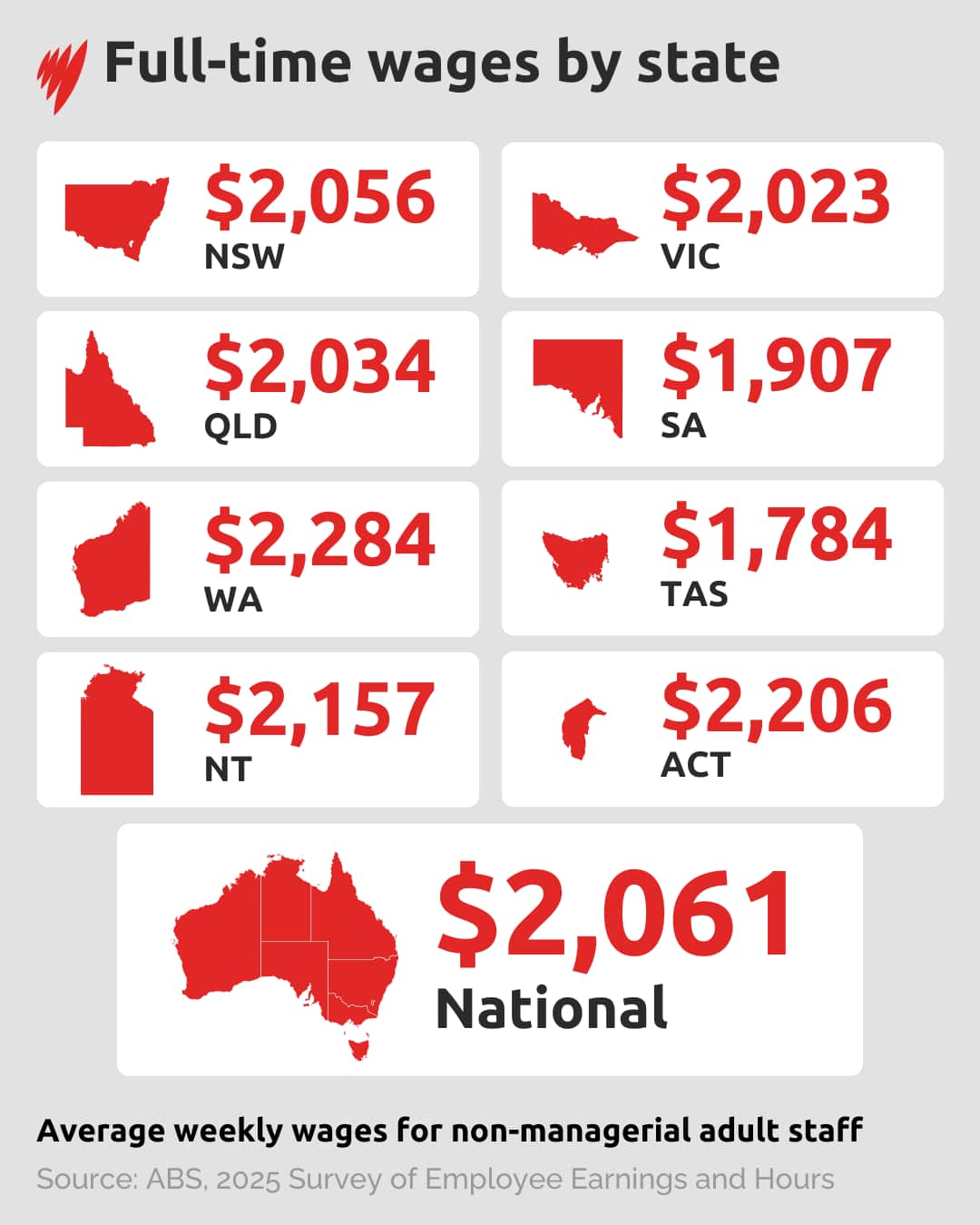
Excluding part-time workers and managerial staff — who have strategic responsibilities or oversee a significant number of employees — the survey found the average weekly wage for a full-time worker in Australia is $2,061 before tax.
The state with the highest average wage is the Australian Capital Territory (ACT), where full-time workers earn an average of $2,206 a week. This drops to $1,784 in Tasmania.
News that makes sense
Your trusted source for staying up-to-date with the world around you. Get free daily news updates and analysis, straight to your inbox.
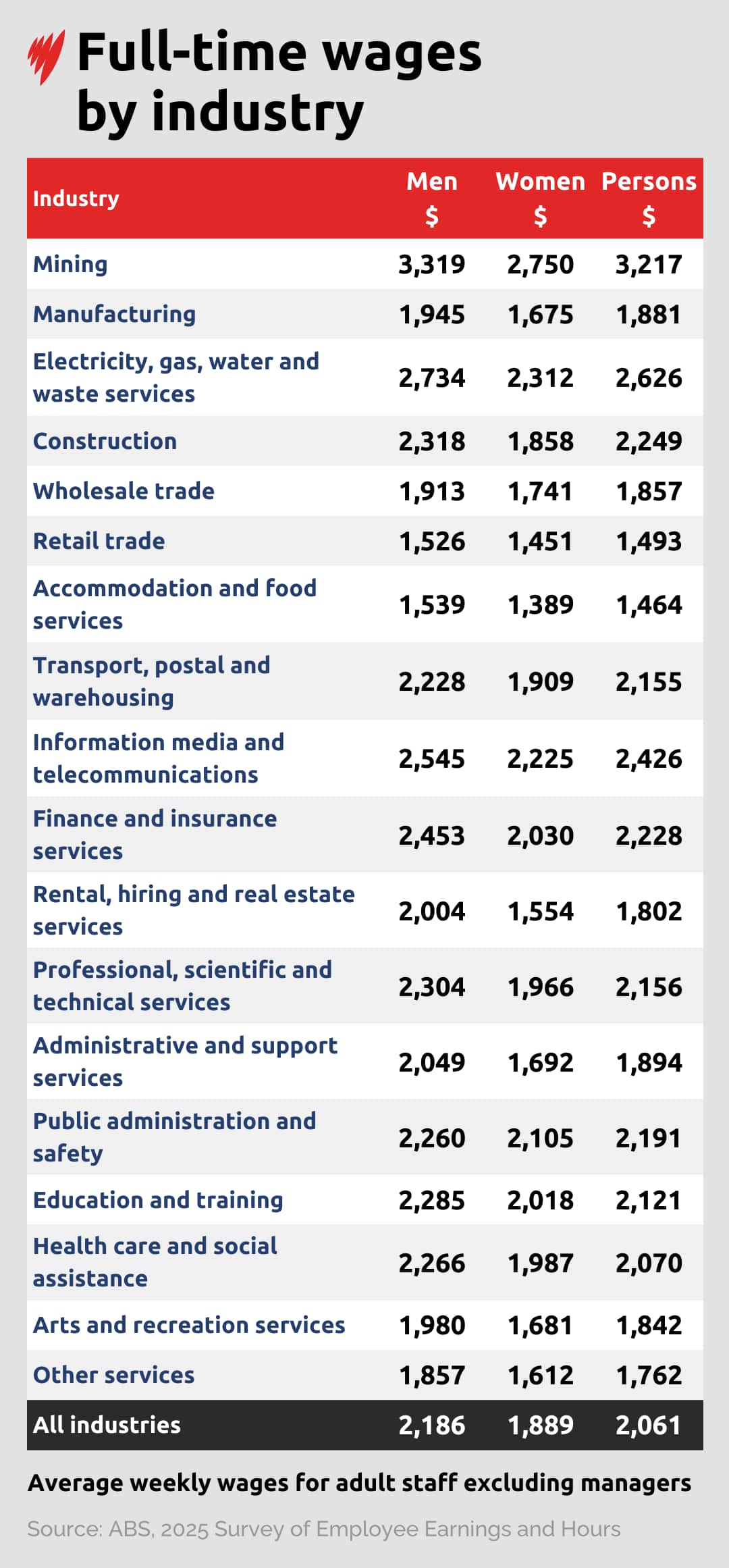
The data also shows which Australian workers are earning more or less based on their industry and gender.
Men employed in the mining industry are on average the highest-earning full-time workers, bringing home $3,319 a week.
The most highly paid women in the country are also those working in mining, earning an average of $2,750 a week.
The most highly paid workers
That picture changes slightly when you look at specific occupations.
The highest-paid occupations in Australia — based on average weekly earnings for all employees — are anaesthetists, who earn $5,366 on average before tax, followed by surgeons on $4,159 and engineering managers on $3,939.
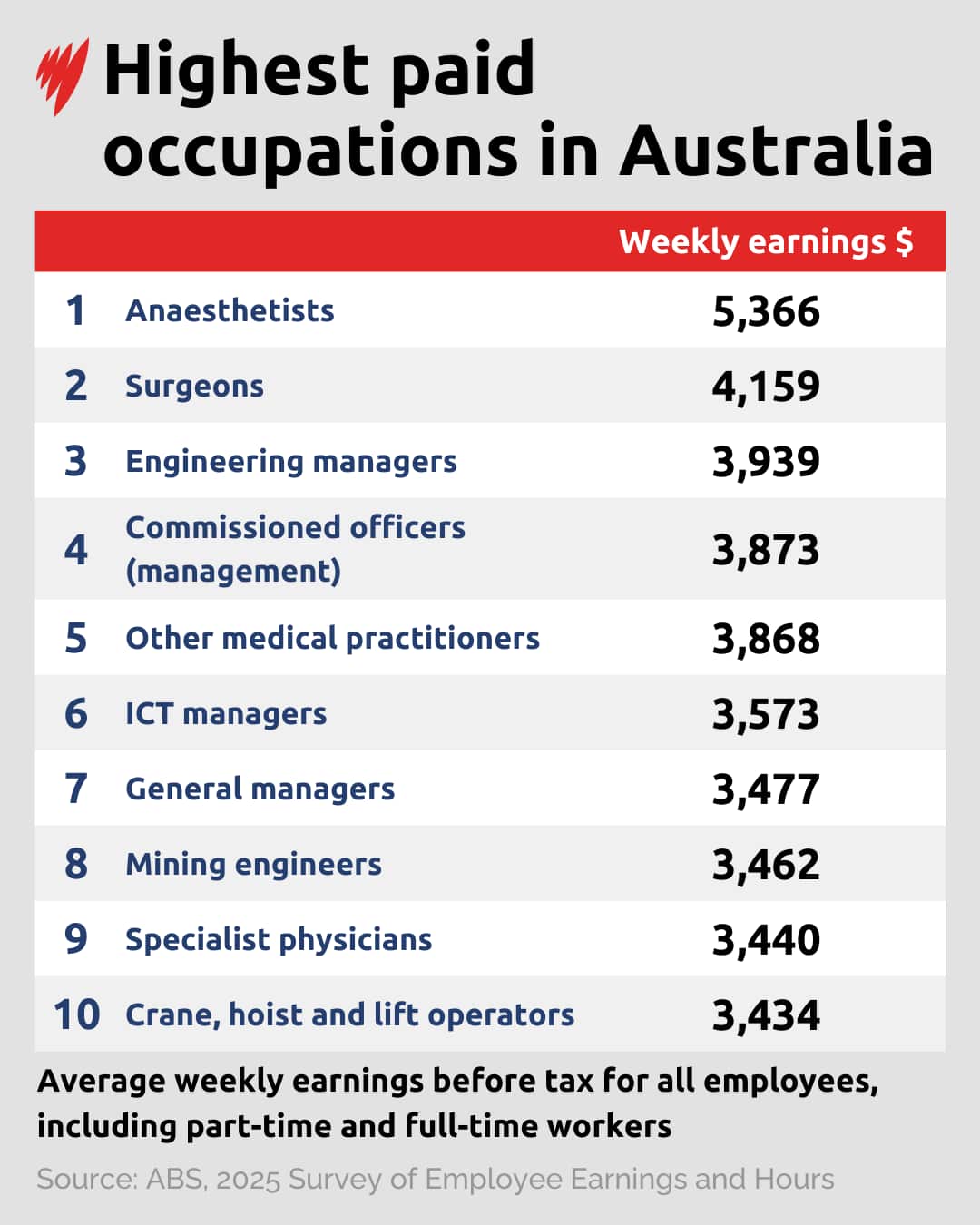
Average wage data can be skewed by a few exceptionally high earners whose income can push the average higher. It's also important to note that these figures include part-time workers, who earn considerably less than full-time workers.
The data can also be broken down by gender, but there are some limitations to this, as it is not available for every occupation (anaesthetists are not included, for example).
Of the occupations that do provide a breakdown, among women, the highest earners are engineering managers, who earn an average weekly wage of $3,818, and surgeons, who earn $3,752. They are followed by "commissioned officers (management)" — those employed in high-ranking positions in the defence forces, fire and police services — on $3,605.

Among men, "other medical practitioners" takes the top spot with an average income of $4,990 a week. This is a category that includes dermatologists, emergency medicine specialists, obstetricians, gynaecologists, ophthalmologists, pathologists and radiologists.
They are followed by surgeons on $4,486, and commissioned officers (management) on $3,990.
SBS News has created a searchable database, showing average wages for specific occupations. The figures include both part-time and full-time workers. Enter your occupation below to explore.
Gender pay gap is closing
While average weekly earnings for different occupations appear to show a stark difference in what men and women are being paid, ABS head of labour statistics Sean Crick says comparing hourly pay is more useful when looking at the gender pay gap because women are more likely to work part-time than men.
Across all professions, men earned $50 an hour on average, while women earned $46.
The gender pay gap in May 2025 was 8.4 per cent, a 0.5 percentage point improvement on the figure two years prior, when it was 8.9 per cent.
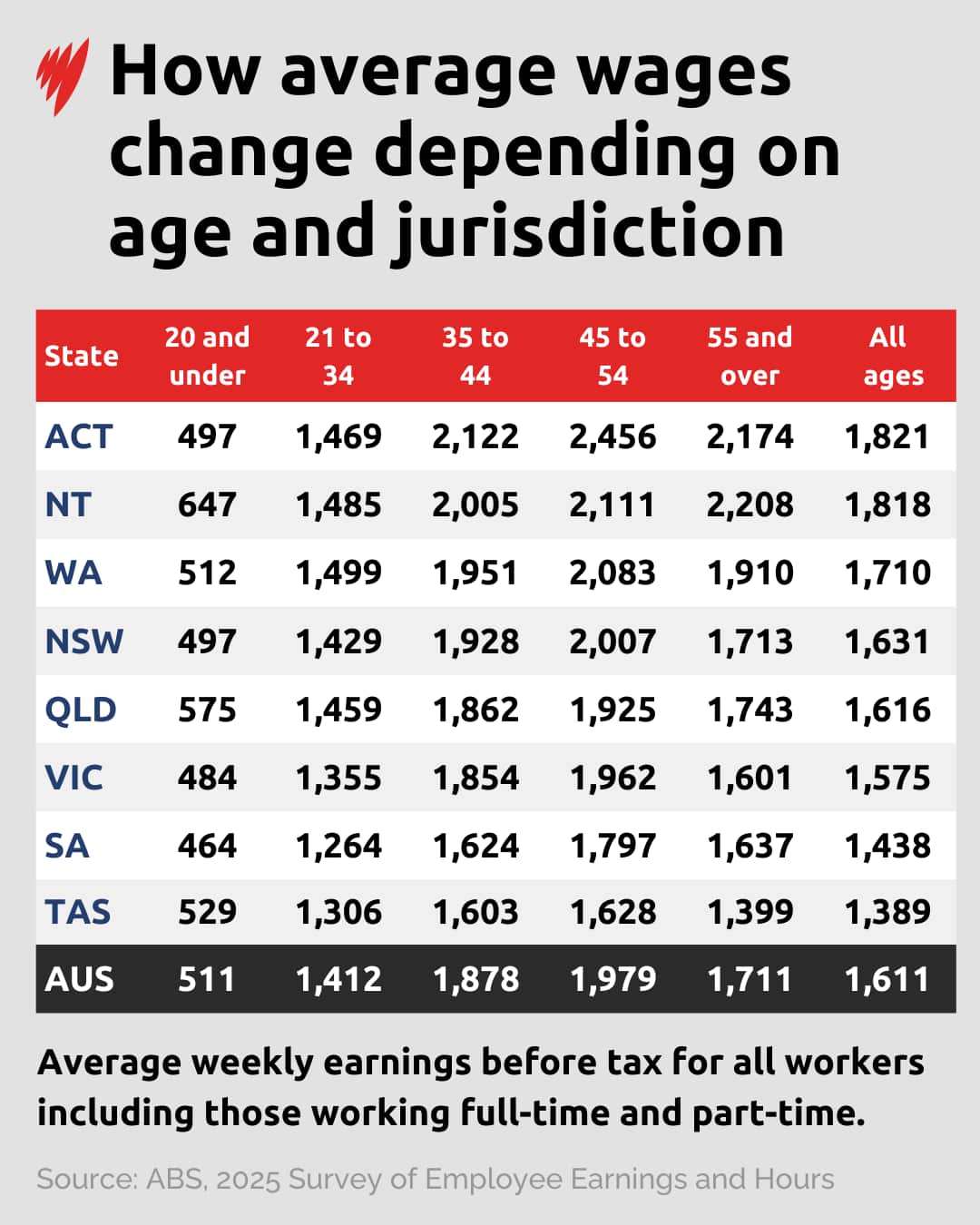
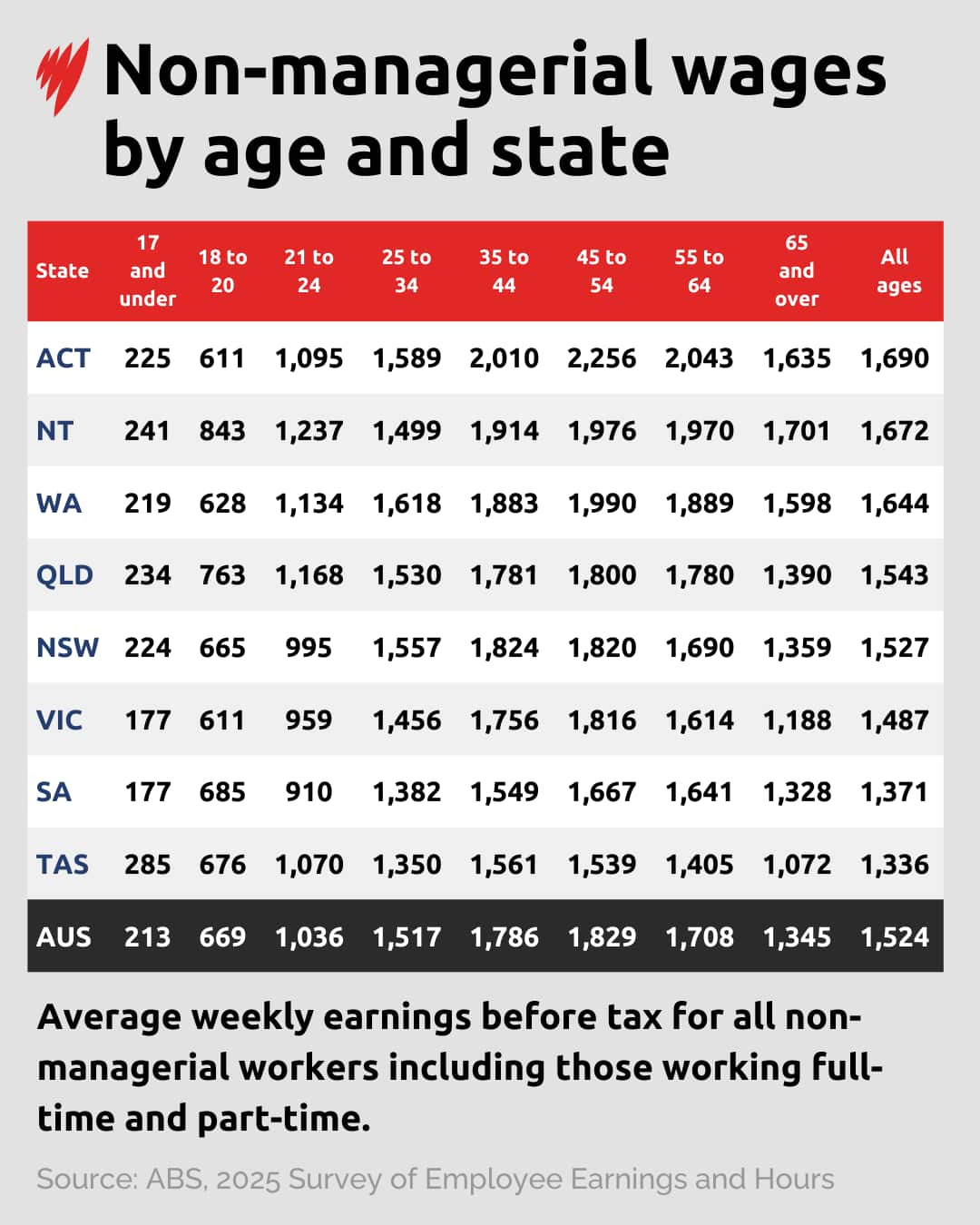
How wages change depending on your state and age
Including part-time workers, the ABS survey found those employed in the ACT have the highest average wage, earning $1,821 a week before tax.
Those aged 45 to 54 in the ACT are the most highly paid age group in Australia, earning on average $2,456 a week, while those aged 20 years and younger in the territory are the fourth lowest earners, bringing home $497 on average.
Tasmania is the state or territory with the lowest average wage overall, with employees earning around $1,389 a week.
But the demographic with the lowest average wage in the country is South Australians aged 20 years and younger, who are paid around $464 per week.
It can also be helpful to look at median wages when seeking to understand what a typical Australian earns. The median wage is the middle value in a list of incomes ranging from lowest to highest — so half of all people earn more than that figure, and half earn less.
In Australia, the median wage is $1,436 a week — $1,674 for men and $1,250 for women. This includes both full and part-time workers.
You can find out more information about where your wages sits compared to others in the interactive below, which has been based on data from the latest ABS release on Characteristics of Employment, August 2025.
Interactive design by Ken MacleodFor the latest from SBS News, download our app and subscribe to our newsletter.







