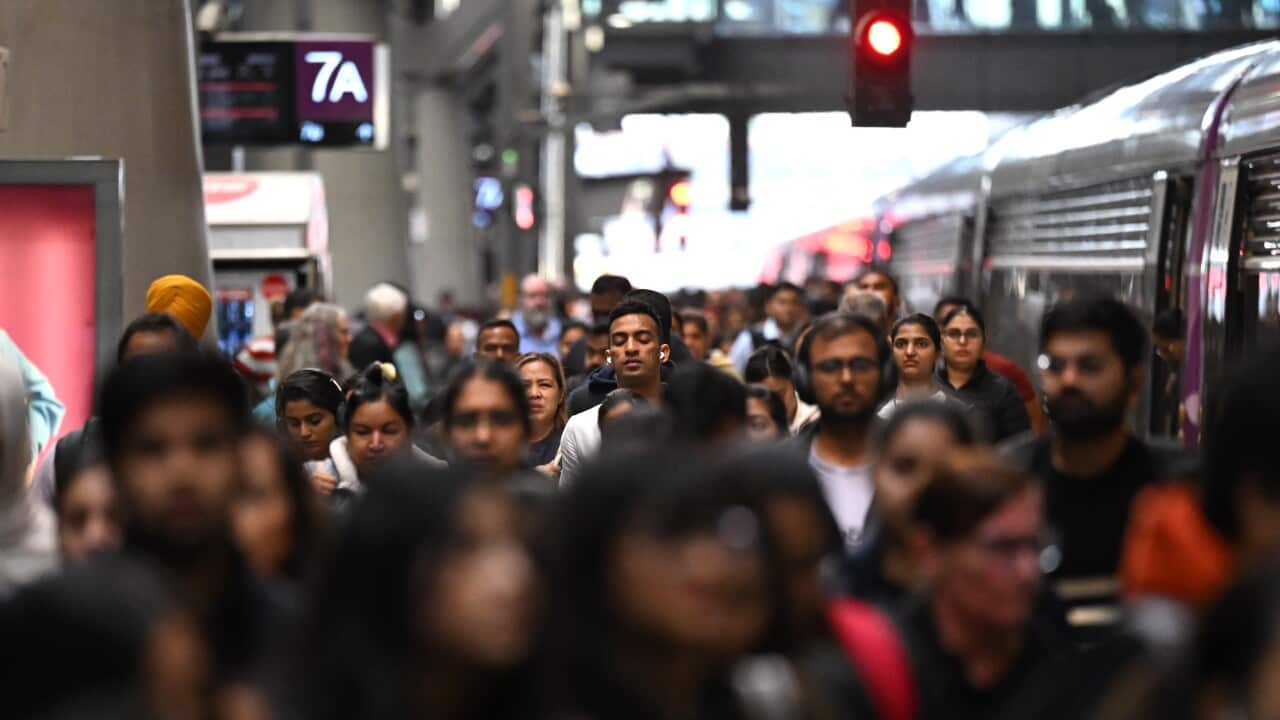
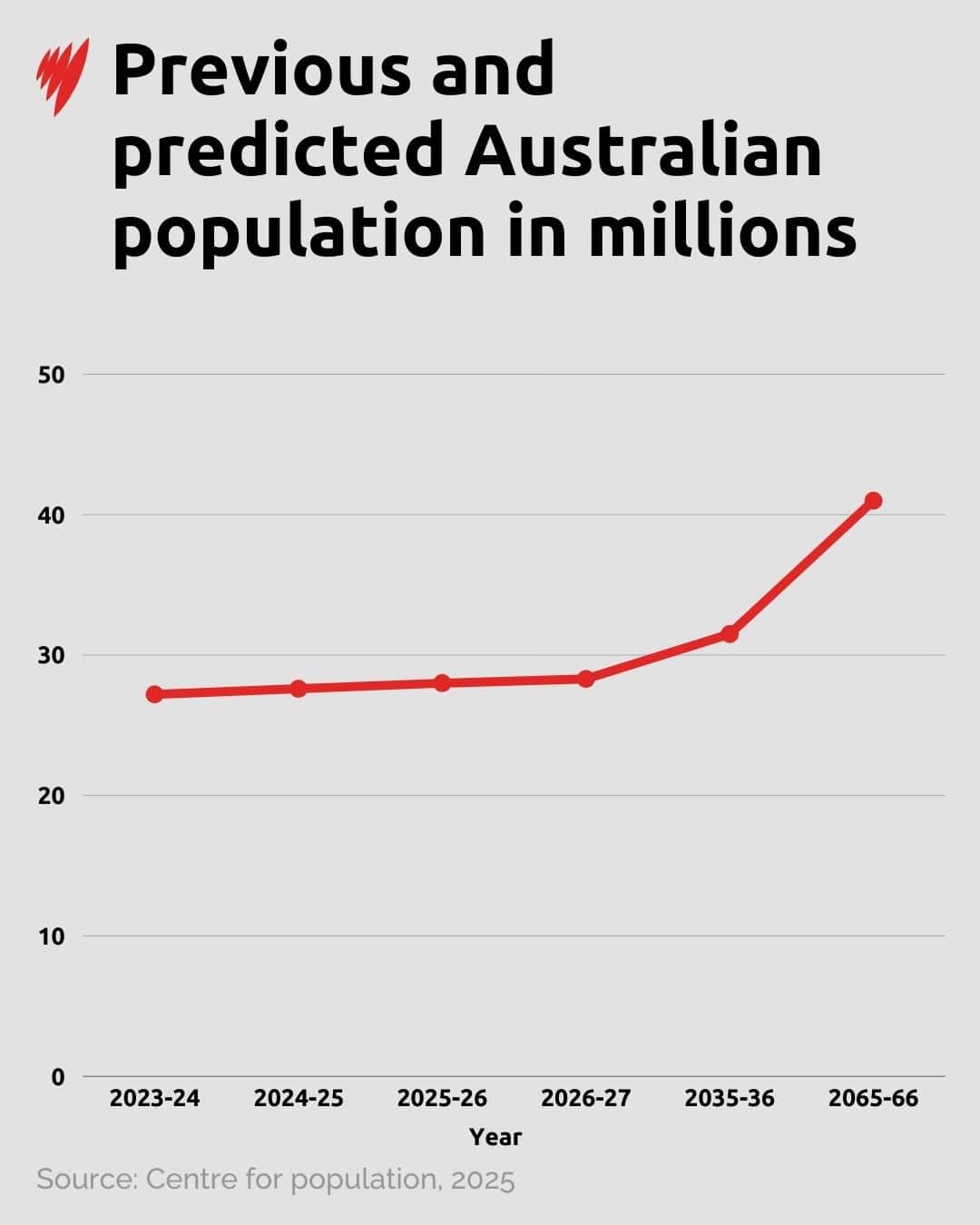
Australia's population will grow by another four million people over the next decade despite falling migration and fertility rates.
The federal government's latest population statement predicts the current population of 27.5 million will grow to 31.5 million by the end of 2035. It's roughly 150,000 lower than projected in the previous population statement.
The Centre for Population, which collates the report, had previously predicted Australia would reach 31.65 million people by 2035.
Population growth, which reflects migration trends and fertility rates, is expected to slow to 1.3 per cent in the coming year, falling short of earlier projections.
News that makes sense
Your trusted source for staying up-to-date with the world around you. Get free daily news updates and analysis, straight to your inbox.
So what's behind the slowing growth, and which areas will witness the biggest change in population?
Net overseas migration falls
Net overseas migration is continuing to ease after reaching record highs in recent years, according to the report.
It is expected to total 260,000 people in 2025–26, well below the peak of 556,000 recorded in the 12 months to the September quarter of 2023.
The decline has been driven largely by fewer arrivals of temporary migrants, particularly those holding student and visitor visas.
Although departures have increased overall since 2023–24, migrants on temporary visas are leaving Australia at lower rates than in the past.
Fertility rates continue long-term decline
While two-child families remain the most common family size, smaller families are becoming more prevalent, and larger families continue to decline.
Australia's total fertility rate is projected to fall to 1.42 in 2025–26, remaining well below the "replacement level" of 2.1 children per woman.
Fertility has been below this benchmark for almost 50 years.
Life expectancy on the rise
Australia continues to rank among countries with the highest life expectancy. By 2035–36, life expectancy is expected to reach 87.1 years for women and 83.4 years for men.
The collected data show health outcomes have shifted alongside longer life expectancy.
The five leading causes of death accounted for one-third of all registered deaths in 2024.
In order, these were: dementia (including Alzheimer's disease), ischaemic heart disease (reduced or blocked blood and oxygen supply to the heart), chronic lower respiratory diseases, cerebrovascular diseases (conditions that affect blood flow to the brain) and lung cancer.
Median age of Australians to increase
While Australia remains younger than many comparable economies, the population continues to age due to lower fertility and longer life expectancy.
The median age is expected to rise by 1.8 years to 40.2 years by 2035–36, about half the rate of ageing experienced during the 1990s.
The number of very elderly Australians is projected to grow rapidly.
By 2065–66, there are expected to be 1.9 million people aged 85 and over — more than triple the current figure.
Regional populations are generally older than those in capital cities across all states and territories, except for the Northern Territory.
Varying rates of growth across the country
Population growth and ageing patterns differ significantly across Australia.
Western Australia is projected to record the highest population growth rate at 1.8 per cent in 2025–26, while Tasmania is expected to grow the slowest at 0.1 per cent.
Capital cities are projected to grow nearly twice as fast as regional areas, with Sydney and Melbourne both expected to surpass 8 million residents in the 2050s.
For the latest from SBS News, download our app and subscribe to our newsletter.







