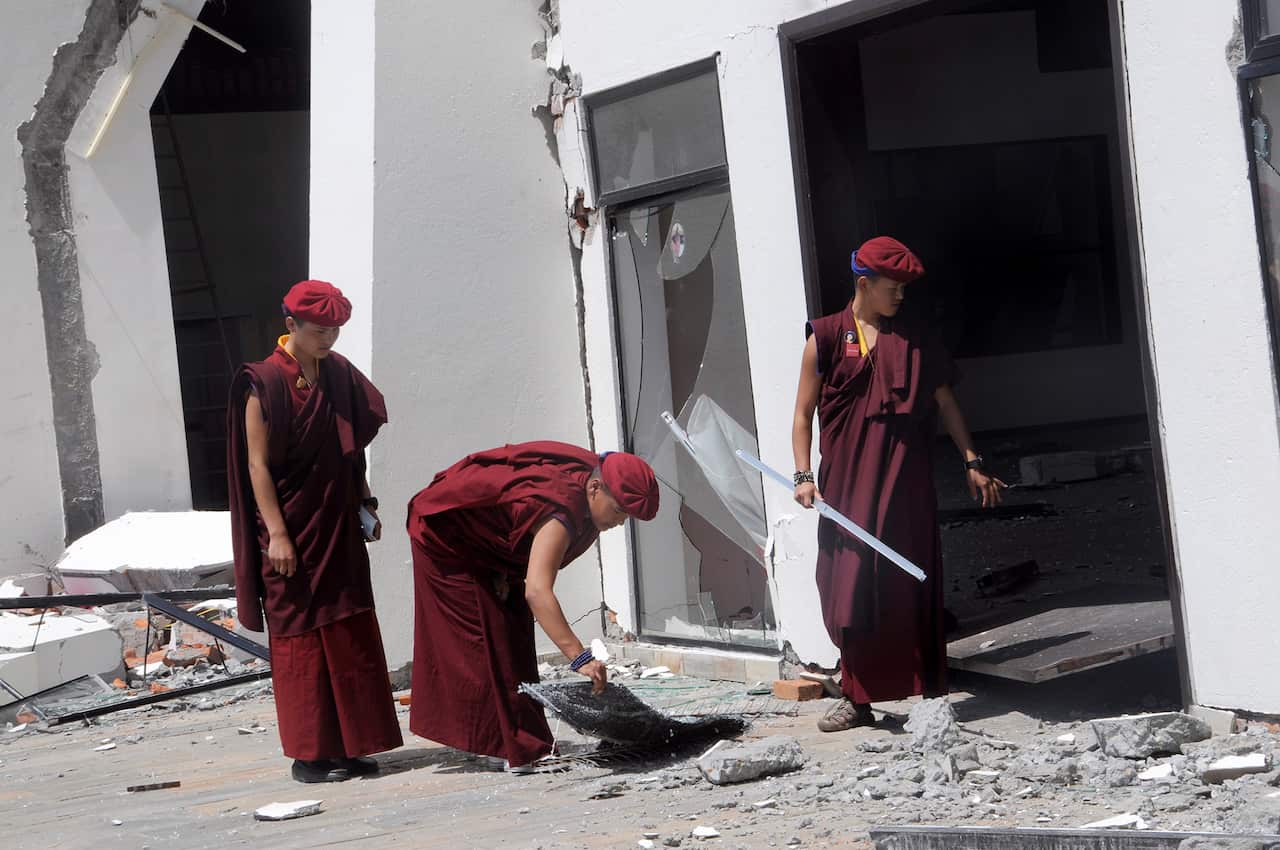
RAMKOT, Nepal — The earthquake shook the sprawling Buddhist nunnery near this village in the western valley of Kathmandu so violently that the nuns jumped through shattered glass windows, smashed open rattling doors and dived over a collapsing staircase.
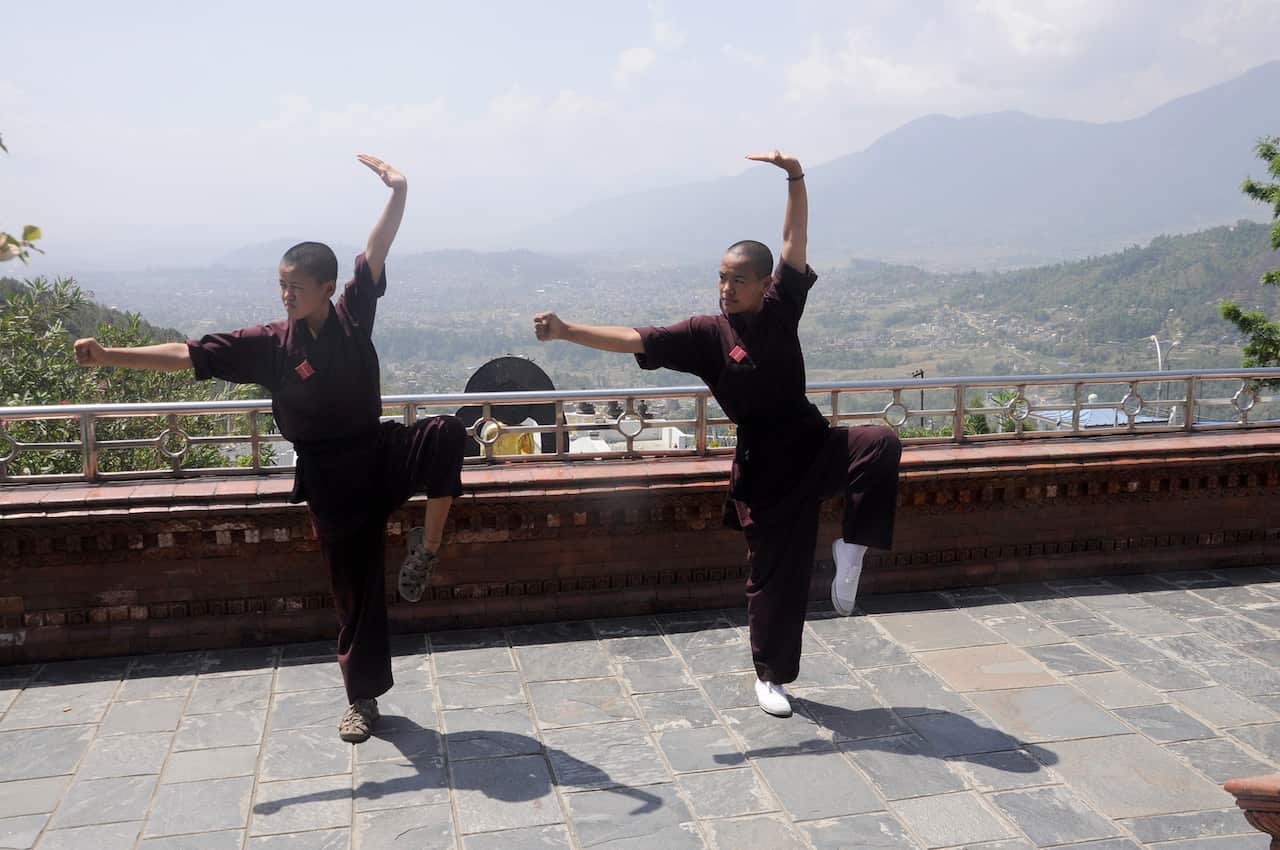
They are, after all, the "kung fu nuns of Kathmandu." And they have been training for about four years to react with just such speed and agility.
"None of us shrieked in fear or crouched on the floor crying. We moved quickly, dodged falling pieces of the wall and escaped," said Jigme Konchok, 21, showing the broken hall where she and her fellow nuns used to assemble for their daily kung fu sessions at the Druk Amitabha Mountain nunnery.
The nuns began learning kung fu from a Vietnamese teacher in defiance of accepted gender codes in the Buddhist monastic system. But over time, they have harnessed the ancient Chinese martial art for meditation, community work, edgy campaigns against toxic waste, and for women's empowerment and walkathons against the prevalence of plastic products in everyday life.
"None of us shrieked in fear or crouched on the floor crying. We moved quickly, dodged falling pieces of the wall and escaped."
News that makes sense
Your trusted source for staying up-to-date with the world around you. Get free daily news updates and analysis, straight to your inbox.
Now they are using their skills and energy in providing relief to victims of the earthquake that hit Nepal a week ago, killing more than 6,800 people. After assessing the structural damage to their sanctuary, the nuns quickly recovered and refocused when they saw the large-scale death and destruction in the villages outside their walls.
"Community duty is also a form of spiritual exercise, and our strong limbs are now trained to work hard and for long hours," said Konchok, who oversees the Internet and sound system at the nunnery.
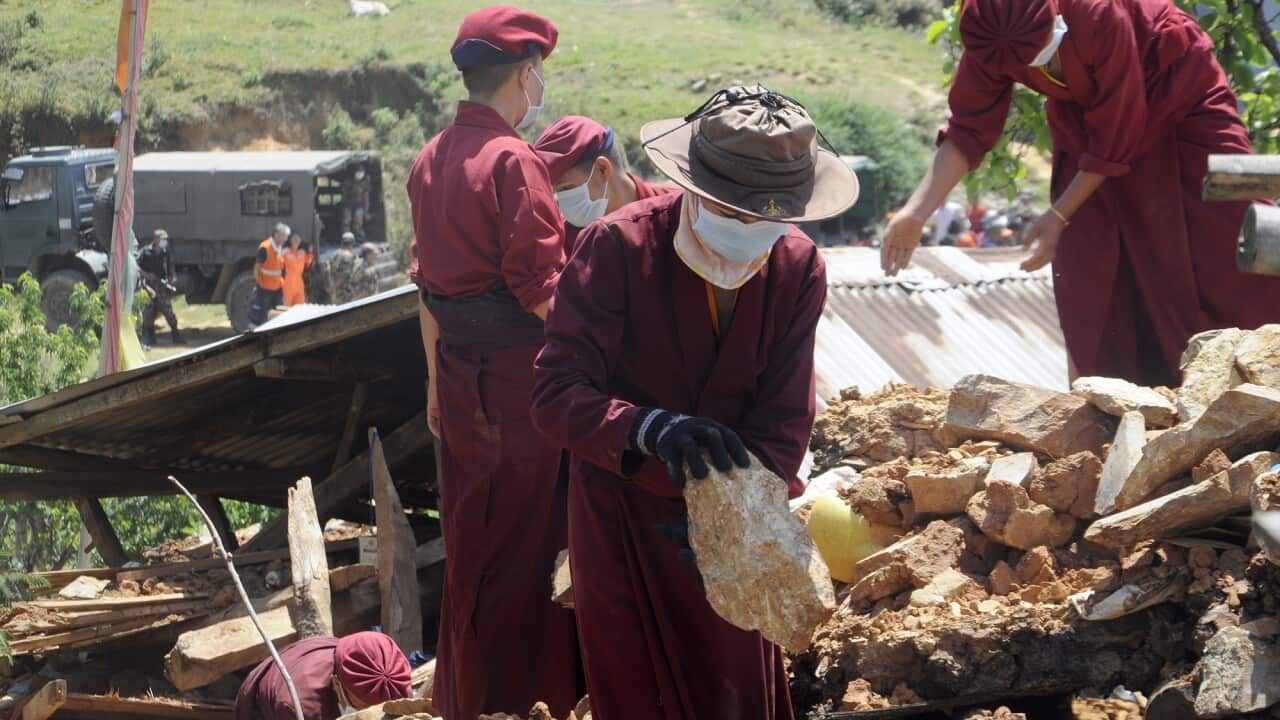
Every day, the maroon-robed nuns trek to nearby villages to help remove the rubble from people's homes, salvage and return buried objects, and clear pathways. They also distribute rice and lentils during the day and help pitch tents for night shelters.
The 26-year old nunnery is a unique example of a gender reversal in the rarefied world of monastic life, where monks often occupy positions of power, leaving nuns the menial chores. But here in Ramkot, the kung fu nuns learn the skills that men do: plumbing, electrical fitting, computers, riding bicycles, the English language and, of course, praying.
"In many monasteries, women are not given a chance to rise up the hierarchy. Nuns are typically made to cook, clean and serve food, while the monks take big decisions and run the administration — just like it is in many of our families," said Jigme Yeshi Lhamo, 26, an office administrator who fled her home in India to join the nunnery a decade ago.
"In many monasteries, women are not given a chance to rise up the hierarchy. Nuns are typically made to cook, clean and serve food, while the monks take big decisions and run the administration — just like it is in many of our families."
On Saturday, the nuns climbed a pile of debris that was once Nirmaya Tamang's house in Kalabari village. Wearing masks to protect against swine flu, the nuns removed the stones with their bare hands and retrieved pots and cooking oil jars from Tamang's kitchen.
"I lost my daughter and my husband in the earthquake. My house is destroyed. I have nothing left," Tamang said, standing under a pear tree. "The kung fu nuns said they will give me a hand because I have no older person in my family now to help. I did not ask them for help; they came on their own."
For the nuns, the community work is an extension of their kung fu training.
"Kung fu is not meant to attack people or fight with them. It prepares you for enduring difficult situations, like this earthquake," Lhamo said. "It is also a form of meditation because it helps us concentrate, keep our minds still and body nimble and light."
After the earthquake, the nuns repaired the solar panels at the nunnery, laid new tiles in the front yard and are rebuilding their broken compound wall. During the day, the older nuns pray for the souls of the villagers who lost their lives in the earthquake. By night, they patrol the streets outside the nunnery, even as the younger nuns sleep in tents on the lawn.
"Our teachings say that nothing is permanent," Lhamo said looking at the destroyed kung fu practice hall. "We feel sad because the earthquake damaged something that was so dear to us. At least we have a roof over our heads and food to eat, and we are in a position to help others. That is important."
— Pradeep Bashyal contributed to this report.
© The Washington Post 2015







