It’s nearly 30 minutes before we arrive in District Seven.
From the city centre, my taxi driver calmly weaves through the busy roads of Ho Chi Minh City traffic, past hundreds of commuters on scooters - some with toddlers between their laps, some holding ladders and pipes as they zip past, some with impossibly large cargo strapped onto their bikes.
We head down the dusty main road of District 7 lined with Vietnamese street food vendors, phone shops and small coffee stands. Stray dogs and chickens graze on food scraps next to families selling Pho noodle soups by the side of a dirt road.
So when we approach a neatly paved street filled with new houses and office buildings in search of KOTO, a cooking school and training centre for youths at-risk, it was not what I was expecting.
News that makes sense
Your trusted source for staying up-to-date with the world around you. Get free daily news updates and analysis, straight to your inbox.
But then again, KOTO, which stands for 'Know One Teach One', isn’t your average not-for profit organisation.
Walking into the centre, a handful of teens on a couch look up from their notebooks, greeting me enthusiastically in English. “Hello! Good morning, are you a volunteer?”
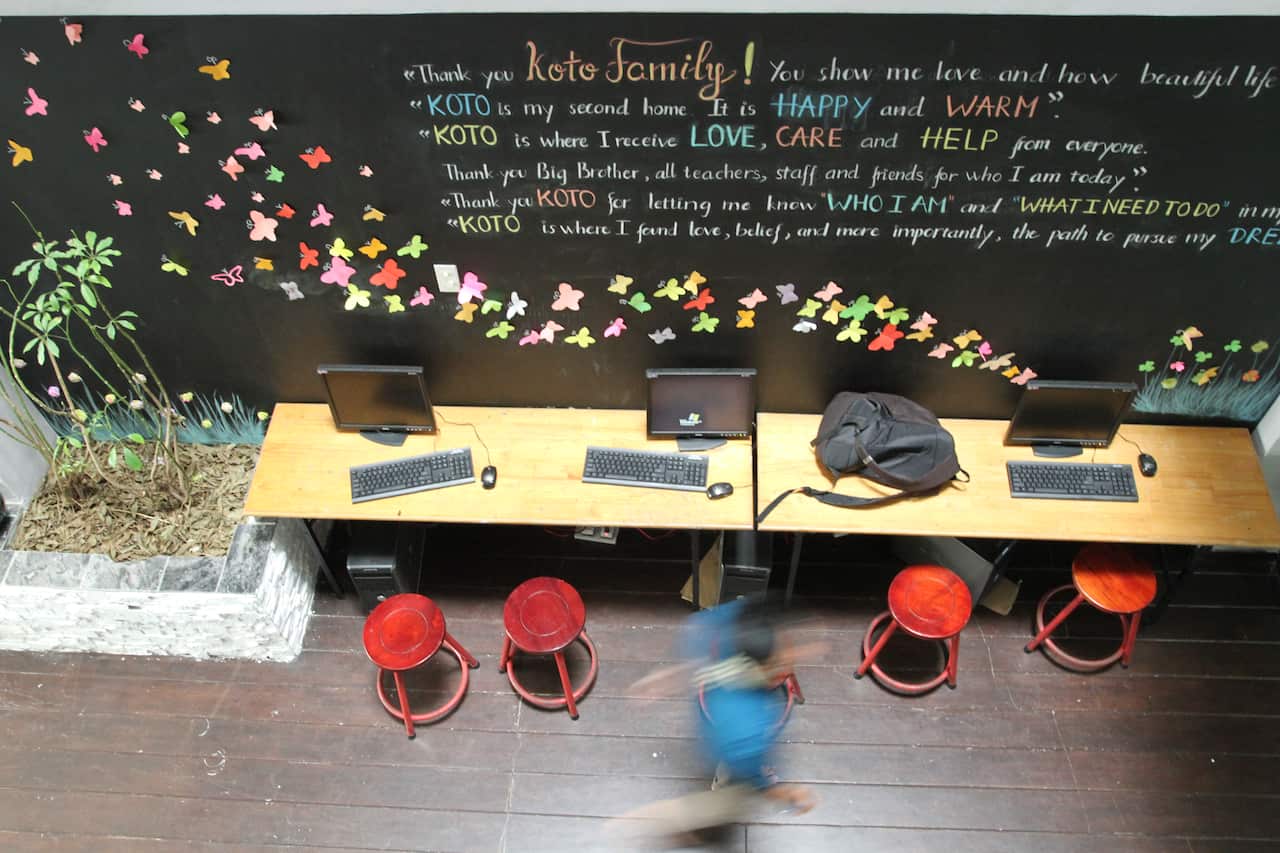
The training centre resembles a trendy, inner city terrace, complete with modern touches like wall murals, indoor plants, a computer lab, air-conditioning, and rustic wooden furniture.
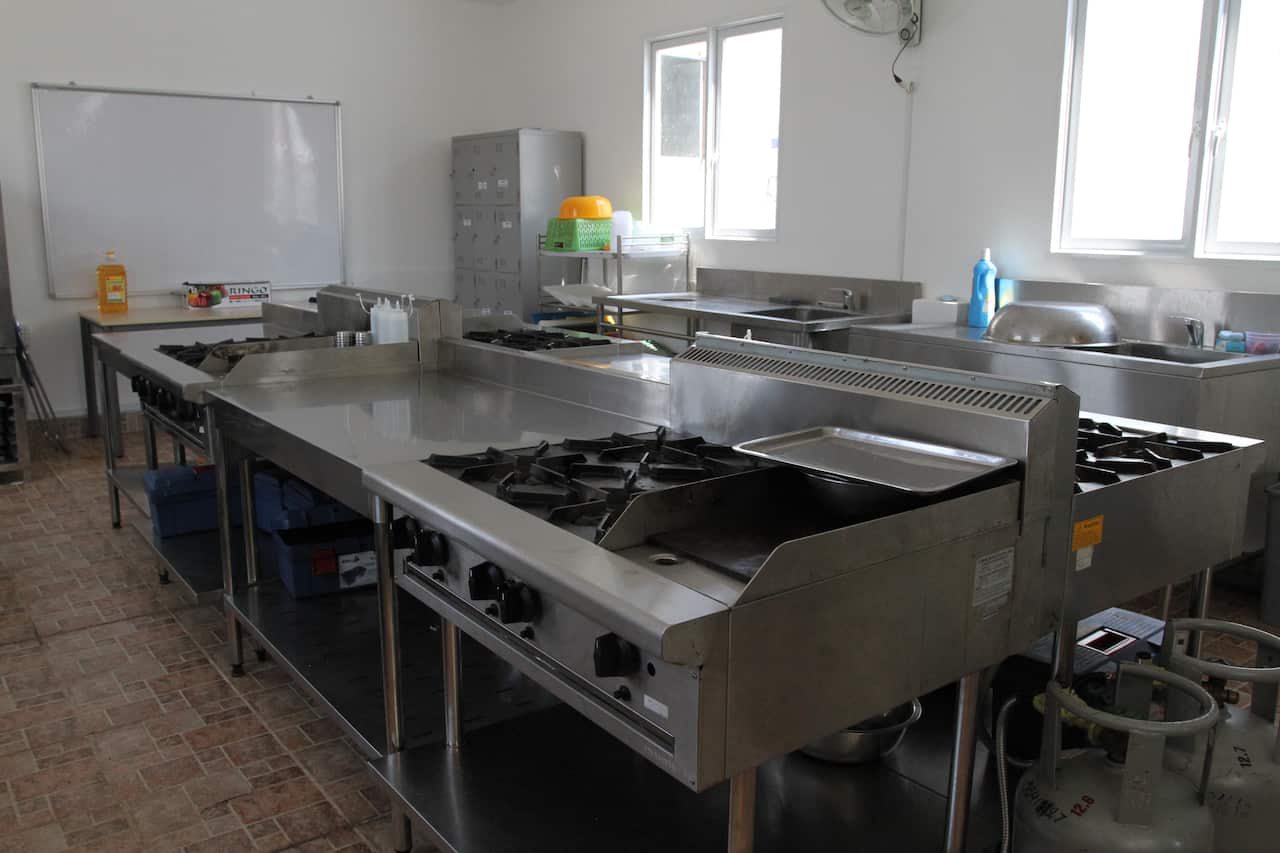
The kitchen, where trainees learn to cook, sits on the top floor, while classrooms and administration offices are located on floors two and three. In one classroom, children dressed in black KOTO t-shirts quietly take an exam. In another, students practice job interviewing skills in English with American and Australian volunteers.
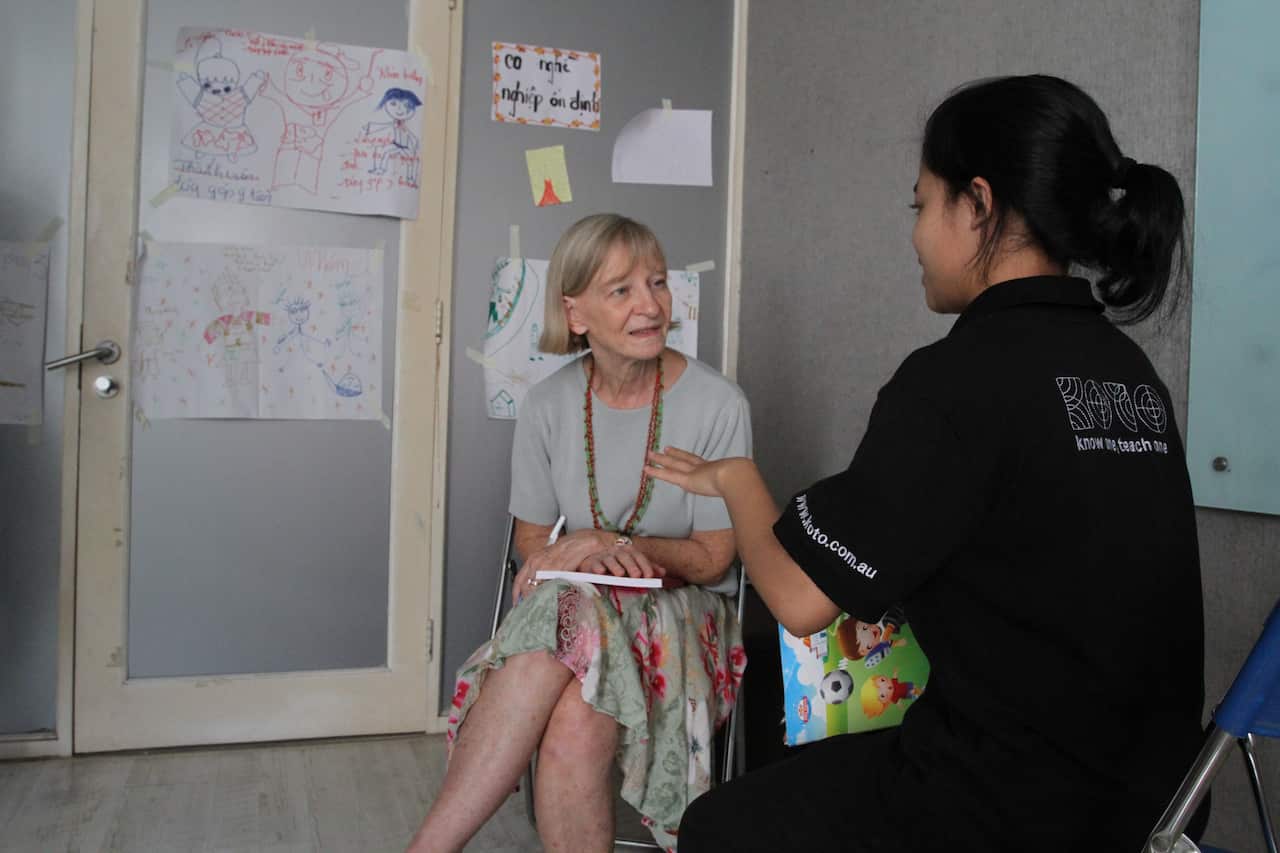
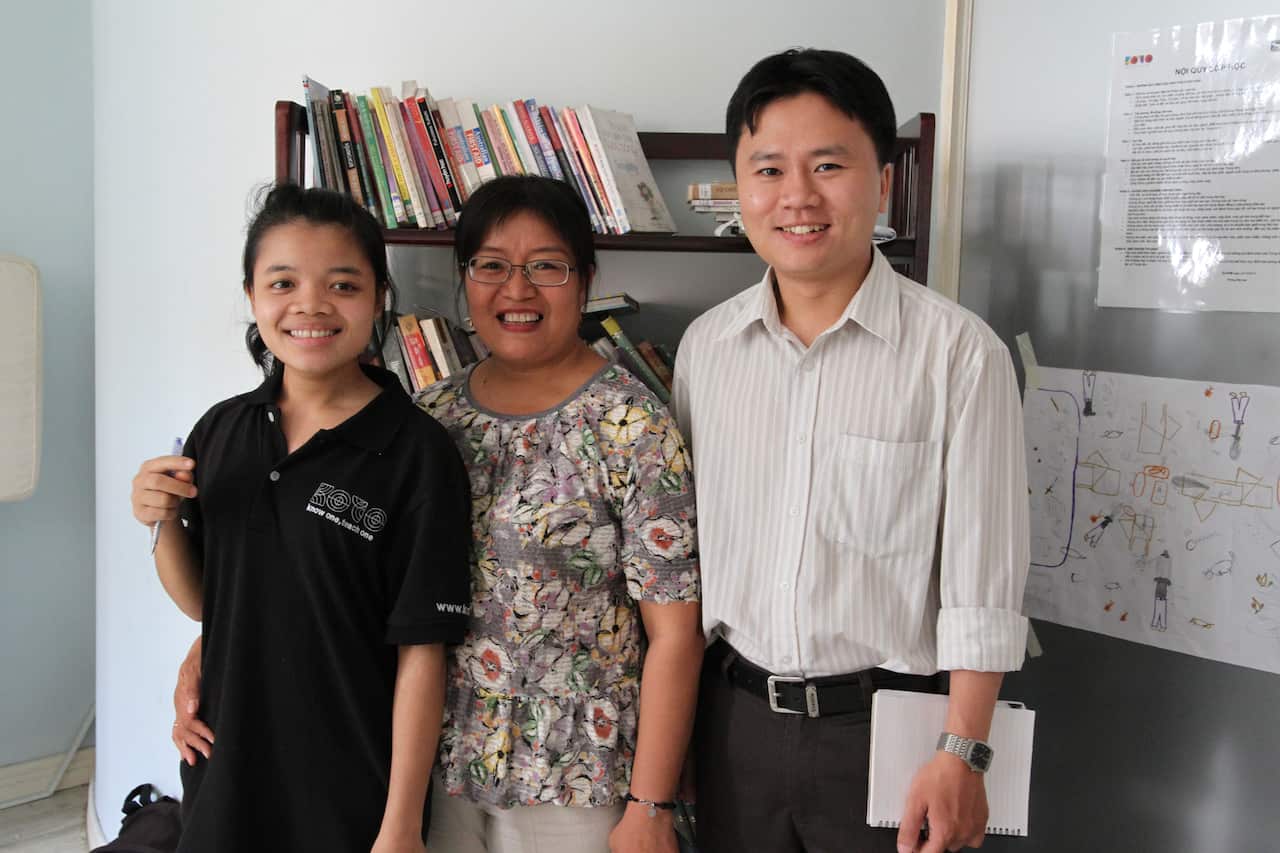
“You work with very very special people,” said part-time English teacher Kim Chung Nguyen, who studied English at Adelaide’s Flinders University.
“Some of them come from orphanage, the other come from poor family, their parents break up. So what they need is love… You know, some of the children come from prison. It means that society don't respect them, but when they come here, it change.”
“After finish KOTO, most of our children will work in five-star hotels or restaurants everywhere in the world as well as Vietnam,” Ms Nguyen added. “You watch them grow up change their lives and after two years, they change completely.
Nguyen Chien Thang, 18, said he was initially “very scared and worried” about leaving his home in Ca Mau province in the Mekong Delta, as he didn't know what to expect from the KOTO program. But after nearly two years, he is now “very happy” and wants to become a chef in a five-star restaurant.
‘Let’s create a family’
KOTO is a difficult organisation to define. It’s a cooking school, a scholarship program and, fundamentally, a social enterprise. Its two restaurants – one in Hanoi and one in Ho Chi Minh City – also generates income for the organisation. Run by KOTO graduates and targetted towards Western tourists, dining at the restaurants is how most volunteers first hear about the organisation.
"I'm volunteering with KOTO for four months because last year when I visited the KOTO restaurant as a tourist, I met Mr Jimmy Pham," said US volunteer Mary Lee Caldwell. "My husband asked if they ever needed volunteers and he said yes. And we decided to come back this winter and volunteer for four months."
“Over a bowl of pho and a Coca Cola, I made an important decision to come back and make a difference.”
The two-year scholarship program offers trainees hospitality skills, basic English and computing lessons, accommodation, and other life skills, free of charge. The investment is worth about $VND 200 million or $A11,488 per student, with the curriculum accredited and monitored by the Box Hill Institute in Victoria. Organisations like Macquarie University, Intrepid Travel, Australian Volunteers International and HSBC are a few of KOTO’s major partners.
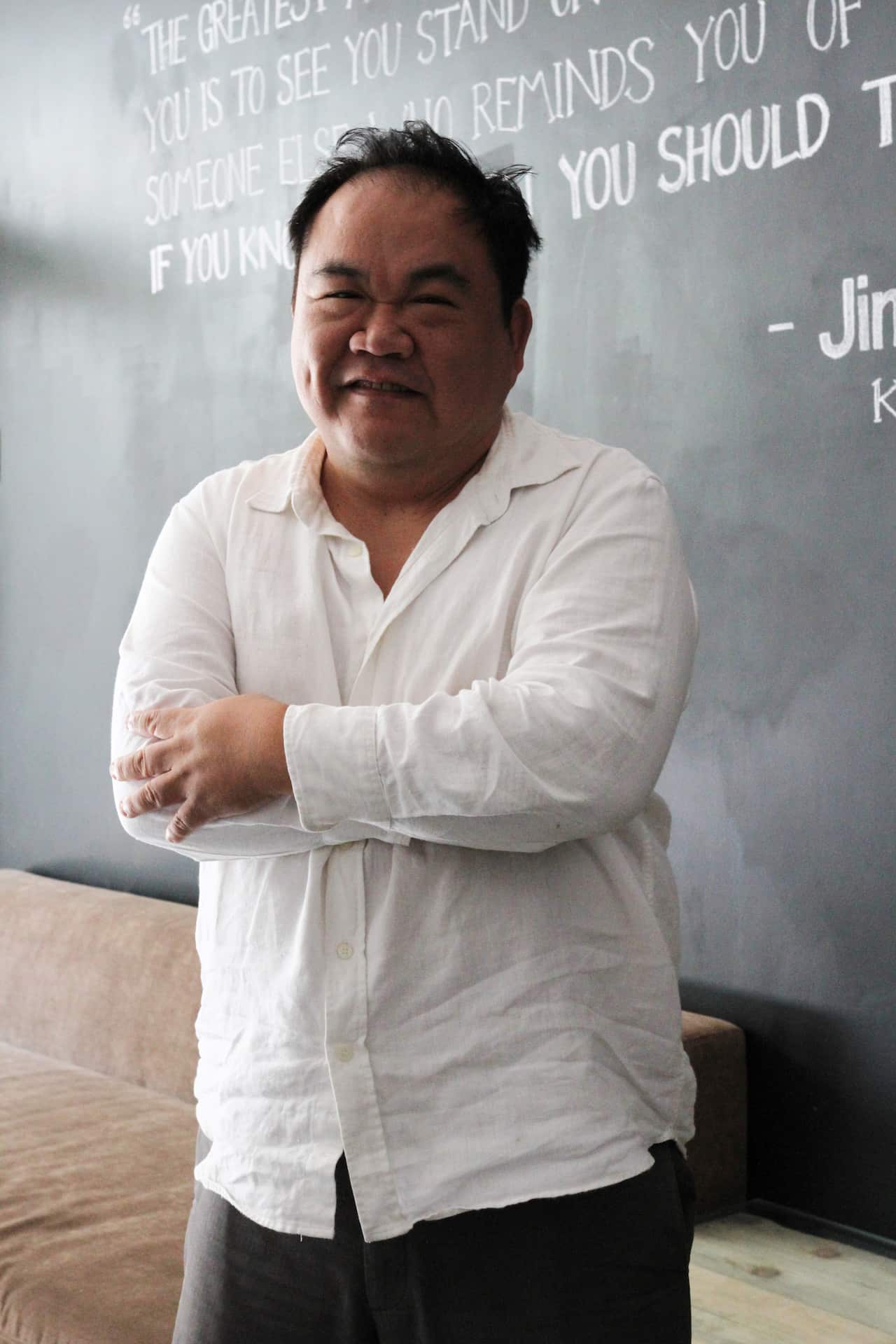
But for founder Jimmy Pham, KOTO is a lot more than a training centre for Vietnamese kids living in poverty or from at-risk backgrounds.
“The idea of KOTO wasn't, 'oh let's get them a job'. It was, 'let's create a family',” he explained, over a glass of Vietnamese iced coffee.
"And from the word go, it was always about all value-adding skills that I can give them so that they're well prepared on their way out.”
'Bui doi' street kids: The dust of life
Jimmy Pham, 42, was born in Ho Chi Minh City in 1972 to a Vietnamese mother and a Korean father (“It got pretty complicated during the war”). His family left Vietnam when he was two, and eventually settled in Sydney, Australia in 1980.
But it wasn’t until 1996, when a 23-year old Mr Pham returned to Vietnam for a work trip, that he came face to face with the effects of poverty.
As he walked through the streets of Ho Chi Minh City, he stumbled across four street kids. A common sight, as it was only ten years ago, in 1986, that the government launched political and economic reforms (Doi Moi) to create a “socialist-oriented market economy”.
“In those days, in 1996, Vietnam was just open. And poverty was very very obvious and even in District One, the centre of Ho Chi Minh.”
Known as the dust of life or ‘bui doi’, many street kids had moved to the city from the countryside to earn a living for their family. Some bui doi were also fathered by American soldiers, ostracised from society and abandoned by their Vietnamese mothers.
“So from the Mekong they go and sell coconuts, postcards, T-shirts, all that kind of stuff. And they usually get raped by police,” said Mr Pham. “They sleep on riverbanks, they put their basket of coconuts on a tree, and they shower next to an open sewer which they manage twice a week – which they have to pay for.
“They walk about 30 kilometres a day trying the sell coconuts…There's no welfare system in Vietnam in those days so they have to look after their family.”
By the end of his trip, he had about 60 kids under his care. Almost naively, he decided to do something significant with the unique situation he had stumbled into.
“Over a bowl of pho and a Coca Cola, I made an important decision to come back and make a difference.”

When the US president came for lunch
In 1999, the KOTO Project was launched as a humble sandwich shop near the Temple of Literature in Hanoi. The scheme, which had nine trainees, was completely funded by a wide-eyed Mr Pham, who was working for an Australian-based travel company at the time.
Despite his youthful idealism, he admitted the early days were an uphill battle, with the Vietnamese government closing down the social enterprise several times.
But little did Mr Pham know that one of the most important men in the world, US President Bill Clinton, would be paying him a visit several months later.
As luck would have it, Mr Clinton was making an historic four-day visit to Vietnam in November 2000 to become the first US head of state to visit the country since the war ended.
“Our restaurant is right opposite a very famous tourist spot called the Temple of Literature. And everyone, the whole area came out to see him that day.”
“And then I saw all these black cars start parking in front of KOTO. So I ran over, and said, 'can I help you?' and they said, 'is this KOTO?' and I said, 'yes it is.' And they said, ‘well, he's coming for lunch.'”
Mr Clinton’s entourage closed off the streets, while taste testers tried all the food and drinks on offer. To this day, Mr Pham has no idea why the former US President chose to eat at his “really tiny sandwich shop”.
“But did he make a donation? No,” he said, laughing.
The whirlwind presidential visit landed KOTO in the papers next day. But it also meant increased scrutiny from the Vietnamese government.
“It was quite an experience. So after that we were investigated for about four years because they thought I was the CIA and so it was kind of tough in the beginning.
“We're just a sandwich shop. Yes, we were in a lot of papers the next day but it wasn't the most important thing. I think KOTO built on that, we came out at the right time. We're very focused on our cause. It's a good project, and it still is.”
Image Kids with heart
Students all throughout Vietnam hear about the life-changing scholarship via pagodas, Buddhist temples, TV, organisations, and word of mouth. A team of KOTO recruiters also scour the country to find youths who are most in need.
“The staff have an incredible task of basically going through the mountainous areas, the highlands, everywhere, They do home visits. They do a lot of travelling to go and search for the most needy kids to go into the program.”
“The program is about showing someone how to fish and then empower them enough to open up their own fishing shop, so they can show others how to fish as well.”
A 12-person committee will take up to three months to make the final decision, and even then, students will go through a one-month orientation before they are formerly inducted into the program. To be part of the KOTO family, said Mr Pham, the youths also need to have compassion, a sense of community, as well as the drive to improve their circumstances.
“We're looking for those kids who have a bit of a heart as well. Because the program is not just about investing in you, and two years, and $200 million dong later, you just going to go out and look after yourself only."
http://media.sbs.com.au/news_dataviz/Charts/2014/December/VietnamPoverty/chart_bar_RegionsPoverty.html
Moving out of poverty
The population of Vietnam currently stands at 90.18 million. According to The World Bank, the country has gone from being one of the poorest in the world, with a per capita income below $US100, to a lower middle income country within 25 years, with a per capita income of $US1960 by 2013.
As a result, Vietnam has drastically reduced poverty over the past few decades. The percentage of people living in poverty had decreased from nearly 60 per cent in the 1990s to less than ten per cent today.
“The kids now are very different to the kids when I first started,” Mr Pham said.
While widespread poverty is less of a concern, greater economic wealth has nonetheless produced unprecedented side effects. Today, he said, KOTO trainees generally consist of youths who have been trafficked, imprisoned, or physically and sexually abused.
“The kids who had to make a living because of their family situation, you have to remember that was 18 years ago, " he said. "Now the social economic scene has somewhat changed and developed, so you have kids where their whole entire family is in prison for drug pushing.”
http://media.sbs.com.au/news_dataviz/Charts/2014DecVietnam/Chart_bar_GDPperPerson.html
Keys to sustainability
“What makes this program so unique is that: you know that old Chinese proverb? Give someone a fish today and they'll eat today. Show them how to fish and he'll eat his whole life long.
“The program is about showing someone how to fish and then empower them enough to open up their own fishing shop, so they can show others how to fish as well.”
But rather than relying solely on charity and comunity fundraising, Mr Pham is a huge advocate of 'social impact investment' - a business model whereby companies invest in efforts that provide both a return on investment as well as social change. (Australian impact investment company Small Giants works with KOTO to operate Pots’n’Pans, a high-end restaurant in Hanoi run by KOTO graduates).
With the future firmly in sight, Mr Pham intends to replicate KOTO in other Southeast Asian countries like Thailand, Cambodia and Myanmar; start KOTO boutique hotels; and open a fee-paying school that offers vocational training in Vietnam so more youths can get access to higher education.
But eventually, he would like the KOTO graduates to run the organisation without him.
“Hopefully one day, the keys to sustainability is the kids themselves, who were once the streets kids, are now running this organisation as well.
“They can be the future CEO, managers, trainers, and all that kinds of stuff. And they know what it's like to be the program and what they got from the program as well.
“That's far more effective and far more powerful than I could ever give.”
Data compiled by Jason Thomas