
An extraordinary recruitment drive is underway in Malawi. On a private Facebook network for Malawian doctors, Dr Owen Chikhwaza has received an invitation to sign up for the battle to contain the deadly disease.
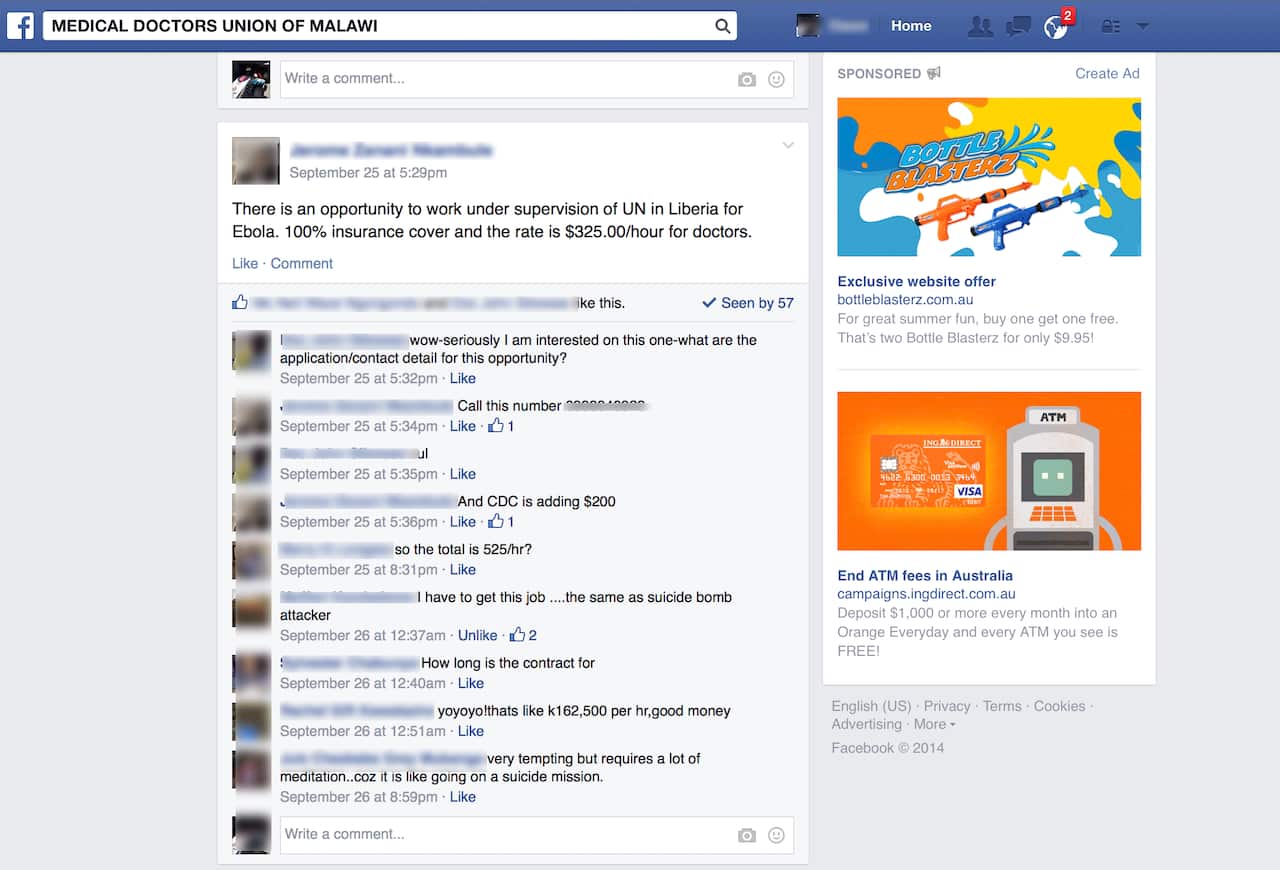
EXCLUSIVE: $US500 an hour? That’s what doctors in East Africa are being offered in a bid to recruit them to ebola hotspots in Liberia.
“The WHO [World Health Organisation] are offering $US325 [$A372] an hour, and the Centre for Disease Control Malawi office they are offering $US200. In total that is $US525 an hour.”
Kruger Kaswaswa from the Malawi College of Medicine has confirmed that candidates are being sought, and there’s been a strong response. However he says selection criteria will be tough, plus logistical details such as transport, accommodation and medical support are yet to be finalised.
That hasn’t dissuaded Dr Chikhwaza from putting his name forward.
“I’ll go. The biggest motivation will be… well, obviously you wouldn’t buy your life with $500 an hour - my life is worth more than that. It’s like a soldier going to war - you’re fighting for the bigger picture.”
Dr Mercy Mwangangi, from Kenya, arrived in Australia at the same time as Dr Chikhwaza. Both are here in Australia to study on AusAid scholarships. They don’t know whether the terms of the scholarship would allow them to work in Liberia and return in time for the next scholastic year.
Dr Mwangangi says the job offer does have some appeal.“You do get an experience working in epidemiology and both Owen and I are doing our masters in health economics / public health and having that in our resume, that we’ve actually worked in and controlled an epidemic such as Ebola would be very good in our resumes, and this is a line of work that we intend to carry on with in the future, so it does look good on the resume.”
But she says there are many aspects about which she’s hesitant, such as what medical evacuation protocols would apply should she contract the infection, and what support she’d received in the field.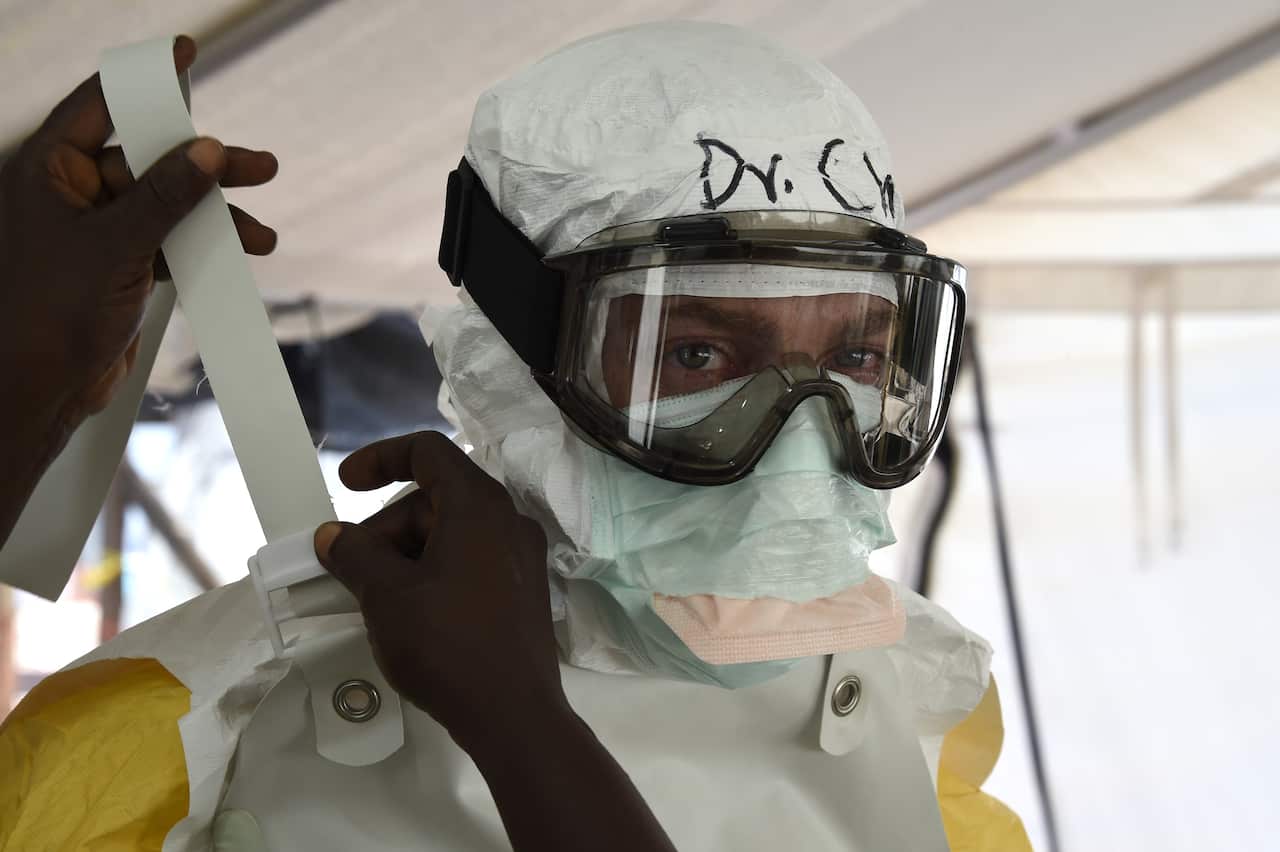 “I think beyond the $500 that they’re offering, I would need a bit more of an incentive to go - maybe some form of insurance, maybe some more information on how they’ll be trying to prevent infection, do I get some training before I go? Is it training in Malawi before I get to Liberia? Or is it training in Liberia?”
WHO says Ebola cases in Liberia are slowing down (Getty)
The Ebola epidemic has infected more than 8,000 people, and if it continues unchecked it’s projected to top a million within months. The demand for not just equipment, but skills, is enormous. For doctors devoted to the wellbeing of others, it presents a complex moral challenge.
“It’s a delicate situation. You do have to consider your family” Dr Mwangangi says.
“If you had children you’d have to think of that … and the transmission rates, the risk of getting Ebola as a medical officer there are high.”
Given the scarcity of doctors in many African nations it might seem logical to draw skills from elsewhere for what has become a global fight. But Dr Mwangangi thinks few western medicos have deep experience in infectious diseases - a field that African doctors confront every day. She acknowledges that her five years of remote medical experience in Kenya would be an asset in Liberia.
“It’s pretty much the same situation, you’re dealing with a rural community who more or less have a similar culture to Kenya and therefore I think we would have probably a better understanding of trying to help people and deal with cultural barriers and issues which are pertinent when it comes to Ebola.”
But even after weighing up all these factors, ultimately Dr Mercy Mwangangi has decided not to go.
“My mother was not excited about it - she categorically told me not to go, because I lost my brother in December and she feels that going there would be a suicide mission ... so she actually offered to pay the $500 an hour” she laughs.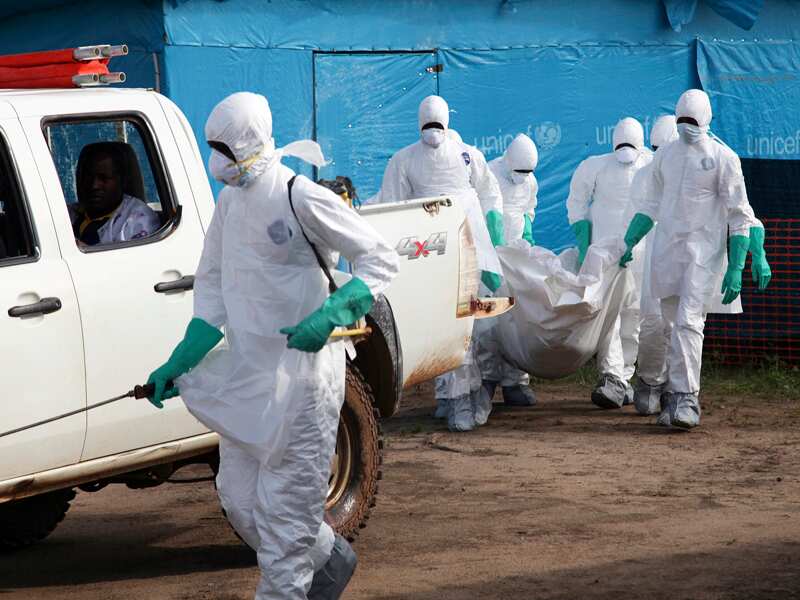 Unlike his colleague, Dr Owen Chikhwaza has chosen to spare his family the knowledge, and subsequent concern.
Alarm has soared in west Africa over the deadliest Ebola virus outbreak yet, with 3 more victims. (AAP)
“It’s tricky, we [Mercy and I] just agree to disagree because like me, I’m the only kid in the family and definitely it’s very tricky and actually no one in my family knows, I haven’t even told them, I wouldn’t even start to tell them because I know their answer, I know their reactions. The feeling by everybody else is you go there, you’re going to die.”
He’s philosophical about the risk - arguing everyone dies someday, and if he lost his life it would not be a waste because he would’ve helped save others.
“Despite what everyone else thinks about it, despite all the risks, I’ll still give it a go. At the end of the day if it was meant to happen it’ll happen… I still think if something happens while you’re doing something like saving people’s lives I would forgive myself for that.”
Share


