Over the next three months, chemical technicians aboard the MV Cape Ray will be using two specially designed reactors to break the chemicals down in a process known as hydrolysis
It involves mixing them with household chemicals such as caustic soda and then heating the mixture to 100 degrees.
The toxic waste produced by that process will then be shipped back to countries in Northern Europe from disposal.
Some of the waste will be stored in underground facilities.
News that makes sense
Your trusted source for staying up-to-date with the world around you. Get free daily news updates and analysis, straight to your inbox.
Medicinal Chemist Martin Boland from Charles Darwin University in the Northern Territory says the industrial waste that gets produced by the reactors is relatively harmless.
"You wouldn't want to go swimming in it and it is quite nasty but it is on the same level as disposing of strong motor oils or other industrial chemicals which modern society disposes of every day."
"Some places the water will be boiled off, the remaining material will be buried in landfill which is specially designed to maintain integrity even though there are toxic chemicals inside," he said.
"In other places it will just simply be incinerated at around 8,000 degrees Celsius and that material will be carbon dioxide and water by the time it's finished."
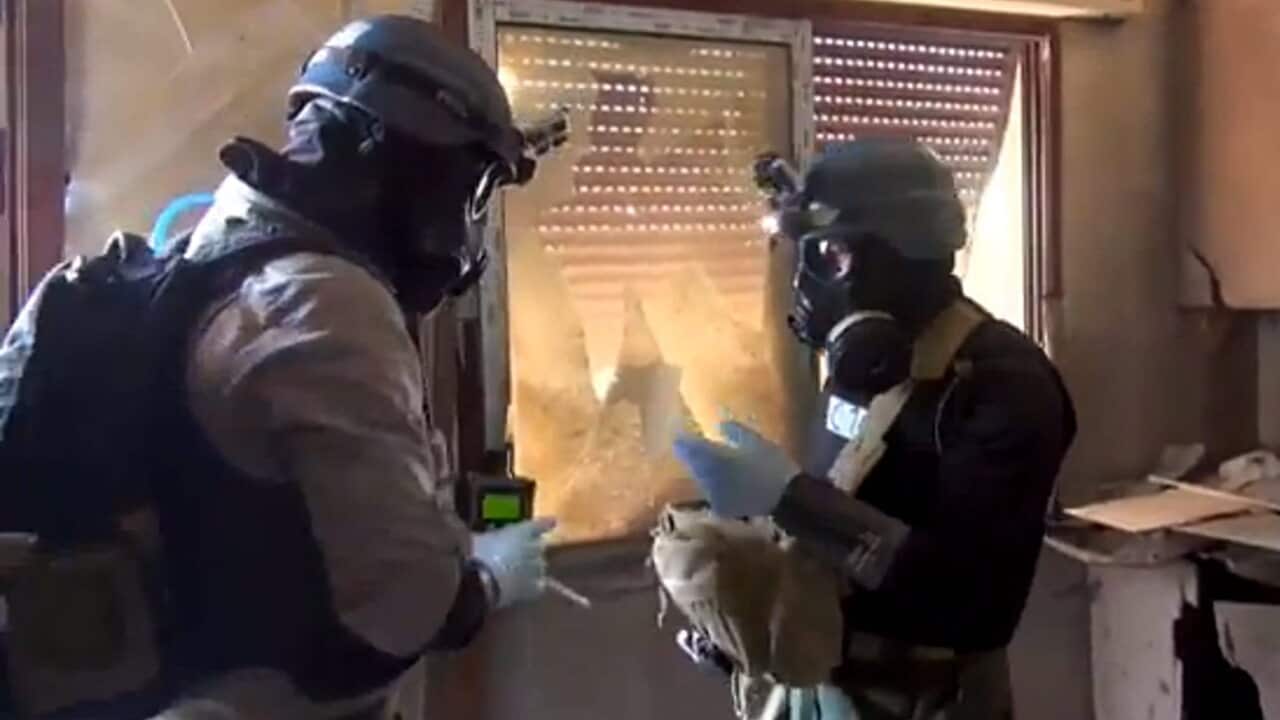
The removal of Syria's chemical weapons stock was prompted by a sarin attack last August.
Hundreds of people died in the Ghouta area outside of Damascus. The Syrian government denied it was responsible for the attack.
Under threat of United States airstrikes, Syria agreed to hand over its chemical weapons in a deal backed by both Russia and the US.
The joint mission involved the UN, at least 10 different countries and staff from the world's chemical weapons monitor, the Organisation for the Prohibition of Chemical Weapons (OPCW).







