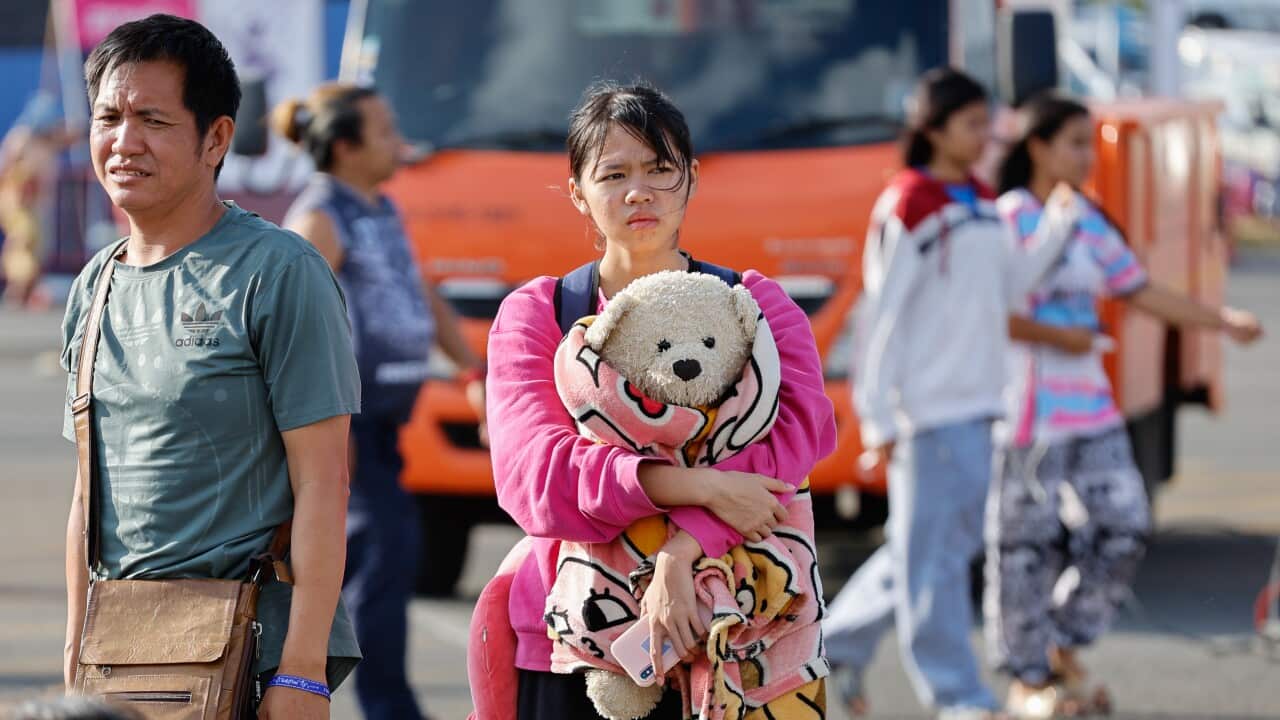
Fighting between Cambodia and Thailand escalated along their contested border on Tuesday, as the Southeast Asian neighbours both said they would not back down in defending their sovereignty.
With each side blaming the other for starting Monday's renewed clashes, it was unclear how or if a fragile ceasefire brokered by US President Donald Trump in July could be salvaged.
Late on Tuesday, a top adviser to Cambodia's prime minister Hun Manet told the Reuters news agency his country was "ready to talk at any time", but Thailand's foreign minister in an interview said he saw no potential for negotiations, adding the situation was not conducive to third-party mediation.
Cambodia's influential former leader Hun Sen said his country waited 24 hours to honour the ceasefire and allow for evacuations before launching counterattacks overnight against Thai forces.
"Cambodia needs peace, but Cambodia is compelled to counterattack to defend our territory," he said in a Facebook post.
News that makes sense
Your trusted source for staying up-to-date with the world around you. Get free daily news updates and analysis, straight to your inbox.
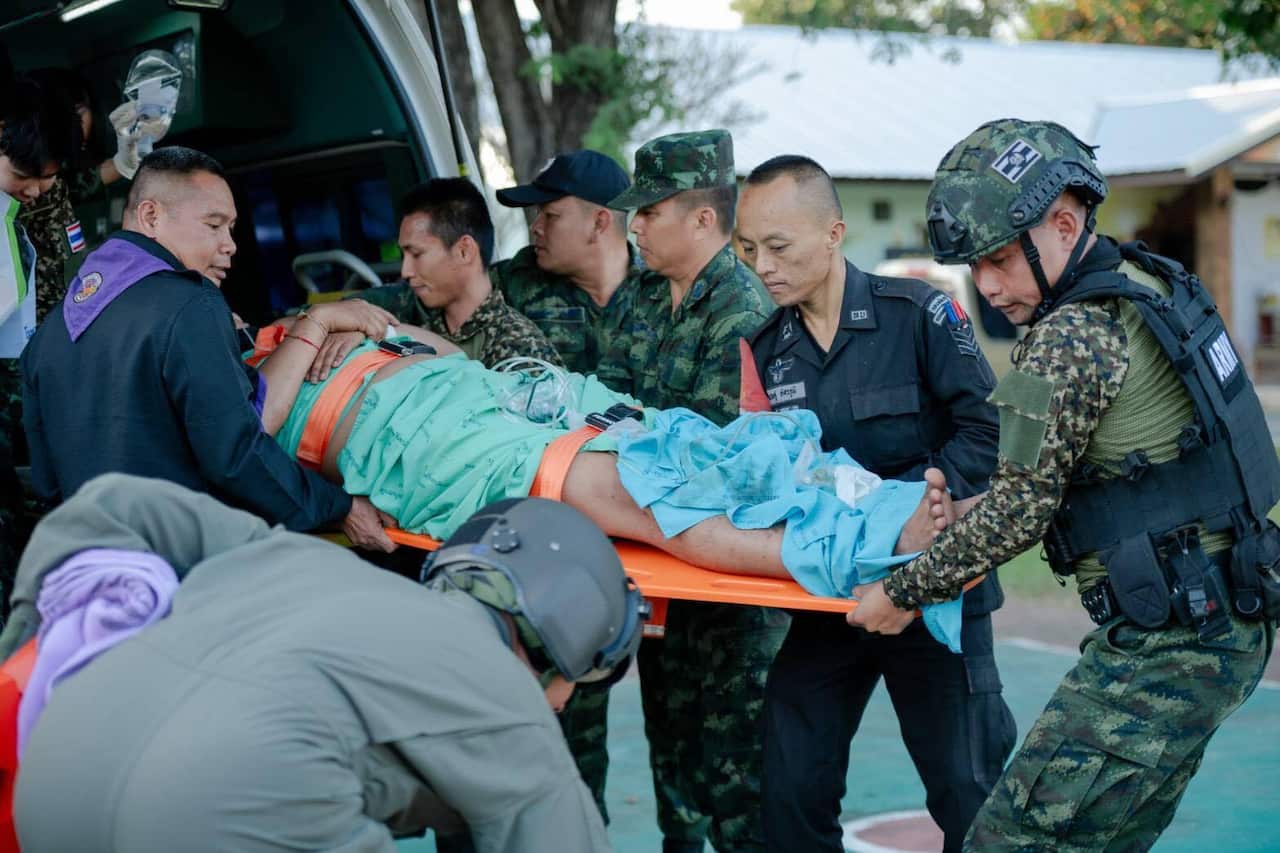
In Thailand, military officials said there were clashes in five border provinces, and a Navy-led operation in its Trat Province to expel Cambodian soldiers was expected to end soon. They said Cambodia was using artillery, rocket launchers, and bomb-dropping drones to attack Thai forces.
"Thailand is determined to defend its sovereignty and territorial integrity and therefore military measures must be taken as necessary," Defence Ministry spokesperson Rear Admiral Surasant Kongsiri told a media briefing.
Cambodia's defence ministry accused Thailand of "brutal and unlawful actions", saying nine civilians were killed since Monday and 20 seriously injured. Thai officials said four soldiers had died in the fighting and 29 people had been injured.
Cambodian Prime Minister Hun Manet, Hun Sen's son, said late on Monday that Thailand "must not use military force to attack civilian villages under the pretext of reclaiming its sovereignty".
Both countries said they had evacuated hundreds of thousands of people from border areas.
What led up to the fighting?
The renewed fighting is the most serious since a five-day exchange of rockets and heavy artillery in July that marked their worst fighting in recent history. At least 48 people were killed and 300,000 displaced before Trump intervened to bring about a truce.
It is not immediately clear what sparked the latest unrest, but tensions have simmered since a Thai soldier was wounded by a landmine on 10 November, prompting Thailand to suspend de-escalation measures agreed in an enhanced ceasefire deal a few weeks earlier in Malaysia in Trump's presence.
Thailand says the landmine was among several that were newly laid by Cambodia and that it would not resume the de-escalation measures until Cambodia apologises. Cambodia has repeatedly rejected the allegations.
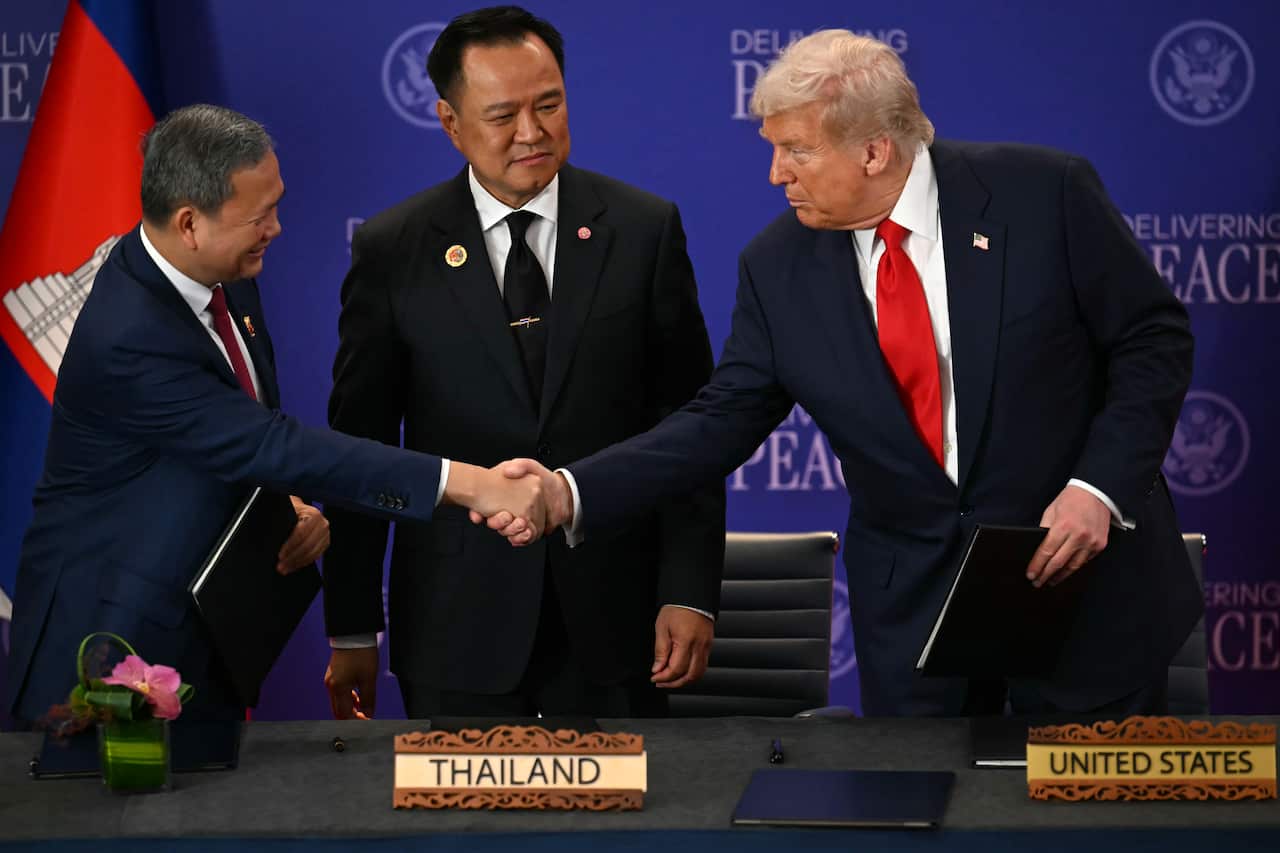
Trump, who Cambodia nominated for the Nobel Peace Prize, had made calls to leaders of both countries last month, urging them to stick to the ceasefire.
How do the two countries compare militarily?
Thailand has a large and well-funded military that dwarfs that of Cambodia, with triple the active armed forces personnel and a 2024 defence budget allocation that was four times bigger than its neighbour's.
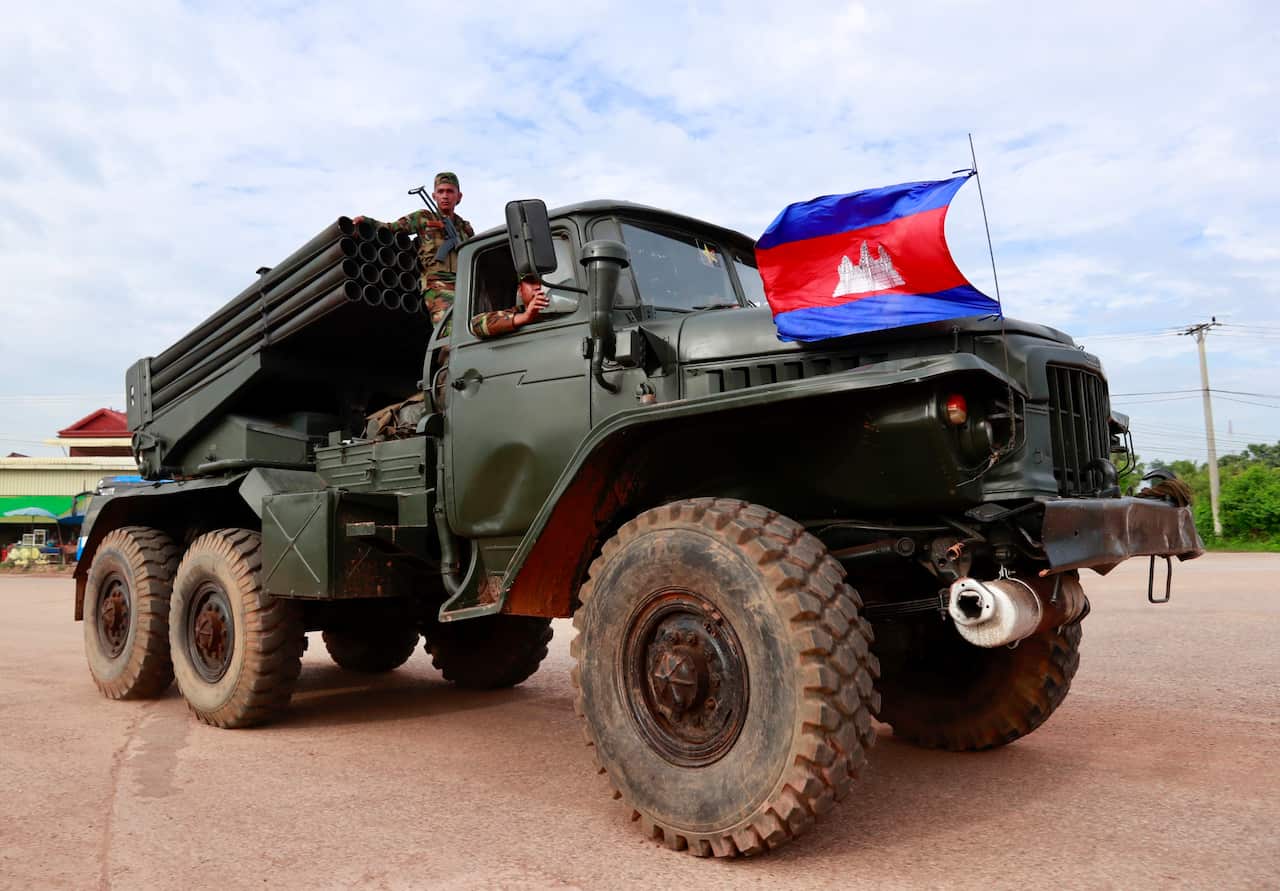
Cambodia's army has 75,000 soldiers, more than 200 battle tanks and around 480 pieces of artillery, compared to the Thai army's 245,000 personnel, around 400 tanks, more than 1,200 armoured personnel carriers and 2,600 artillery weapons.
Thailand's air force has nearly 40 fighter jets and dozens of helicopters, while Cambodia has 16 multi-role helicopters but no fighter aircraft.
Where does the dispute originate?
Thailand and Cambodia have for more than a century contested sovereignty at various undemarcated points along their 817km land border, which was first mapped by France in 1907 when Cambodia was its colony.
That map, which Thailand later contested, was based on an agreement that the border be demarcated along the natural watershed line between the two countries.
In 2000, they agreed to establish a commission to peacefully address overlapping claims, but little progress has been made.
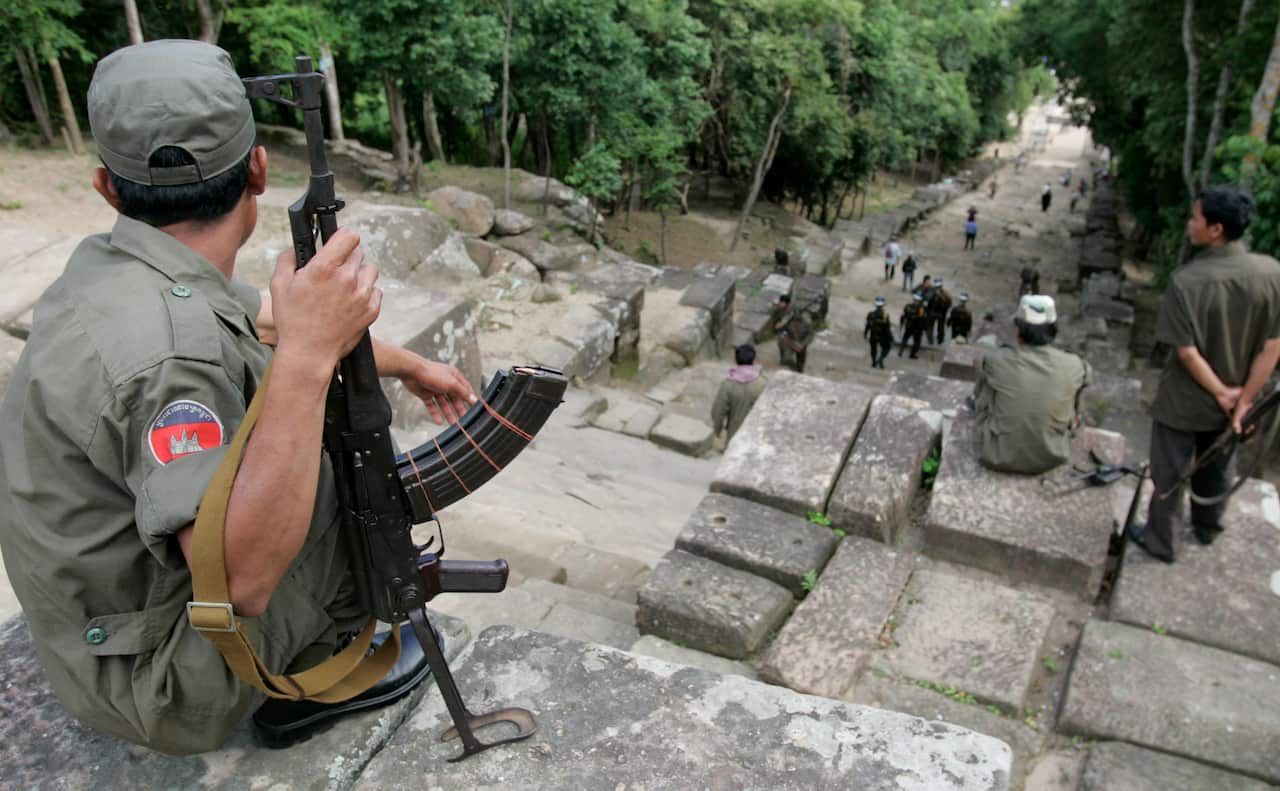
Claims over ownership of historical sites have raised nationalist tension, notably in 2003 when rioters torched the Thai embassy and Thai businesses in Phnom Penh over an alleged remark by a Thai celebrity questioning jurisdiction over Cambodia's World Heritage-listed Angkor Wat temple.
The 11th-century Hindu temple Preah Vihear, or Khao Phra Viharn in Thailand, has been central to the dispute, with both countries claiming historical ownership.
The International Court of Justice awarded the temple to Cambodia in 1962, but Thailand continued to lay claim to the surrounding land. Tension escalated in 2008 after Cambodia tried to list Preah Vihear as a UNESCO World Heritage site, leading to skirmishes and at least a dozen deaths, including during a week-long artillery exchange in 2011.
What's behind this year's troubles?
Nationalist sentiments were stirred in Thailand in 2024 when conservatives questioned a government plan to negotiate with Cambodia to jointly explore offshore energy resources, warning that it could risk Thailand losing island territory.
In May, a Cambodian soldier was killed by Thai forces during a brief skirmish, prompting both countries to increase troops at the border. Around the same time, Cambodia referred disputes over temples in four areas to the ICJ.
For the latest from SBS News, download our app and subscribe to our newsletter.







