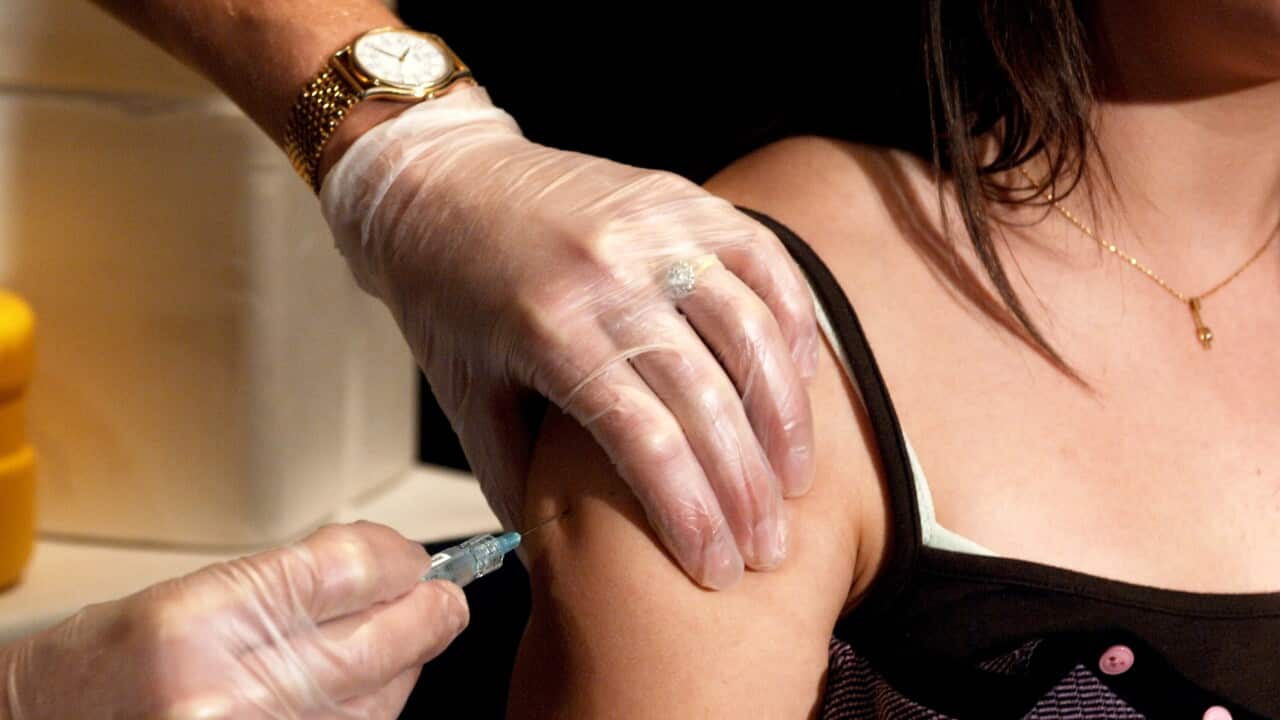
More than a quarter of all 15-year-old girls in Australia had not been fully vaccinated against the human papillomavirus (HPV) in 2013. That's close to 40,000 girls nationwide, or 28 per cent.
HPV is the leading cause of cervical and many other kinds of cancer. It can lead to complications like genital warts and other health issues.
Yet, rates of 15-year-old girls who had received the three-dose vaccination were lower than 60 per cent in parts of South Australia, New South Wales and Tasmania in 2013.
The national rate increased from 70 to 72 per cent between 2012 and 2013, yet some areas of Australia have persistently-low rates of vaccinations.
Full-vaccination rates in some areas dropped between 2013 and 2012.
Tasmania had the nation’s lowest rate of 15-year-old girls who were fully immunisation from HPV, although the rate in Tasmania increased five per cent between 2012 and 2013.
Only New South Wales, the ACT and the Northern Territory had a lower rate in 2013 than 2012.
Some of the lowest rates of fully-vaccinated girls in 2013 were in the statistical local areas of Richmond-Tweed (North Coast NSW) and Sydney-Outer West & Blue Mountains NSW.
The data from the NHPA did not reflect the increased uptake of the NSW School Vaccination Program, which had led to improvements in HPV vaccination rates, NSW Health Communicable Diseases Branch director, Dr Vicky Sheppeard said.
She said there was a significant time-lag between improvements in NSW and the timeframe of the report.
Dr Sheppeard said the difference between the Blue Mountains and North Coast areas and the rest of NSW could be due to choice.
"[Those areas have] marginally lower coverage than average, due to slightly higher numbers of vaccine refusers in those areas," Dr Sheppeard said.
There were many reasons girls were not always fully vaccinated from HPV, Royal Adelaide Hospital’s Department of Gynaecological Oncology Director, Professor Martin Oehler said.
“One reason is that HPV infections are perceived as a ‘sexually transmitted disease’ and therefore some parents - also depending on the cultural and ethnic background - do not see why their daughters should get vaccinated as their daughter does not have sex, only will have one partner, etc.,” Prof Oehler said.
The most common time to contract the virus is shortly after becoming sexually active, the World Health Organisation (WHO) says.
Australian Cervical Cancer Foundation (ACCF) chief executive Joe Tooma said another reason for girls not becoming fully vaccinated was apathy.
"Most of Australia has access to the best healthcare in the world," Mr Tooma said.
However, many Australians did not realise how potentially dangerous HPV could be, he said.
"It's a lack of people talking about it. We talk about breast cancer but we don't talk about cervical cancer."
Some websites draw attention to perceived risks of having the HPV vaccine.
Prof Oehler said the HPV vaccine was extremely safe.
“There is [no] danger of getting vaccinated,” Prof Oehler said.
However, he said the dangers of not getting vaccinated at a young age (before becoming sexually active) include potential problems like genital warts, cervical dysplasia (abnormal growth on the cervix surface) and potentially, cervical cancer.
Mr Tooma said the vaccine would protect against two strains of HPV that cause 70-80 per cent of cervical cancer, and another two that were responsible for 90 per cent of genital warts.
The WHO said primary prevention begins with HPV vaccinations of girls aged between nine and 13 years of age. The US-based Centres for Disease Control and Prevention said the vaccinations were recommended for girls aged 11 and 12.
It was important to get the vaccine before becoming sexually active, Mr Tooma said.
"[The vaccine] only works if you haven't been exposed to the virus," he said.
He said since the vaccine cannot protect against all kinds of cervical cancer, women should have regular pap tests.
A pap test, or pap smear, can detect abnormal changes in the cervix or womb, which can often mean cancer is diagnosed and can be treated before it becomes terminal.
The WHO said HPV vaccinations could not replace pap tests.
More information about HPV and getting vaccinated is available at the Immunise Australia Program website.
Share


