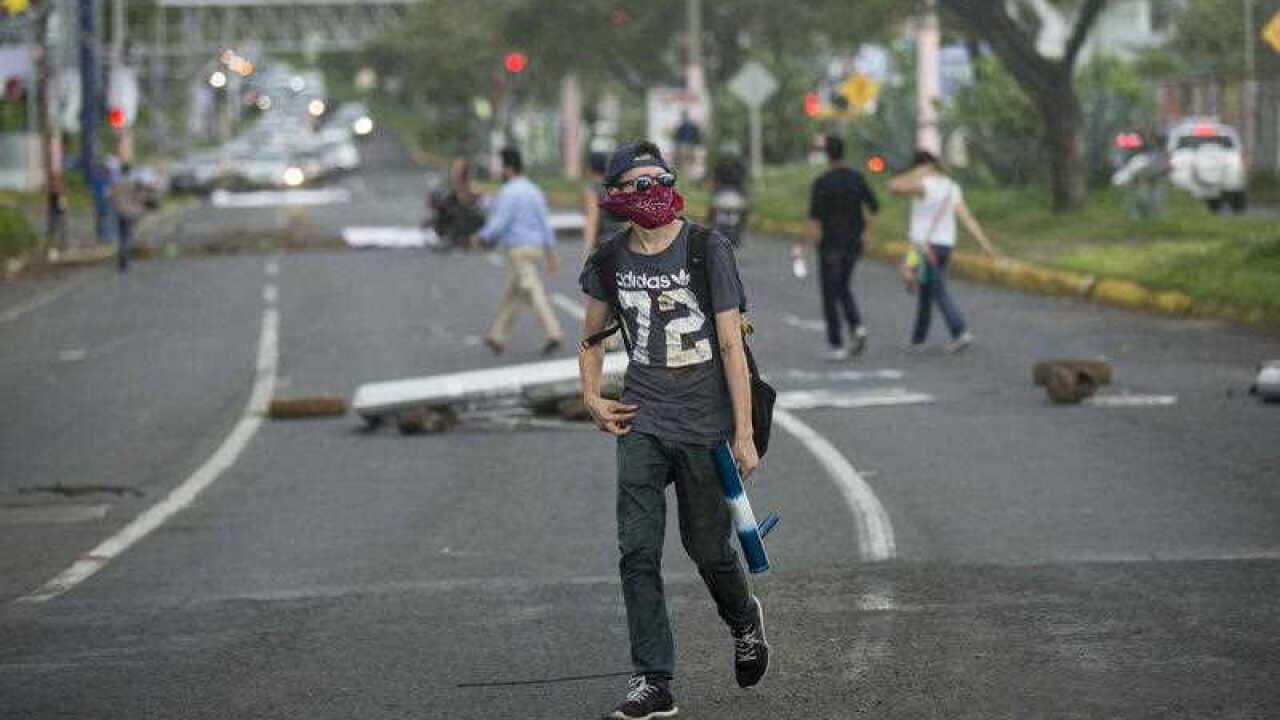
At least 121 people have been killed in a wave of protests since April 18 against President Daniel Ortega's government, Nicaragua's main human rights group said Tuesday, calling it a "human tragedy."
The Nicaraguan Center for Human Rights (CENIDH) said another 1,300 people have been wounded in the protests, which have met with a violent crackdown from the government.
"This is now a massacre, a human tragedy where the goal is to exterminate all those young people who think differently than or are critical of the government," the group's executive secretary, Marlin Sierra, told AFP.
"It amounts to state terrorism."
The latest toll includes a young boy killed by gunfire during clashes Tuesday in the resort city of Granada between anti-government protesters and riot police, the group said.
News that makes sense
Your trusted source for staying up-to-date with the world around you. Get free daily news updates and analysis, straight to your inbox.
A parish priest, Wilmer Perez, earlier told the 100% news channel that the boy was killed in a confrontation between demonstrators and government supporters trying to clear a barricade in the city, 45 kilometers (28 miles) south of the capital Managua.
Ten people were also killed in running battles over the weekend in the flashpoint city of Masaya, near Managua, said the CENIDH.
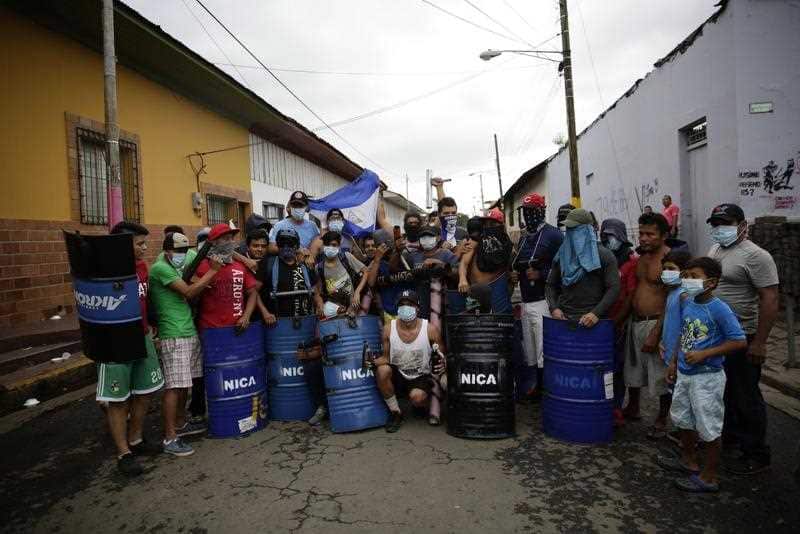
Masaya residents armed with homemade mortars and slingshots faced off in clashes with what they said were riot police and vigilante groups loyal to Ortega, who has dominated the Central American country's politics for four decades.
Separately on Tuesday, the Organization of American States, which was holding its general assembly in Washington, issued a condemnation of the violence and appealed to the Nicaraguan government and other parties to "demonstrate commitment and engage constructively in peaceful negotiation."
On edge
The city braced for a new night of clashes Tuesday, after several nights of attacks that residents say were led by riot police.
"Yesterday we buried one person, the day before we buried another. One was a 15-year-old boy. He begged for his life. He told the policewoman, 'Don't kill me, don't kill me.' But bam, bam, she shot him," said Ramona Garcia, 83.
"We're sick and tired of it. We want that son of a bitch Ortega to go. The people want him to go, all Nicaragua wants him to go," she told AFP, speaking beside one of the myriad barricades residents have erected in the streets.
Built with cobblestones, furniture, sheet metal and whatever else is at hand, the barricades are meant to keep out pro-Ortega gangs, whom residents accuse of pillaging the city of 100,000 people.
The government blames criminals for the pillaging, and says it sent in riot police at the request of small-business owners.
Economic pressure
In Managua, there is a virtual curfew in place after dark, with motorcycle gangs terrorizing those who venture out, according to the CENIDH.
Barricades set up on key highways have meanwhile ground transportation to a halt. Some parts of the country are beginning to run out of fuel and other essentials.
The country's business elite, long close to Ortega, have broken with him over the crackdown.
The Catholic Church, also once close to Ortega, initially tried to mediate the conflict. But it called off the talks after attacks on a march led by victims' mothers last Wednesday left 16 people dead.
The crackdown on what started as relatively small protests against pension cuts has fueled demands for the ouster of Ortega and Murillo.
Ortega blames the violence on right-wing opposition groups he says are conspiring to "terrorize" the country.
The former guerrilla leader first came to power in 1979, at the head of a communist junta installed by the Sandinista rebels after they ousted dictator Anastasio Somoza.
He lost power at the ballot box in 1990, then led the opposition until winning a 2006 election that again returned him to the presidency.
He is now serving his third consecutive term, due to end in 2022.







