
Massive flooding from a South Korean-constructed hydroelectric dam in Laos has left several people dead and hundreds missing. Rescue efforts were underway as top government officials rushed to the site and public appeals were launched for aid.
The official Lao news agency KPL said part of the Xepian-Xe Nam Noy hydropower dam in southeastern Attapeu province collapsed Monday evening, releasing large amounts of water that swept away houses, flooded villages and made more than 6600 people homeless.
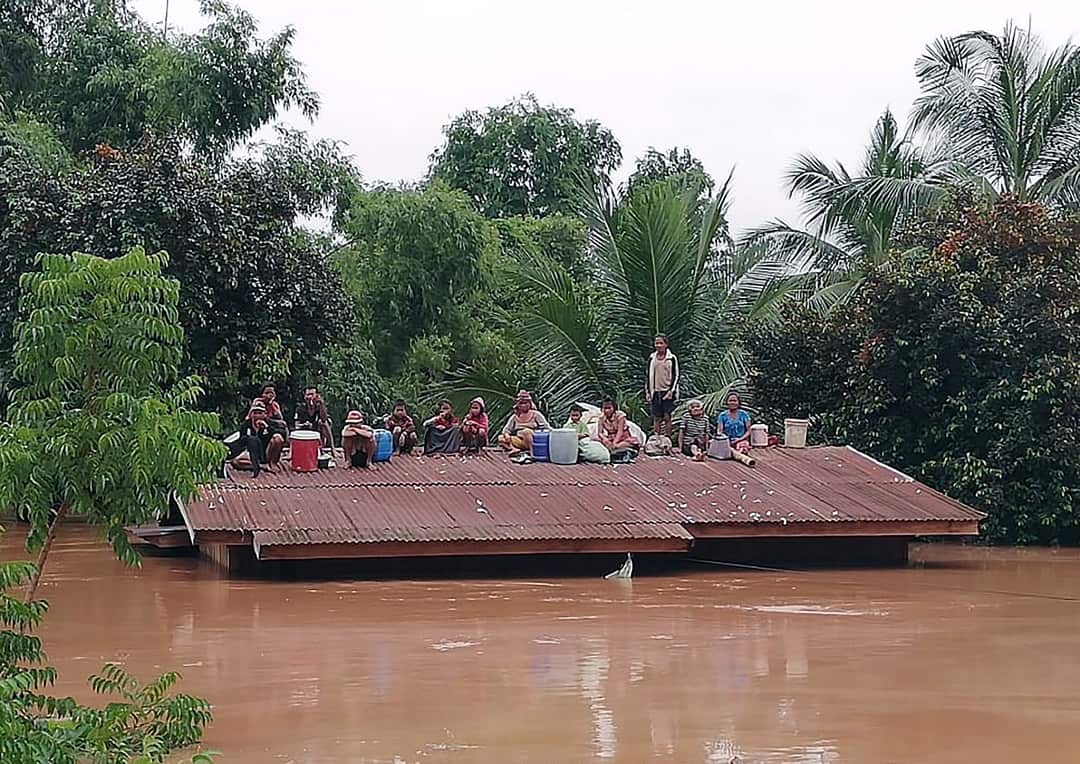
The website of the state-run Vientiane Times newspaper said two people were confirmed dead as of Tuesday afternoon and the government had declared the area an emergency disaster zone. It said continued rain and strong winds predicted for the next few days could make the situation worse.
KPL said the disaster "left hundreds of people missing," without providing details.
Many areas of Laos have recently been hit by floods from heavy seasonal rains.
The dam was built by a joint venture led by two South Korean companies with Thai and Lao partners, and was still under construction.
SK Engineering & Construction, one of the two South Korean partners, said in a statement that "part of the upper area" of one of five auxiliary dams at the project "got swept away" Sunday night after several days of heavy rain. It said the auxiliary dam consisted mainly of earth and rock.
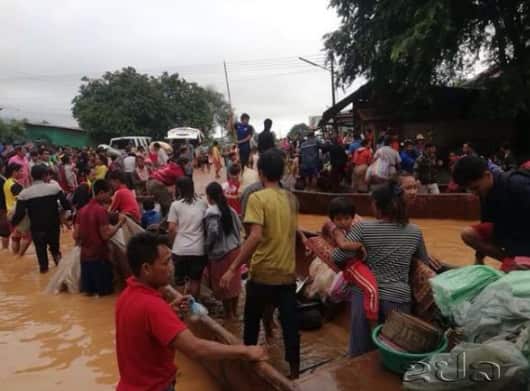
Photos and videos posted on social media showed people sitting on rooftops to escape the surging water, while others were carried to safety or rescued by boat. State media said helicopters were also being used to rescue people.
Prime Minister Thongloun Sisoulith suspended his government's planned Cabinet meeting and travelled with fellow ministers and other senior officials to Sanamxay district to monitor rescue and relief efforts, KPL and the Vientiane Times reported.
Provincial authorities issued a call for emergency aid - clothing, food, drinking water, medicine, cash and other items - from the "party, government organisations, business community, officials, police and military forces and people of all strata."
'Battery of Asia'
Dam projects in Laos, mainly providing power to neighbouring countries, have long been controversial with fears over environmental damage and the impact on local communities who are often displaced.
Maureen Harris, an expert on Laotian dams at the International Rivers NGO, said the flooding raised "major questions about dam standards and dam safety in Laos, including their appropriateness to deal with weather conditions and risks".
"Many of these people have already been relocated or suffered impacts to livelihoods due to the dam construction and are now experiencing further devastating impacts - loss of homes, property and family members," she told AFP.
Laos has been keen to turn itself into "the battery of Southeast Asia" with a series of massive hydropower projects that has sparked opposition in downstream Mekong nations like Vietnam and Cambodia, who fear it will disrupt vital ecosystems, fisheries, and their own river systems.
Communist authorities in Laos keep tight control of information and are often opaque about business deals and development projects. The media is state-controlled and the government vigorously pursues dissent or protesters.
The country has around 10 dams in operation, 10 to 20 under construction and dozens more in planning stages.
"Once they cast themselves as the battery of Asia, exporting electricity became one of the major revenue sources, so it's basically selling natural resources such as water," Toshiyuki Doi, Senior Advisor at Mekong Watch, told AFP.





