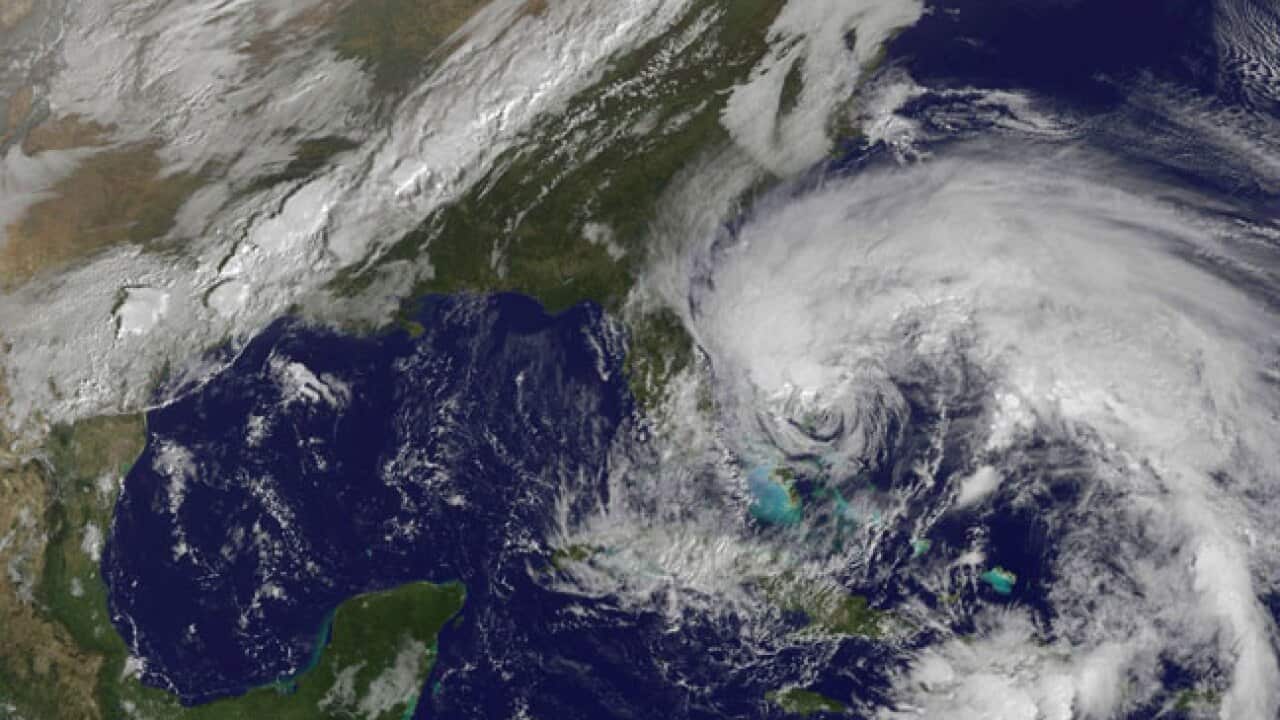
As I write this, Hurricane Sandy remains a very large, powerful hurricane. On Sunday afternoon (local time), Sandy brought winds gusting to 103km/h to coastal North Carolina. Heavy rains are already occurring from North Carolina to New Jersey with amounts recorded of 4cm so far.
But Sandy is predicted to turn left and move ashore on the Atlantic coast somewhat south of New York and north of Washington DC in a day or so. Rainfalls exceeding 15cm are likely in some areas, but a major risk is from the coastal storm surge on top of very high sea levels made higher by climate change.
A large easterly wind fetch has already piled waters up along the coast, and with high tide and the storm surge, and storm force winds extending a huge 800km plus from the center, the potential for the ocean surges to be over 3m is very real in the New York City area.
The sea surface temperatures along the Atlantic coast have been running at over 3C above normal for a region extending 800km off shore all the way from Florida to Canada. Global warming contributes 0.6C to this. With every degree C, the water holding of the atmosphere goes up 7%, and the moisture provides fuel for the tropical storm, increases its intensity, and magnifies the rainfall by double that amount compared with normal conditions.
Global climate change has contributed to the higher sea surface and ocean temperatures, and a warmer and moister atmosphere, and its effects are in the range of 5 to 10%. Natural variability and weather has provided the perhaps optimal conditions of a hurricane running into extra-tropical conditions to make for a huge intense storm, enhanced by global warming influences.
My daughter lives in a ground level apartment in Hoboken New Jersey, a few hundred meters from the Hudson River, near Manhattan, New York City, in a region where the largest storm surge is predicted. My wife happens to be visiting with her and her family at the moment and as I write this, they are evacuating. They have taken many precautions including especially removing leaves (since it is autumn) from drains and sandbagging certain areas, but risk of flooding and backed up sewage and drains is high. Better safe than sorry.
Kevin Trenberth does not work for, consult to, own shares in or receive funding from any company or organisation that would benefit from this article, and has no relevant affiliations.

Share


