
Prime Minister Bjarni Benediktsson of the conservative Independence Party called the vote last month after a junior member of the three-party centre-right coalition quit over a legal controversy involving his father.
Saturday's election is Iceland's fourth since 2008.
Opinion polls published Friday by public broadcaster RUV and the daily Morgunbladid show the Independence Party could win just 17 seats in the 63-seat parliament, the Althingi.
The rival Left-Green Movement and its potential partners - the Social Democratic Alliance and the anti-establishment Pirate Party - are set for 29 seats, short of an outright majority.
But with help from a fourth party, they could dethrone the centre-right and become Iceland's second left-leaning government since its proclamation as a republic in 1944.
News that makes sense
Your trusted source for staying up-to-date with the world around you. Get free daily news updates and analysis, straight to your inbox.
"We want to lead a government that can create a broad unity on a long term vision for the society," Left-Green leader Katrin Jakobsdottir, 41, told AFP earlier this month, adding that her campaign promises include investing in social infrastructure and making sure Iceland's economic prosperity reaches the health care and education sectors.
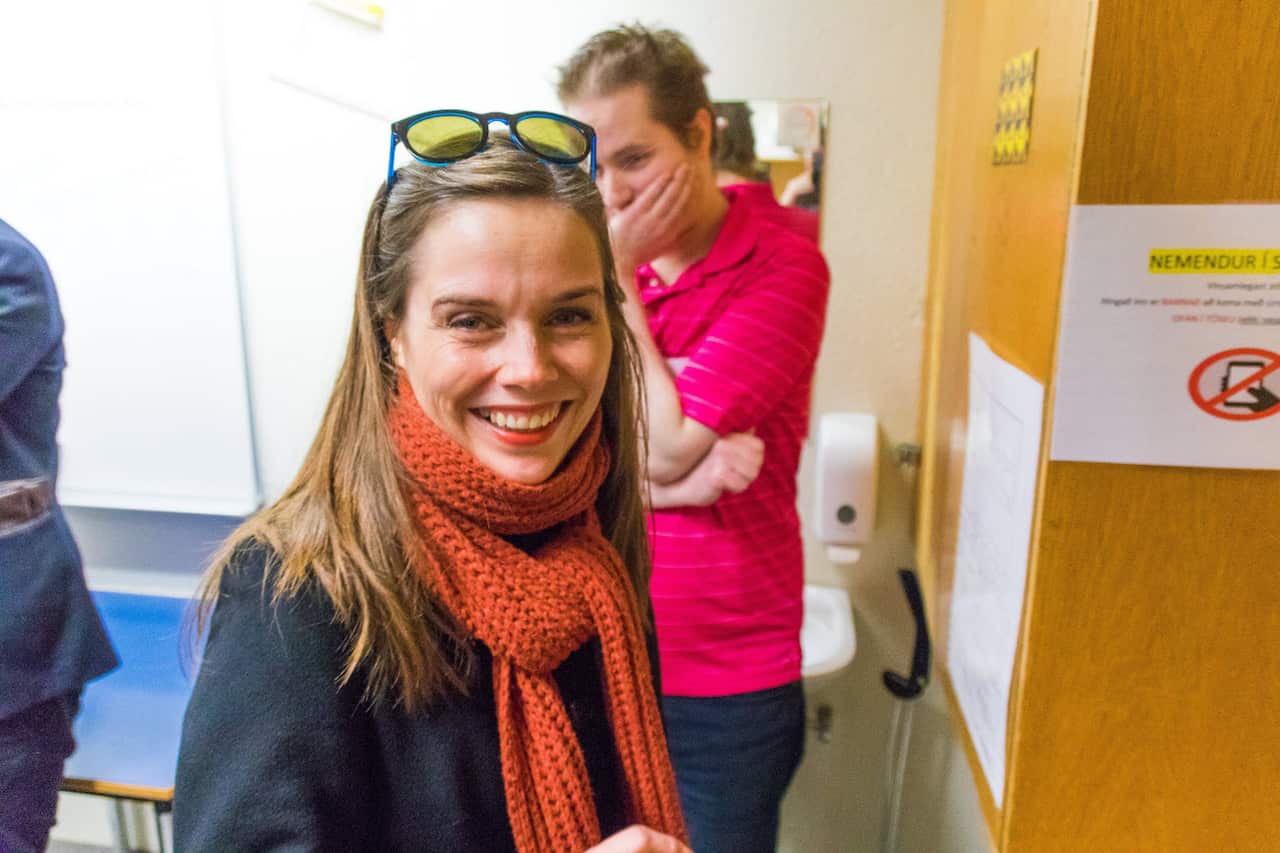
Nearly one in two Icelanders would prefer to have her as their new prime minister, according to a September 19-21 poll published by Morgunbladid.
Some voters queueing to cast ballots at Reykjavik city hall on Saturday said they were weary of the endless polls and establishment cronyism.
"I hate the election and it's the last time I'm going to vote! I want change! We have the same crooks coming back again and again," said Jonsson Hjorttur, 55.
"It's a good thing to have a second snap vote. I'm happy to see a chance for Iceland to form a new government," said Ragnar Veigar Gudmundsson, a 39-year-old manager.
Polls close at 2200 GMT after which the final results sare expected within hours.
Under the Icelandic system, the president, who holds a largely ceremonial role, tasks the leader of the biggest party with forming a government.
"The fear is whether there will be a possibility to form a government," said Arnar Thor Jonsson, a law professor at Reykjavik University, recalling negotiations to form a coalition after the October 2016 election took three months.
High growth, low unemployment
Since the 2008 financial crisis, when Iceland's three major banks collapsed and the country teetered on the verge of bankruptcy, it has made a spectacular recovery with robust growth of 7.2 percent in 2016 and unemployment at an enviable 2.5 percent.
A year ago, snap elections were called after then-prime minister Sigmundur David Gunnlaugsson was pressured to resign when he was named in the Panama Papers scandal exposing offshore tax havens.
More than 600 Icelanders -- in a country of just 335,000 people -- were also named in the documents, including Benediktsson, then finance minister.
Benediktsson still managed to build a coalition holding a one-seat majority in parliament with the centre-right Reform Party and the centrist Bright Future which quit after nine months because the prime minister had covered up his father's recommendation letter for a convicted paedophile who sought to restore his civil rights.Independence Party supporters still view it as the main force for economic stability and growth. Nearly half of Iceland's postwar prime ministers came from the eurosceptic party.
Iceland's EU membership bid ended in acrimony in 2015 over fishing rights.
Eva Sveinsdottir, a 33-year-old conservative voter, said the former centre-right government's decision to end the accession talks "saved Iceland after the 2008 crisis".
"We are in a much better situation than Greece," she said. "If we were a member (the EU) would take the fishing areas from us."
'Rich parents'
Iceland's construction is booming: cranes dominate the skies in Reykjavik city centre, away from the island's breathtaking volcanoes and glaciers.
But its thriving tourism scene has caused an increase in housing prices and a shortage of apartments, many of which are rented out to tourists.
According to Iceland's Housing Financing Fund, rents in the capital rose 13.9 percent in the year to September.
"The people in the government do not understand (working people) because they all have rich parents," Jarya Sukuay, a 23-year-old voter in Reykjavik, told AFP.







