A landmark Federal Court judgment has found it is 'impossible to hold internet provider iiNet responsible for its users illegally downloading movies and TV shows.
All an internet service provider ISP can do is provide the service to its customers, but it cannot be held responsible for what they choose to do with it, Justice Dennis Cowdroy said on Thursday.
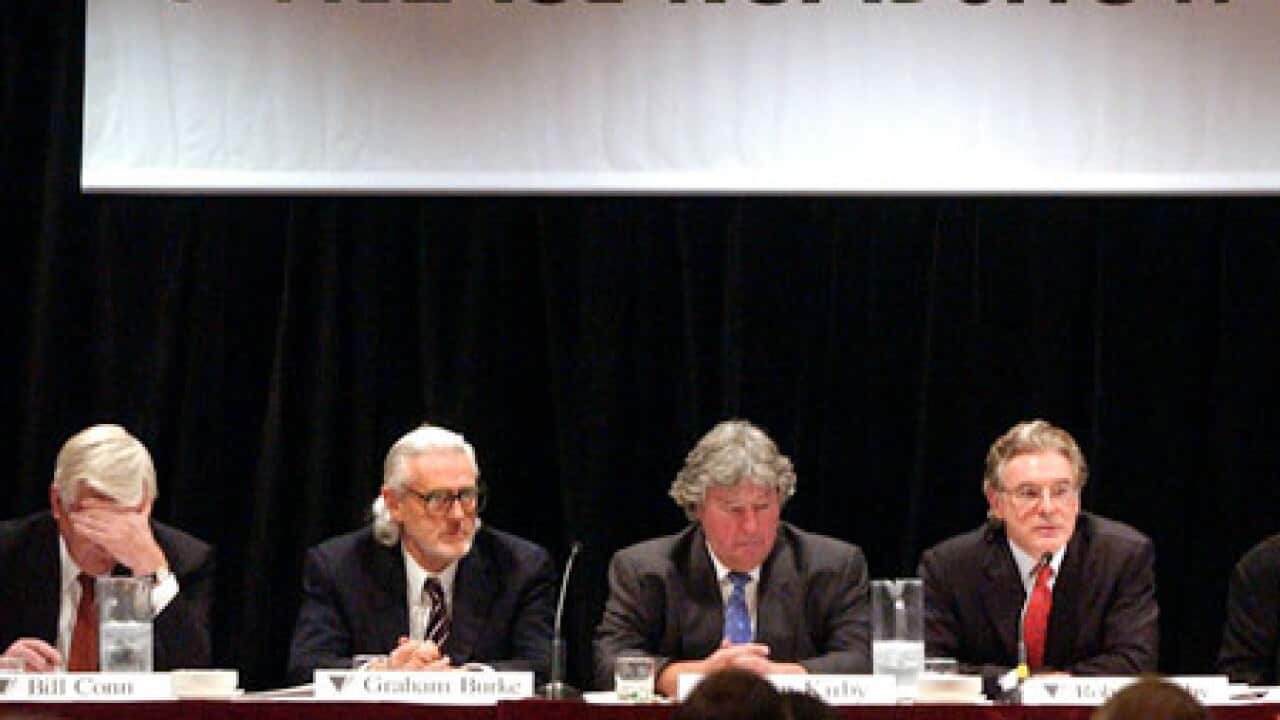
A consortium of 34 movie studios, headed by Village Roadshow, had hoped to prove iiNet not only failed to take steps to stop illegal file-sharing by customers but breached copyright itself by storing the data and transmitting it through its system.
News that makes sense
Your trusted source for staying up-to-date with the world around you. Get free daily news updates and analysis, straight to your inbox.
But in a judgment that may secure the future for all ISPs, Justice Cowdroy said iiNet could not be seen as "sanctioning, approving or countenancing" copyright infringement, simply by providing a service.
"While I find that iiNet had knowledge of infringements occurring, and did not act to stop them, such findings do not necessitate a finding of authorisation," he ruled.
"The evidence establishes that iiNet has done no more than to provide an internet service to its users ... it is impossible to conclude that iiNet has authorised copyright infringement."
Justice Cowdroy said it was clear that illegal file downloading was happening on a large and international scale but he could not find against iiNet simply to make a point.
"The evidence establishes that copyright infringement of the applicant's films is occurring on a large scale ... however, such a fact does not necessitate or compel ... a finding of authorisation, merely because it is felt that 'something must be done' to stop the infringements," he said.
Justice Cowdroy recommended the application be dismissed and that the consortium of studios pay for iiNet's court costs.
An anti-piracy agency speaking on behalf of the consortium said the judgment was a setback for Australian film industry workers.
"(The) decision is a setback for the 50,000 Australians employed in the film industry," Australian Federation Against Copyright Theft executive director Neil Gane said in a statement.
"But we believe this decision was based on a technical finding centred on the court's interpretation of how the infringements occur and the ISPs' ability to control them.
"We are confident that the government does not intend a policy outcome where rampant copyright infringement is allowed to continue unaddressed and unabated via the iiNet network."
Outside court, iiNet's managing director Michael Malone said that while he was delighted with the outcome, he hoped he would have the opportunity to work with the consortium on ways to prevent illegal downloads in the future.
"We would like to engage with all the movie studios and the other rights holders, and see if we can find a way to get this stuff legitimately online," Mr Malone told reporters.
"Copyright violations don't benefit iiNet at all ... so we think that's the best way to tackle piracy on the internet," he said at a press conference later, adding that going after ISPs was not "appropriate".
The chief executive of the Internet Industry Association, Peter Coroneos, said the fundamental issue at hand was whether the role of an ISP was that of a gatekeeper, or simply that of a conduit.
"We have always been of the view, as a national industry body, that there is a need for an appropriate balance between the rights of content owners and the efficient functioning of the internet," Mr Coroneos told reporters.







