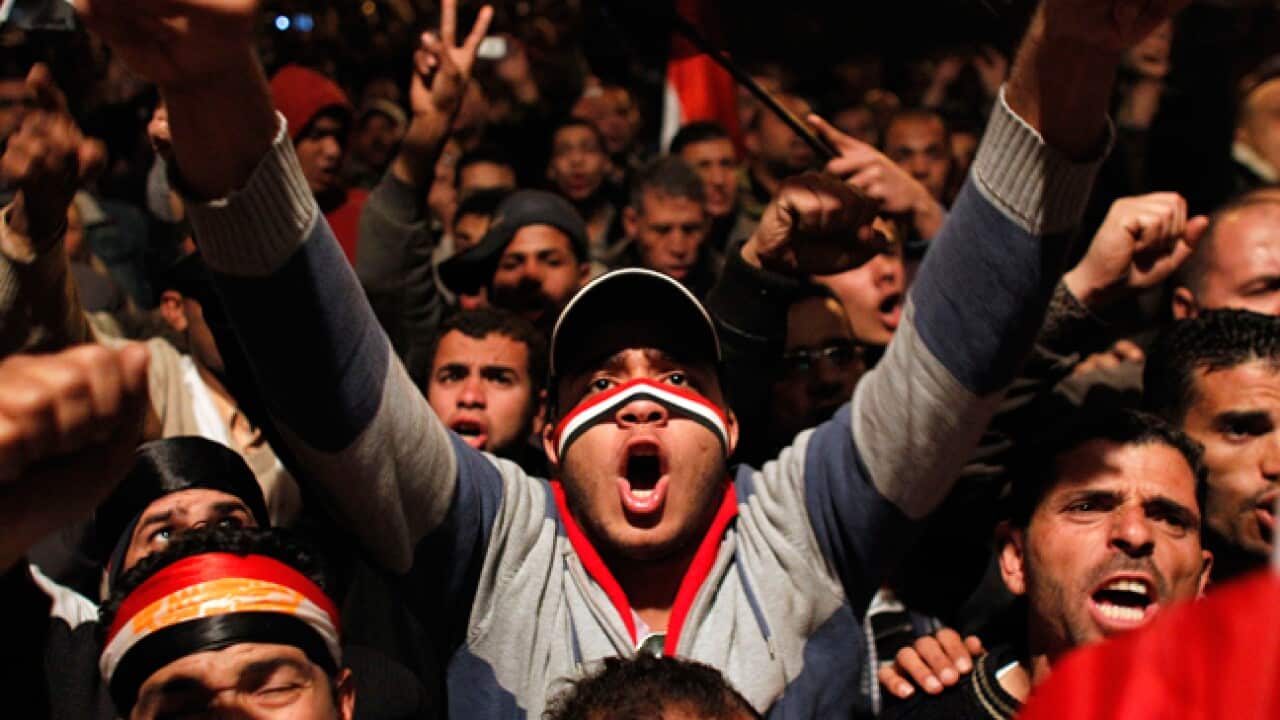
Through the television screen, the excitement, the tension and the agitation of around 200,000 Egyptian protesters in Cairo's Tahrir Square was palpable.
The 17-day-old protest demanding President Hosni Mubarak's immediate resignation had surged despite threats of a military crackdown, inspired by success in Tunisia, egged on by international supporters and covered by the world's media.
Live broadcasts from Reuters, CNN, SkyNews and al Jazeera brought the ever-present roar of the crowd in the background, the tents pitched in the middle of Tahrir Square selling flags and food and the passion on myriad faces of participants into homes worldwide.
As impressive as the television coverage was, nothing brought home the enormity of Egypt's historic day as much as watching it unfold on Twitter.
But five years ago, who would have thought that a revolt on the African continent would be broadcast and supported vehemently online, around the world?
News that makes sense
Your trusted source for staying up-to-date with the world around you. Get free daily news updates and analysis, straight to your inbox.
"Uninstalling dictator in progress ... ...99.9% complete," tweeted a user named @adelshehadeh as the crowd awaited Mubarak's address which was expected to be his resignation speech.
"The live scenes from Tahrir Square is amazing. A mass of humanity. The reporter is being offered plates of dates by passersby," said @ddot_
Wael Ghonim, the Google executive who organised the January 25 revolt via Facebook, quickly became the search engine's number one topic in Arabic.
Voices from Egyptians abroad, from reporters and non-Egyptians supporting the protests, and the odd tweet apparently from inside the square itself conglomerated under the hashtags #Jan25, #Tahrir and #Egypt.
"Watching the live stream, getting very emotional. http://www.youtube.com/aljazeeraenglish Will democracy win tonight? 10 min left," tweeted @princeword in the countdown to Mubarak's speech.
"From JAPAN, messages to #Egypt & I want Egyptian and World to read this. Plz Retweet," said @MeeMMaa, linking to a Facebook page filled with pro-democracy messages from apparently Japanese users.
Of course, the usual limitations of the medium applied as strongly as ever. It gives voice mostly to those who speak English, and whose income and location allow access to the Internet.
Rural populations in many countries lack that, and in this case, so did the rest of the country during frequent Internet outages after the revolt began on January 25.
Those who did have a voice had it on a possibly unprecedented scale.
"And we are no 1 topic trending all over the world," tweeted @HanyELTokhy.
"A day to remember: 02-11or two-eleven or two-eleven-twenty eleven. New dawn in #Egypt, the middle east and the world," pondered @Jan25_rvlt
There was a distinct sense of empowerment.
"Dammit #Mubarak, speak already! Your days are numbered and we've got other repressive countries to start revolutions in!" tweeted @SamSedaei.
"Come on Mubarak, the whole world is waiting," added @piathabia.
As ever with social media, humour wasn't far off.
"This is what happens when your goons mess with (CNN reporter) Anderson Cooper's hair. Your government will fall," joked @zainyk.
Shortly after the minute-hand crept past the hour Mubarak had promised his address, tweeters' impatience evolved into a new hashtag; #ReasonMubarakIsLate.
"#ReasonMubarakIsLate Changing his facebook relationship status with #EGYPT to it's complicated," tweeted @noooou.
"He is sending shirtless pictures of himself to a woman he met on Craigslist," one user added, referring to a scandal involving a US politician this week.
"Why is the Mubarak speech late? Well, one of the satellite channels here is running Die Hard 4..." said @bencnn.
"Christ, I haven't waited so excitedly for someone to take to the stage since I last saw Grace Jones," said @PatrickStrud.
"He is not late, the video tape is ready, but he has not yet been able to reach Saudi Arabia," said @IranTweet.
While some joked, others were serious, amid rumours Mubarak's speech had been leaked.
"Alarabeya (sic, Al-Arabiyah) has leaked info on speech: Mubarak will transfer power to Omar Suleiman," @hadeelalsh said.
Al Jazeera's Alan Fisher didn't buy it.
"Our teams across #Egypt working the phones - and not convinced some of these reports on speech are true - a rejected 1st draft #armysaysno?", he tweeted.
Mubarak's fate seemed sealed when - according to Twitter reports - Egypt's state television began to change its tone on the government.
"Unprecedented. Egyptian State TV is FINALLY exposing the atrocities of the government! What a teaser!," tweeted @Sarahfenix.
However it was not to be. As the world now knows, Mubarak had no intention of altering his original stance - that he will die in Egypt.
In a long, televised address that was drowned out by roars of fury from the crowd in Tahrir Square, he announced he will stay on until September as planned.
The reaction online was as vehement as the one in Cairo.
"Let me make it clear, #Mubarak HAS got the message, he is just IGNORING it - there is a difference...," @muiz exclaimed.
"Still in Tahrir: Maybe I am projecting but the soldiers watching speech don't look any happier than the crowd...," said @ashrafkhalil.
"Reckon the subtext of Mubarak's speech was 'you will have to come and kill me first'," said @Wilson1970.
Messages of peace came quickly after.
"Don't give the thugs an excuse to use force and violence. No more victims please," implored @raafatology.
"Let's not lose the respect & credibility we've gained by turning violent, kill them w/ peace," echoed @hebaelkayal.
As the world moved on and analysts struggled to explain the events of February 11, 2011, a crowd of protesters began to move toward the presidential palace.
"People on the way to the presidential palace from Tahir square right now. Excited and worried...," one user said.
At the time of writing, tweets continued to flow thick and fast under the hashtags, and the future of Egypt remained wholly unclear.
"It looks like tomorrow the army will have to choose sides, the people or Mubarak," concluded @ianinegypt.







