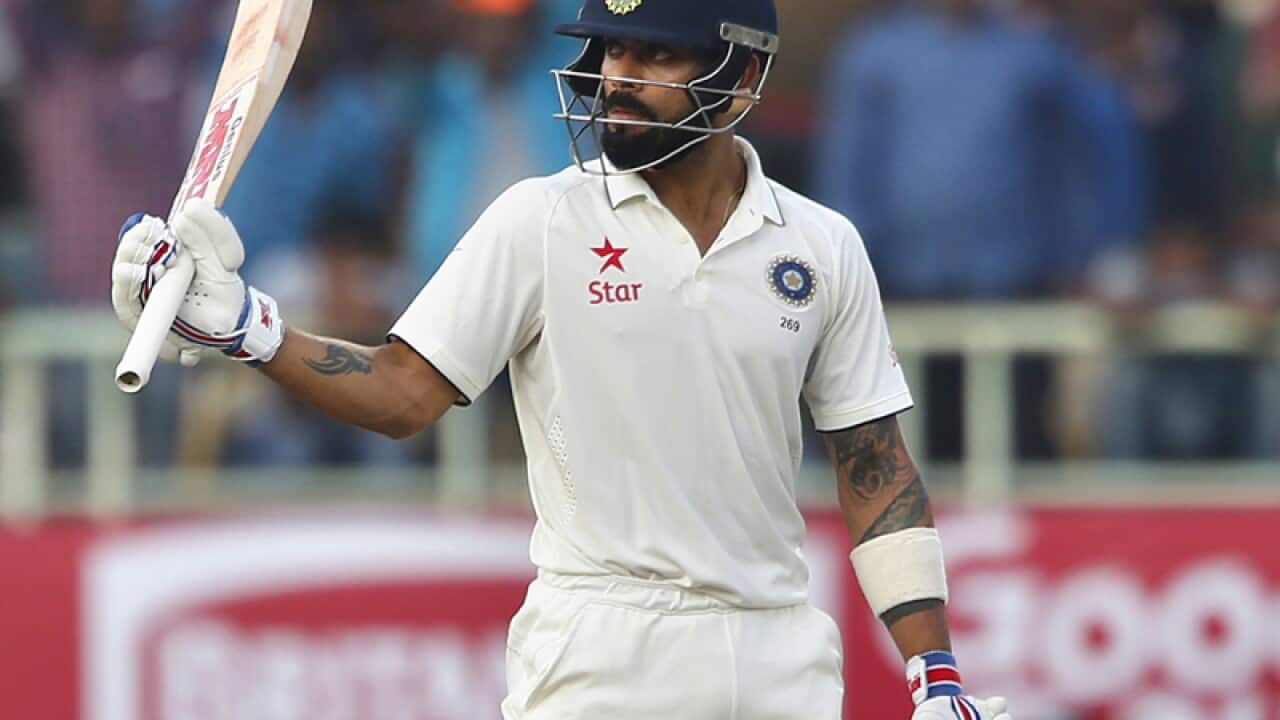
India captain Virat Kohli gave a thumbs-up to the Decision Review System (DRS) on Friday, signalling cricket's financial powerhouse might permanently embrace the technology aimed at curbing umpiring errors.
It took a lot of cajoling to convince India, a staunch DRS opponent after their bitter 2008 initiation in Sri Lanka, to use the technology on a trial basis in the current five-Test series against England.
Kohli did not always get it right when it came to reviews in the first two Tests but the India captain sounded like he may be leaning towards accepting the system.
"I'm pretty happy with it...I think it is pretty fair for the game," Kohli said.
The Indian board has been particularly suspicious of the ball-tracking technology but agreed to try it following a presentation by officials from the International Cricket Council (ICC).
News that makes sense
Your trusted source for staying up-to-date with the world around you. Get free daily news updates and analysis, straight to your inbox.
Kohli appreciated how the ball-tracking technology improved leg-before decisions without challenging the authority of the on-field umpires.
"They (umpires) are the people given the job to make decisions and their call is respected even in the DRS. I think that's pretty fair," Kohli said.
"If it is really, really off target, then DRS corrects it but if it is marginal, then you got to respect the umpire's call. That's all it does.
"I think it clarifies the decision that is made on the field. I think that's absolutely fine."
The India players are yet to master the nuances of the technology.
"We as a team have only played two Test matches with DRS and I can't analyse the progress in a span of eight days. It is a pretty fair thing to have happened and we are going to get better with using it, for sure," Kohli said.
An excellent lesson was how England teenager Haseem Hameed, fielding at short leg, convinced skipper Alastair Cook to review a not-out decision and get India opener Lokesh Rahul caught behind in the second innings of the second test in Visakhapatnam.
"Obviously, the wicketkeeper and the bowler are the main people involved, who have the best sight of where the ball hit the pad or if they heard a sound of the bat," Kohli said.
"The close-in fielders as well play a massive role as well, as you saw with KL's (Rahul) dismissal. It was Hameed who actually convinced the bowler that he heard something which someone else might not have."







