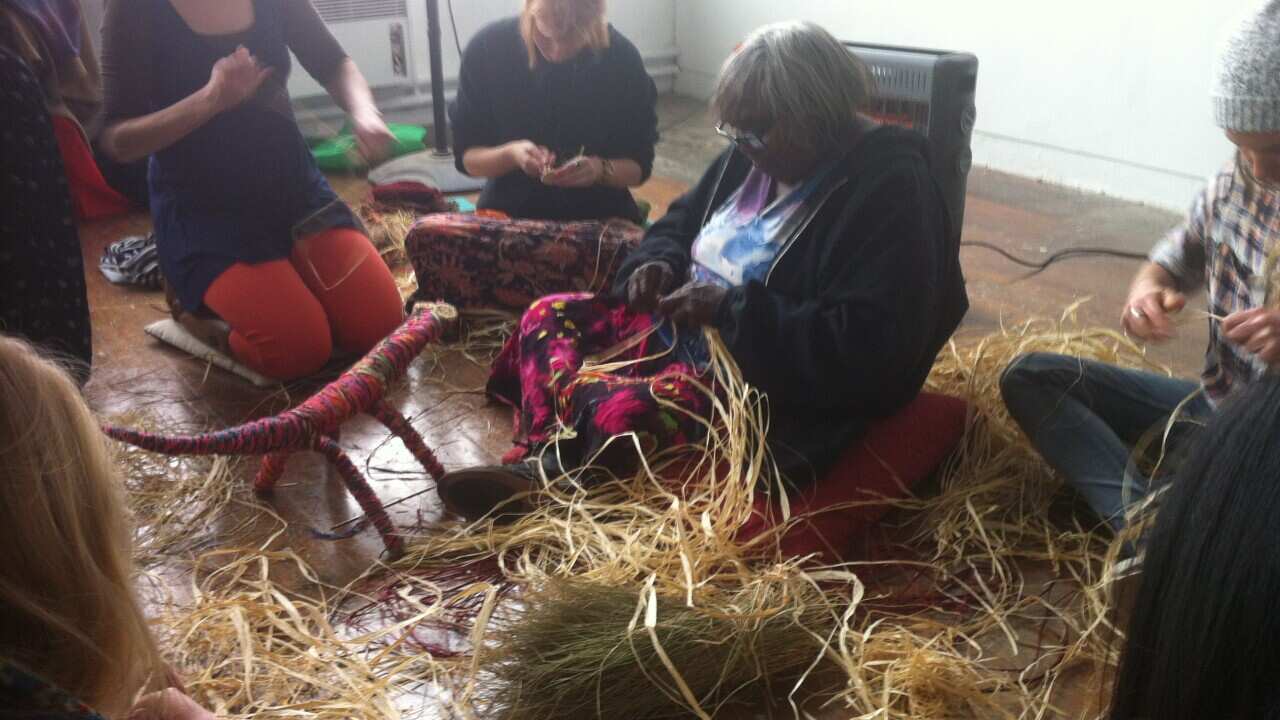
A group of Indigenous artists known as the Tjunpi Desert Weavers are holding a masterclass for fine arts students at Melbourne Universities but it's not your usual university tutorial.
There's no whiteboards, no notepads and very little speaking. Dozens of young students sit cross-legged on the floor surrounded by piles of hay and dried grasses.
The four tutors travelled from Central and Western Australia to share their centuries old knowledge of working with traditional fibres.
Pitjantjatjara woman Roma Butler said it's a method of learning that's steeped in tradition.
"We go to the bush and the women, they all come," she said.
Ms Butler, from Western Australia, is one of about 400 women from 28 communities who make baskets and artwork for the Tjanpi Desert Weavers. The group formed in 1995, to help Indigenous women earn an income while importantly remaining on country.
Head of the Wilin Centre for Indigenous Arts and Cultural Development, Deborah Cheetham, says a little bit of culture is woven into every creation.
"These women will create their sculptures, they will weave these incredible animals into life and then they'll also sing life into them," she said.
"They'll dance their story into these animals, so it's that completely integrated and immersed experience of the arts that defines Aboriginal existence."
Originally, the women of the Central and Western desert made bowls for carrying food, water and medicines. Today their artistic creations are shown in galleries across Australia, and sold to thousands of consumers every year.
Students participating in the masterclass say the Indigenous women are weaving a little magic of their own.
"Just to have the time with them as well is really sacred and special," sculpture major, Tia Mavanie said.
"Especially in the city where you don't get to make contact with our Indigenous people on the land, you know."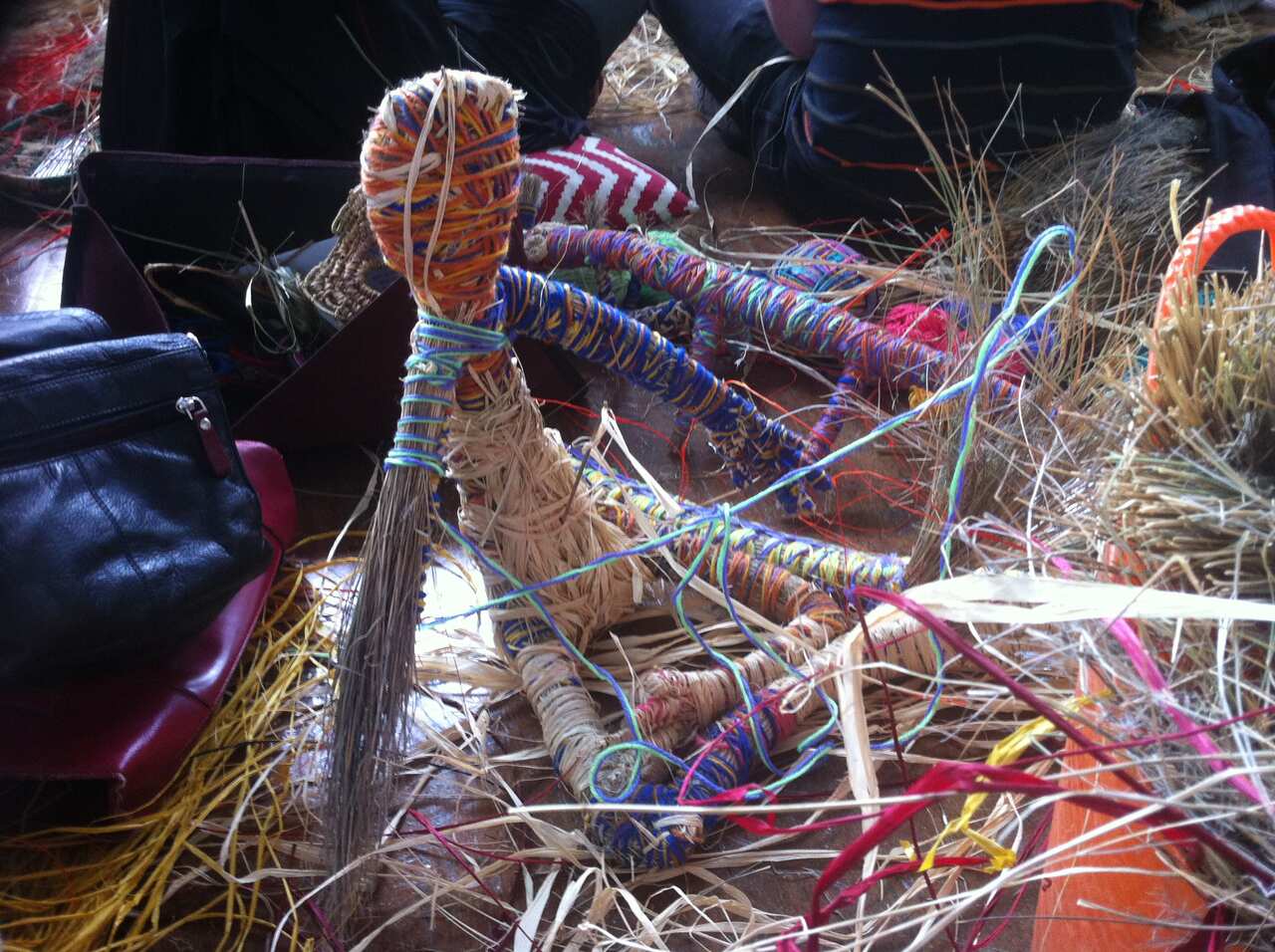
(SBS)
Share


