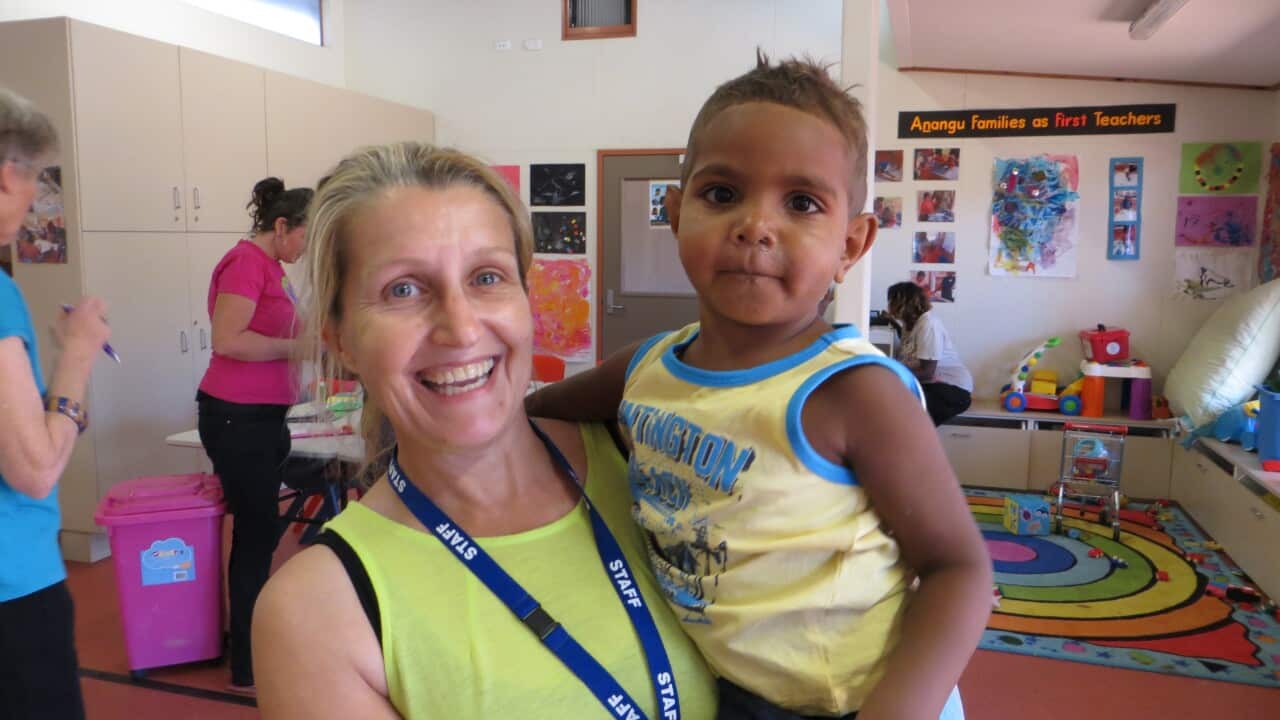
Jude Crabtree has poured 50 years of teaching experience in an initiative tailor-made to begin teaching Anangu children aged 0-3, some having their first contact with education at just six weeks old.
The program harnesses the artistic skill of Anangu parents and grandparents to become their children's first teachers, working with experts to help develop children's literacy, numeracy and fine motor skills through learning processes that seems like play.
It's achieved through the creation of books about the children, for the children. Parents photograph little ones, and draw intricate and colourful illustrations, adding text as they go. Crucially, it's in English, a language children in the APY lands wouldn't otherwise encounter until they reach preschool.The program succeeds for several reasons - Jude Crabtree developed it at the request of, and working with Anangu mothers, then spent three years cultivating the trust of communities; it draws on the region's rich art and cultural heritage to inspire children; parents are rediscovering their own English literacy skills which may have lain dormant; and children love the books and want to read them because it's their story.
International paediatric expert Sue Jenkins says it's a highly successful program that's cultivating a love of learning in children, where past attempts have failed; the initiative’s also received plaudits by preschool and school personnel across the Lands.
But it's hit a hurdle. Federal funding for the pilot program has expired. Communities are pinning their hopes on South Australia's Education Minister Jennifer Rankine, who says she's interested in assessing the program. The state's ability to embrace the initiative would still be thwarted however, with Minister Rankine saying the Abbott government won’t confirm whether the “Universal Access to Pre-school” program will be continued, and says the "National Partnership Agreement on Indigenous Early Childhood Development" is also at risk - two program central to the state's capacity to deliver early learning in remote regions.
Share


