(Transcript from World News Australia Radio)
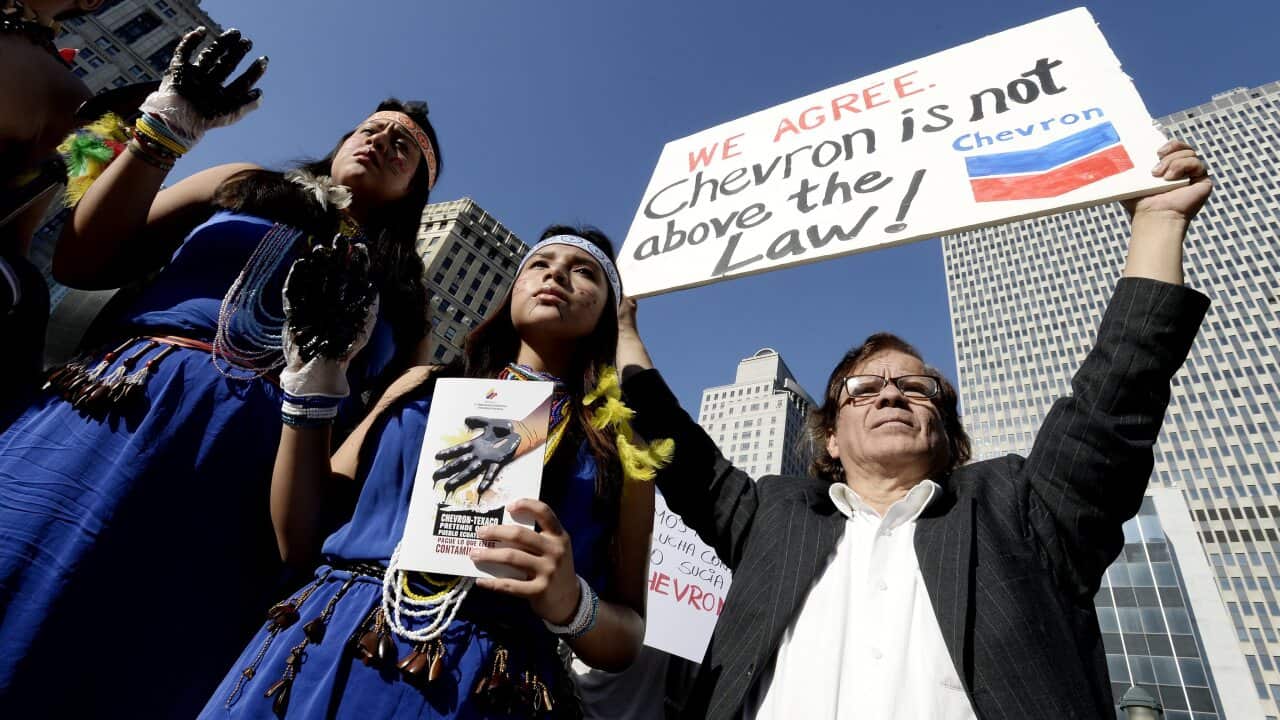
A classic David and Goliath court case is underway between multinational oil giant Chevron and a group of indigenous Ecuadorians.
Chevron is trying to convince a United States judge that the Ecuadorian villagers and their American lawyer used bribery to win a multi-billion dollar judgment against Chevron from a court in Ecuador.
Kerri Worthington reports.
(Click on audio tab above to listen to item)
News that makes sense
Your trusted source for staying up-to-date with the world around you. Get free daily news updates and analysis, straight to your inbox.
The trial is the latest chapter in a dispute over environmental contamination between 1964 and 1992 at an oil field in north-eastern Ecuador operated by Texaco, which Chevron bought in 2001.
The Ecuadorians are being supported by Amazon Watch, an non-government organisation which works with indigenous people of the Amazon region.
Operations director Paul Paz y Mino says the $18 to 19 billion in damages awarded to the indigenous villagers after their class action has not been paid.
And he says Chevron is going to extraordinary lengths to avoid ever having to pay.
"That verdict in Ecuador is enforceable, according to the plaintiffs in Ecuador, anywhere in the world and so therefore they have sued in Canada, Argentina and Brazil already to seize Chevron assets there to force them to acknowledge and comply with the verdict in Ecuador. Because Chevron knows it can't win those battles, we believe, they've decided to pursue a case in the only place where they've found a judge who will actually side with them and so that's why they've launched this RICO suit. It's part of their ongoing -- we're talking about 20-year -- campaign to delay or deny or ignore what's happened in Ecuador."
The RICO suit Mr Paz y Mino mentions refers to a United States law, the Racketeer Influenced and Corrupt Organizations Act, under which people can be tried for crimes they ordered others to do.
In this case, Chevron alleges the plaintiffs' representatives committed fraud, extortion and other misconduct and that the Ecuadorian judgement was illegitimate.
But a spokesman for the villagers, Han Shen, says they will not be bullied into stopping their legal action.
"The Ecuadorians are going to continue to take the judgement that they won after one of the most litigated cases in history with incontrovertible evidence of Chevron's abuses its criminal conduct, its reckless and deliberate dumping of toxic waste into rivers and streams relied upon by thousands and thousands of people who are sick today because of that -- they're going to take that judgement and they're going to enforce it."
The company has posted a statement on its website outlining its case against the Ecuadorians, alleging their lawyers falsified data in the name of supposedly independent environmental experts.
In a video media release, Chevron says those experts -- from US organisation Stratus Consulting -- have renounced the scientific evidence provided in a report for the Ecuador court.
"Stratus is not aware of any scientific evidence that people in the former concession area are drinking water contaminated with petroleum. At no time when working on the Ecuador project did I see any data supporting a finding of groundwater contamination. I am not aware of any scientific data that shows any adverse health effects are caused by contamination from petroleum operations in the Oriente. I disavow any and all findings and conclusions in all of my reports and testimony on the Ecuador project."
Paul Paz y Mino of Amazon Watch dismisses those statements, saying none of the data Chevron says was retracted was even used in the Ecuador court case.
Chevron also says it has never operated in Ecuador, and that Texaco fully remediated its shar_ÐùÃ__ÐùÃ_e of environmental impacts when it ceased operations in Ecuador in 1992.
Mr Paz y Mino says Chevron is responsible under United States and other countries' laws for Texaco liabilities.
And he says Amazon Watch warned the company at the shareholder meeting to finalise the Texaco takeover in 2001 that it would be taking on billions of dollars of liability for environmental damage.
"In 1992 when they were Texaco and they left, they worked out a 40-million dollar clean-up deal with the government of Ecuador which amounted to actually pushing dirt over unlined waste pits. And so all of the pits that were supposedly remediated have been found to be toxic, which is part of the suit in Ecuador and the evidence that was submitted. Chevron claims that they had a clean-up. Even if they had, 40 million dollars wasn't even close to what actually needed to be cleaned up. They left almost a thousand waste pits saying that they were remediated."
Locals in Ecuador's Amazon region say they're sick of mining and oil companies not cleaning up after extracting the region's natural wealth.
Donald Moncadio is activist from the area where Chevron's predecessor Texaco operated.
He's told al-Jazeera the company dumped its toxic waste in pits without taking safety precautions.
(with translation) "They should have disposed of this. Why did they create these pits? Why didn't they put the residue in metal tanks like they did back in the United States?"
Mercedes Jiminez lives in the same region, and is one of the 30,000 people from five indigenous groups who filed the class action against Chevron.
(with translation) "Our health has been affected. My family is sick, I'm sick. My bones ache and my sons are ill."
The Ecuadorian lawyers in the case against Chevron say the undeniable rise in illnesses, including cancers and leukaemia, are Chevron's responsibility.
Paul Paz y Mino agrees, saying it's highly likely the lawsuits against Chevron outside the US will be won by the Ecuadorians.
And he says the indigenous villagers have only been able to keep going with decades of legal action because the evidence against is so overwhelming.
"Chevron has dug its heels in the ground and they're going to essentially fight as they have put it, quote, until Hell freezes over and then they're going to fight it out on the ice, because they don't believe they can afford to be seen to lose to, not a government, but 30-thousand rainforest community members and their lawyers. This would be an unbelievable precedent for corporate accountability and would embolden many other people that have had their conflicts with multinational corporations, not just environmental but in human rights crimes."
The cases are continuing.







