(Transcript from World News Australia Radio)
A national survey has revealed a detailed and up-to-date picture of the state of Aboriginal and Torres Strait Islander health.
Health groups say it'll be a long road to reduce the burden of disease and poor health among indigenous Australians, but the smoking rate decrease proves progress is being made.
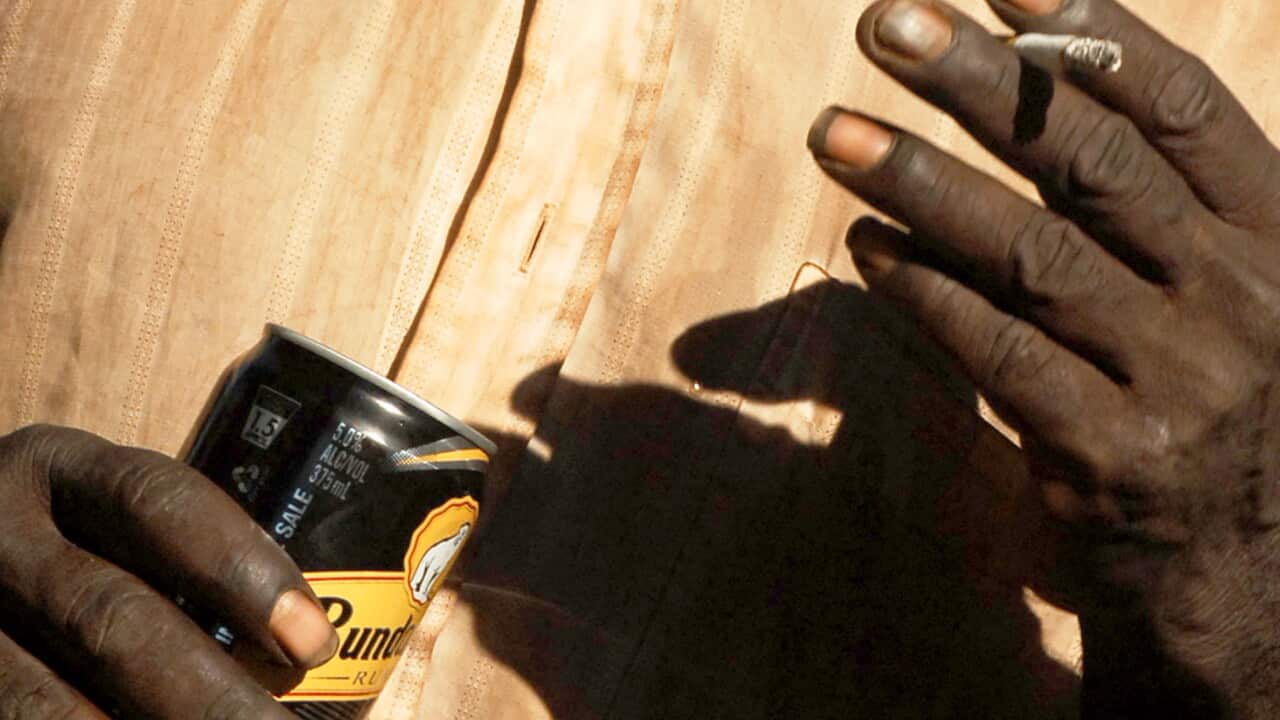
But as Andi Yu reports, the smoking rate is still nearly three times higher than the rate for non-Indigenous Australians.
(Click on audio tab above to hear full item)
News that makes sense
Your trusted source for staying up-to-date with the world around you. Get free daily news updates and analysis, straight to your inbox.
The Australian Bureau of Statistics survey, conducted over 2012 and '13, examines long-term health conditions and health risk factors affecting more than 12,000 Indigenous Australians from urban and remote areas.
ABS statistician Paul Jelfs says although the findings show a heavy burden of disease and grave health risk factors affecting Indigenous Australians, there is some good news.
"We've been able to find that smoking rates have declined quite significantly over the last decade from around about 51 per cent to 41 per cent. This is a really major decline and it's really good news - except that the rate is still high compared to non-Indigenous populations."
Cancer Council Victoria CEO Todd Harper says the decrease shows that health programs run by his organisation and others are making an impact in Indigenous communities.
And he says cooperation with Indigenous communities is central to that success.
"It brings together the opportunities to make sure that our prevention programs are relevant to the target audience and well understood by our Indigenous populations and presented in a way that is easier for people to act on those prevention messages. And so I think what this does is show the benefits of federal government investment and a partnership that occurs with health organisations working together with Indigenous community."
Partnerships are vital, says the Chair of the National Aboriginal Community Controlled Health Organisation, Justin Mohamed.
He says not only must health services seek to work with Indigenous communities, partnerships must be genuine.
"Across all health, all Aboriginal and Torres Strait Islander health, there's a couple of key ingredients for success and one of them is partnerships, and genuine partnerships. And this is something which we've been striving for through the Aboriginal Community Control Health Organisation, ensuring that the partnerships we have with mainstream bodies and government is genuine and then if that's genuine then we can see results."
Genuine, says Mr Mohamed, means making sure each community is consulted and included in the running of health services.
He says the burden of disease and health risk affecting so many Indigenous Australians can be reduced by long-term programs tailored to each individual community.
And he says to do this, the government must set aside short-term political gain.
"They have to listen to community, if they don't listen to community, well then we won't be much different to other governments. And also not only just trying to get a quick turn-around on some of the low-hanging fruit but to be committed for the long haul, which might exceed their term of government, but put the building blocks in, so we can see the results in future years."
Mr Mohamed says he doesn't know how effective the new federal government will be in addressing Indigenous health but, he says, so far, Prime Minister Tony Abbott's rhetoric has given him hope.
"I do see a Prime Minister who's put his hand up and he said he wants to change the status quo which has been sitting around Aboriginal affairs and Aboriginal community, so he's actually put his hand up to say, well I want to see change. I'm hoping, I'm willing to work with this government, our organisation is, that we can, collectively together, we can see these changes, but it's not going to happen under the business as usual approach, things have to change for this to get real gains."







