(Transcript from World News Radio)
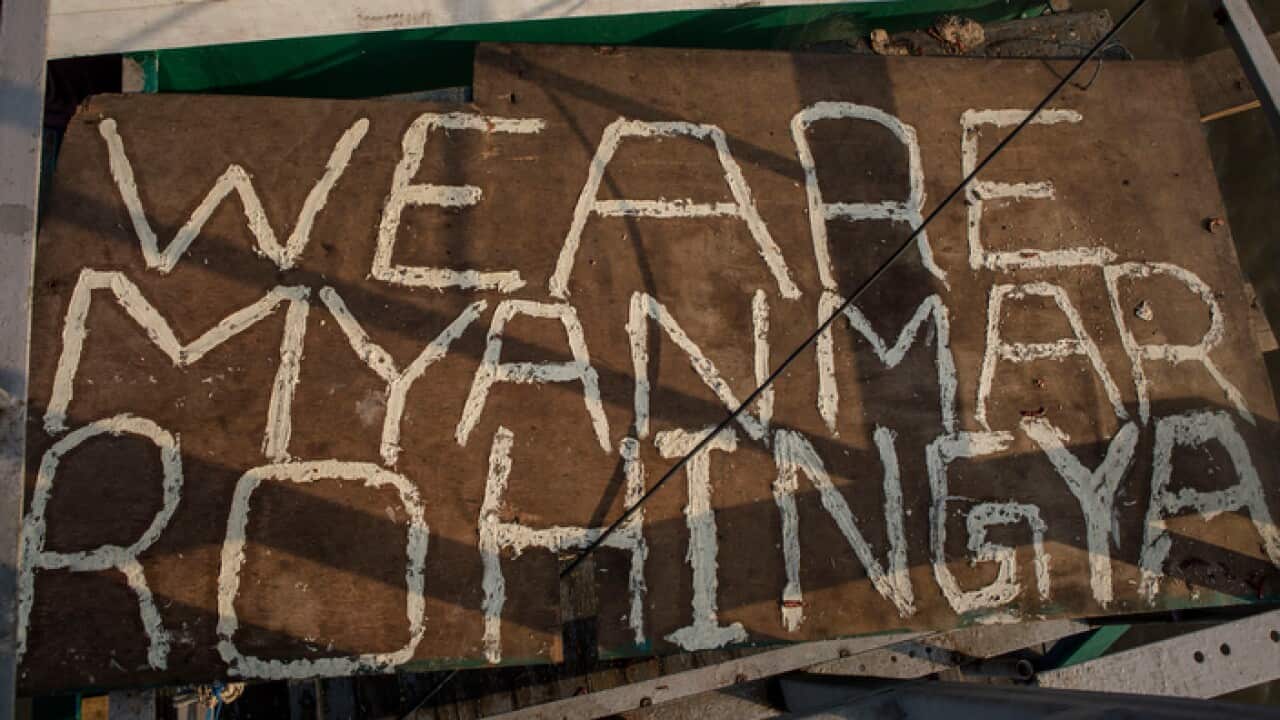
Indonesia has criticised Australia's refusal to settle any of the thousands of people stranded at sea in south-east Asia.
Thailand, Malaysia and Indonesia have agreed to stop turning back boats carrying mostly Rohingyas from Myanmar and Bangladeshis.
They've agreed to temporarily shelter people from the boats.
But Prime Minister Tony Abbott says offering resettlement in Australia to any assessed as refugees would encourage more people to risk their lives on leaky boats.
Zara Zaher reports.
Indonesia says Australia has an obligation to help with a regional resettlement solution because it's a signatory to the internatinal Refugee Convention.
Speaking to CNN, Indonesian Foreign Minister Retno Marsudi has criticised Australia's stance on the crisis.
"It is not fair that it is Indonesia's problem, that Indonesia has to deal with it. It is not an Indonesian problem, but again we offered a solution and clearly mentioned that we need cooperation from the international community. The cooperation should be coming from the country of origin, the country of transit as well as the country of destination."
Frontbencher Christopher Pyne says refugees hoping to live in Australia must come through what he calls "the front door".
Mr Pyne has told Channel Nine Australia won't change its policy on the issue.
"We've increased the humanitarian group from about 14,000 to about 18,000, recognising that we have responsibilities as part fo our international obligations. I want those people to be able to come here as much as anyone else. But they have to come here through the correct processes and apply as refugees along with everyone else around the world."
Thailand, Malaysia and Indonesia say temporary shelter will be given to as many as 7,000 people, as long as the international community provides resettlement within a year.
Malaysian Navy Chief Abdul Aziz says his country's Prime Minister, Najib Razak, has ordered the navy to commence rescue efforts for those adrift at sea.
(Translated).... "With regard to the involvement of the Malaysian armed forces in humanitarian activities, especially regarding the Rohingyan migrants, I would like to inform you that the navy has deployed four vessels off the coast of Langkawi island."
It comes ahead of a regional meeting to discuss the boats crisis on May the 29th.
Diplomats say Myanmar has until now resisted calls to take part in such meetings.
However, Myanmar's Deputy Foreign Minister, Thant Kyaw has agreed to attend the emergency conference.
"If they are Myanmars and if they show that their residency is from Myanmar, I think [the] Myanmar government has the obligation to bring them back."
The Unites States says it's also prepared to help.
US State Department spokeswoman Marie Harf says both financial and resettlement proposals are being considered.
"In terms of resettling, I think the Malaysians and the Indonesians have requested some help resettling people. We're taking a careful look at the proposal. We're prepared to take a leading role in any UNHCR-organised multi-country effort to resettle the most vulnerable refugees."
Despite the international coordination on the crisis and calls for a joint effort from all countries concerned to resolve the matter, Australia remains adamant in refusing to resettle refugees on its soil.
Prime Minister Tony Abbott insists they should apply for resettlement from the first country they escape to and wait for a place in Australia's annual humanitarian intake.
It coincides with an announcement from Cambodia's interior ministry that four refugees held by Australia on the remote Pacific island of Nauru have voluntarily applied to go to Cambodia.
The Australian government signed a deal with Cambodia in September to allow those granted refugee status in Nauru to permanently resettle in Cambodia, one of the poorest nations in southeast Asia.
Meanwhile, protests are being held around Australia by refugee advocacy groups to show support for those stranded at sea.
They're calling on Australia, as the richest country in the region, to help rescue people stranded at sea and offer resettlement.
Share


