
in brief
- One Nation wants to cut Australia's temporary migrant population by 750,000 over three years.
- Industry groups warn the cuts could worsen labour shortages and hurt economic growth.
One Nation's proposal to slash temporary migration has drawn criticism from the agricultural, business and education leaders, amid warnings the policy risks turning migration into a "political football" and could push Australia into recession.
On Monday, One Nation unveiled its plan to reduce Australia's temporary migrant population by 750,000 over three years by cutting student, graduate, temporary skilled, and bridging visas, as well as removing illegal migrants.
One Nation leader Pauline Hanson said the cuts were about "restoring control and making sure migration serves Australia".
But the proposal has drawn sharp criticism from several industries that heavily rely on temporary migration.
Michael Guerin, the chief executive of the National Farmers' Federation, said his organisation was yet to see the policy details but warned it could hurt regional Australia, noting worker shortages during the COVID-19 pandemic led to price rises of up to 25 per cent for produce.
News that makes sense
Your trusted source for staying up-to-date with the world around you. Get free daily news updates and analysis, straight to your inbox.
"Migration policy should not be treated as a political football. This is about food security, keeping farms operating and ensuring food remains affordable for Australian families," Guerin said in a statement.
"We haven’t seen the detail of this proposal, but we know temporary workers help put food on tables, with backpackers alone filling roughly one in seven farm jobs nationally.
"They also spend millions in regional communities and generally stay in hostels, caravan parks or purpose-built on-farm accommodation. They are not the cause of Australia's housing crisis."
He said any reform to migration settings needed consultation with the affected industries.
One Nation said the Working Holiday Maker program and the Pacific Australia Labour Mobility scheme — which allows businesses to hire from Pacific countries when there is a local worker shortage — would not be affected.
The federal government has already moved to slow backpacker arrivals, pausing applications from 24 of the 29 eligible countries last month amid a record number of working holidaymakers already in Australia.
Business groups have also raised concerns about One Nation's proposed cuts, with Business Council of Australia chief Bran Black warning they could have a "significant detrimental impact on our economic growth".
Citing Treasury forecasts, Black said the country's budget deficit — forecast at $31.5 billion in 2026-27 — was expected to increase in coming decades due to Australia's ageing population.
"As things stand right now, one in three occupations reports a skills shortage," he told ABC News.
"So we can’t grow our economy and reduce that gap between government revenue and expenditure, unless we're prepared to train our people internally, but also to recognise that historically and into the future, Australia is going to need skilled migrants.
Group of Eight chief executive Vicki Thomson, representing Australia's leading universities, issued a similar warning about cuts to student numbers.
"International education is not a political plaything. Australia should absolutely have strong standards and clear rules. But repeated proposals to slash international student numbers send the wrong message to the very people we say we want to attract," she said.
"You do not strengthen Australia's future by shrinking one of our largest exports, weakening our research engine and sending the world's best students to our competitors. Countries that attract talent prosper. Countries that drive it away pay the price."
Recession warning
Andrew McKellar, the chief executive of the Australian Chamber of Commerce and Industry, said the migration debate should not be driven by a "set of arbitrary numbers".
"The real risk here is that if you are basing the outcome on a set of arbitrary numbers and an arbitrary target, which is not achievable without across-the-board cuts in a whole range of categories, then you are going to do long-term damage to the Australian economy," he said.
"The risk is that we end up with a deep recession ... this is a COVID-level shock to the Australian economy without any of the offsets."
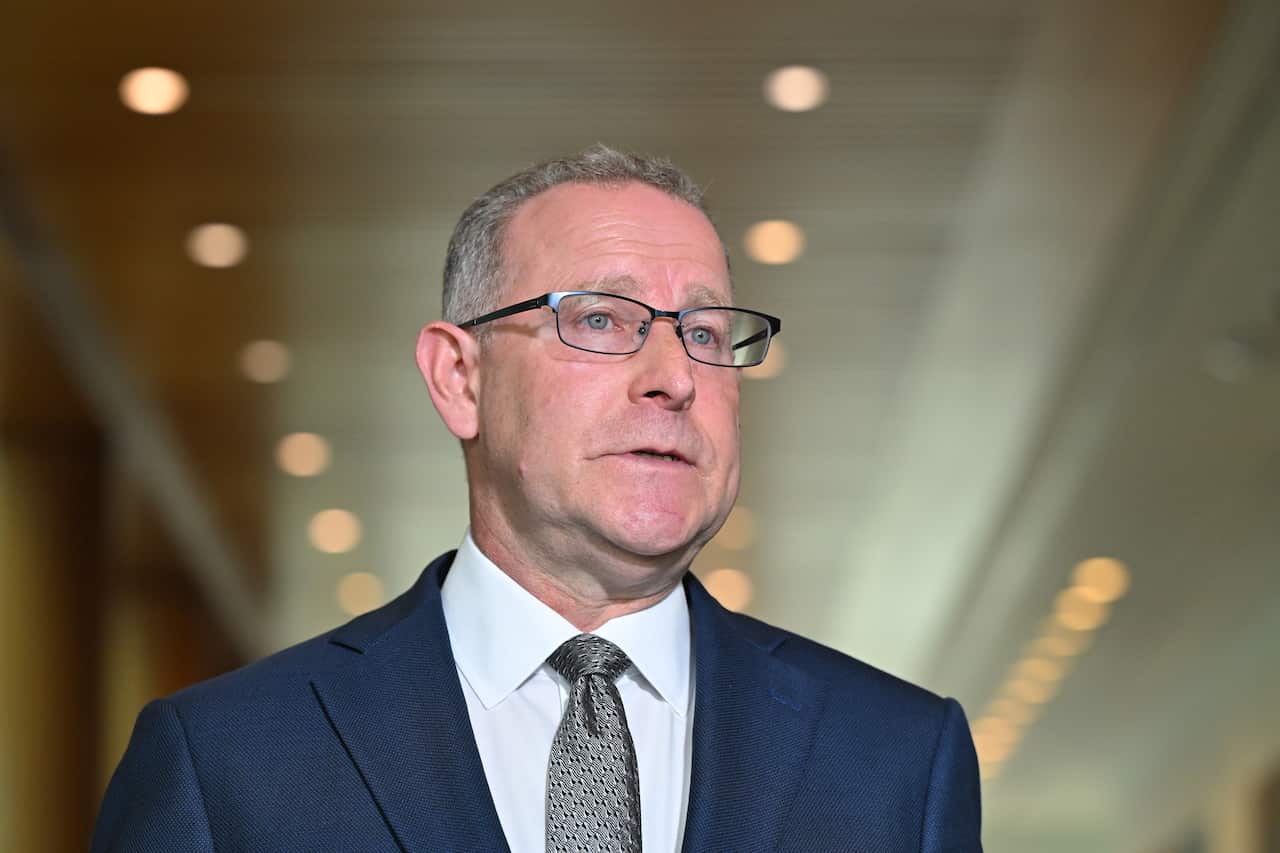
The Housing Industry Association said Australia was already facing a shortage of more than 83,000 skilled housing trade workers at a time when governments were asking for a record delivery of new housing.
"Proposals to cap or further restrict skilled migration would make an already critical workforce challenge even worse," a spokesperson said.
The peak national industry body for residential building said the current skilled migration scheme was not working and that targeted migration pathways were needed to address labour shortages.
Immigration lawyer Mona Khadour told SBS News One Nation's proposed cuts would have a "domino effects" on businesses, with mining, hospitality, construction, healthcare and aged care-all among the most reliant sectors on skilled migration.
"It is a worry. We do see a lot of businesses, especially in regional Australia, who are finding it very difficult to find employees," she said.
A return to 2017 levels
One Nation has defended the proposed cuts, saying they would return Australia's migration levels to those seen in 2017.
"I don't think that 2017 was a disastrous year for Australia. For students it’s back to 2015 levels. So if you’re modelling it, I suppose you’d use a retrospective view of how it was going at that period of time," One Nation MP Barnaby Joyce told News24.
The Institute of Public Affairs, a conservative think tank, also supported the policy, dismissing concerns about a recession.
"The three-year negative net overseas migration intake is a necessary period of adjustment after record-breaking migration since the end of the pandemic," IPA deputy executive director Daniel Wild said.
"A massive migration cut will not trigger a recession, as Australia is already in a per capita recession. Instead, cutting migration will boost living standards and ease infrastructure pressures as the Canadian experience demonstrates."
Canada slashed temporary migration from the start of 2025 after capping foreign student numbers and tightening work visas, easing housing pressures but slowing economic growth.
— With additional reporting by Hamssa Abou Kheir
This story was produced in collaboration with SBS Arabic.
For the latest from SBS News, download our app and subscribe to our newsletter.







