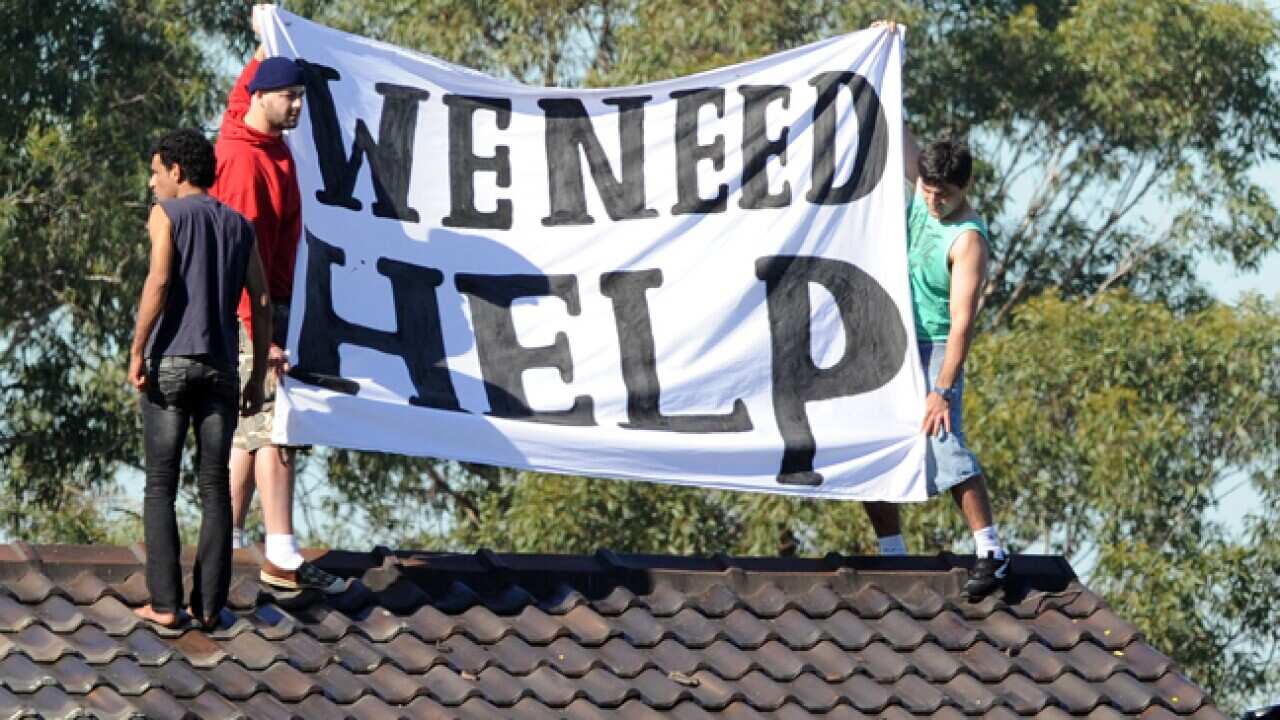
Protests on rooftops, burnt down buildings, high wire fencing and hunger strikes are the aspects of Immigration Detention Centres that the Australian public usually hears about. That's because these incidents make the most emotive headlines for newspapers and pictures for television news. It's also because the high wire fences and layers of security don't just keep detainees from getting out, but prevent the media from getting inside for the whole story.
To get a better idea of the situation, journalists are forced to rely on information from activists, social workers and detainees with mobile phones to add to the limited information that the Immigration Department releases. Getting cameras and recording devices inside Immigration Detention Centres has been impossible for a long time.
I first heard about the success of the volunteer music program inside Villawood Detention Centre last September. Volunteer programs have come and gone at the centre for decades, but I understood this to be one of the few remaining, and even increasing in size. It's a very different picture from the usually distressing images we see.
News that makes sense
Your trusted source for staying up-to-date with the world around you. Get free daily news updates and analysis, straight to your inbox.
I put in a request to the Immigration Department's media unit to be granted entry into Villawood for the story. That one email opened a minefield.
In my career as a television journalist, I have always felt privileged to have access to places and events that the general Australian public does not have. Often special media passes are required with proof of identity and employment. Gaining access to Villawood was far more restrictive than anything I have ever experienced before in this country.
Almost four months after my initial request, I was given a time and date for my visit to Villawood. The head of the Immigration Media unit Sandi Logan was to be present along with other departmental representatives. However, it was on the condition that SBS signed a contract beforehand.
The 'Media Deed of Agreement' required that no detainee be identified, even if they were willing. It stated that all footage had to be scrutinised by the Immigration Department. The Immigration Department was to have the final say in whether images and audio were to be deleted or faces blurred, using an 80s editing technique called pixellation. SBS protested against these restrictive conditions, but was eventually forced into signing the Agreement, in order to do the story.
At Villawood, my cameraman and I were met by no less than four bureaucrats to escort us. Mobile phones were not allowed inside. I was reminded by Sandi Logan that no detainee could be identified. He said this was in part because the detainee could potentially use it to change the nature of their claim. I was also not permitted to interview or ask questions of detainees nor write their answers on a notepad. The longest conversation I managed to have with a Villawood detainee, before they were ushered out of the room, was two minutes of supervised chit-chat. We were only taken to the parts of the centre relevant to the music program. The rest of our footage had to be filmed through wire fences. The music teacher was guarded in what he could say on camera for fear it might jeopardise his classes in future. I understand volunteers also have to sign a highly restrictive contract. For their part, the Immigration Department had coordinated the delivery of donated pianos to coincide with my visit.
This was to be a story about one volunteer's efforts to improve the mental state of people in challenging situations by sharing his love of music. It should have been an opportunity for Serco and the Immigration Department to reveal a very different side of their controversial detention centres. However, because my access to the full story was restricted, I was once again forced to seek further information from outside sources like activists, social workers and former detainees.
The Media, Entertainment and Arts Alliance has a petition asking Federal Minister for Immigration and Citizenship Chris Bowen to allow journalists to report properly on asylum seekers.







