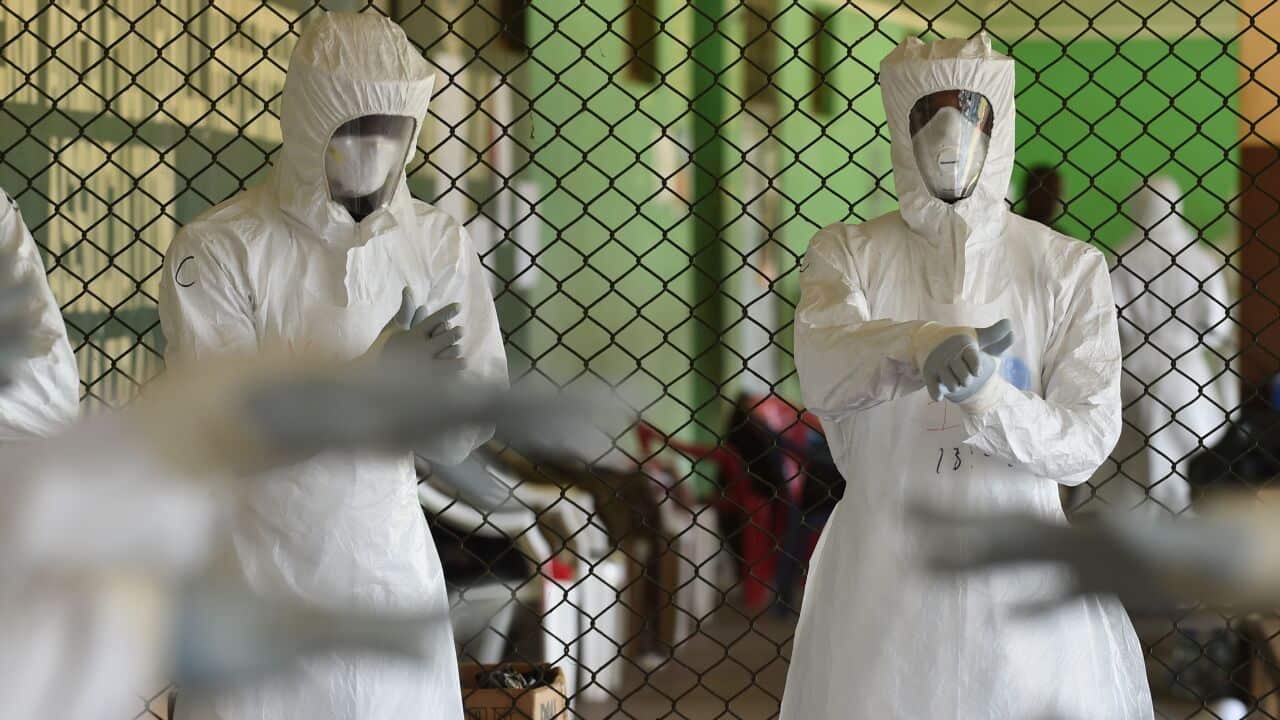
The concerns were outlined in a report which ranks the public health systems of the world’s poorest countries, issued by international aid charity Save the Children.
The report said 28 countries are more vulnerable to major health epidemics than Liberia, where Ebola claimed more than 4000 lives.
The warning preceded an Ebola summit, attended by world leaders in Brussels on Tuesday.
More than 80 delegates discussed the next steps in eradicating the disease across West Africa.
Listen: Save the Children's Country Director for Liberia Greg Duly speaks with Brianna Roberts.
Save the Children's Country Director for Liberia Greg Duly said investment in public health was vital in preventing another public health catastrophe.
Mr Duly said to date, it has cost around $4.3 billion to try to tackle Ebola.
“We estimate that for about $1.6 billion, the countries could have invested into a health system that would have provided basic essential health services to the citizens in those three countries,” he said.
“You need to have strong health systems in order for them to be able to detect early on the rise of potential epidemics and to be able to put in place, quickly enough, protocols and practices that would prevent, or at least limit the spread of the virus.”
Key findings from the report include:
- In Afghanistan, public spending on health is just $10.71 per person per year, compared to $3,099 in the UK
- In Somalia, there is one health worker for every 6,711 people – by comparison in the UK there is one health worker for every 88 people.
As well as rebuilding the fractured health systems of Liberia, Sierra Leone and Guinea following the Ebola crisis, Save the Children called for:
- The international community to make a clear commitment to Universal Health Coverage for every country – the principle that every person should have access to essential health care, not just those that can afford it – including the IMF encouraging countries to collect progressive taxes and increase investments in public health services
- Countries to increase domestic tax revenue to 20 per cent of GDP and allocate at least 15 per cent of their national budgets to health
- Donors to ensure that the aid they give is better aligned and contributes to building comprehensive primary healthcare systems
- The new Sustainable Development Goals – which will replace the Millennium Development Goals, due to be negotiated at the UN General Assembly in New York in September – to explicitly include a commitment to Universal Health Coverage
- World leaders to commit to end preventable maternal, new-born and child deaths by 2030
Share


