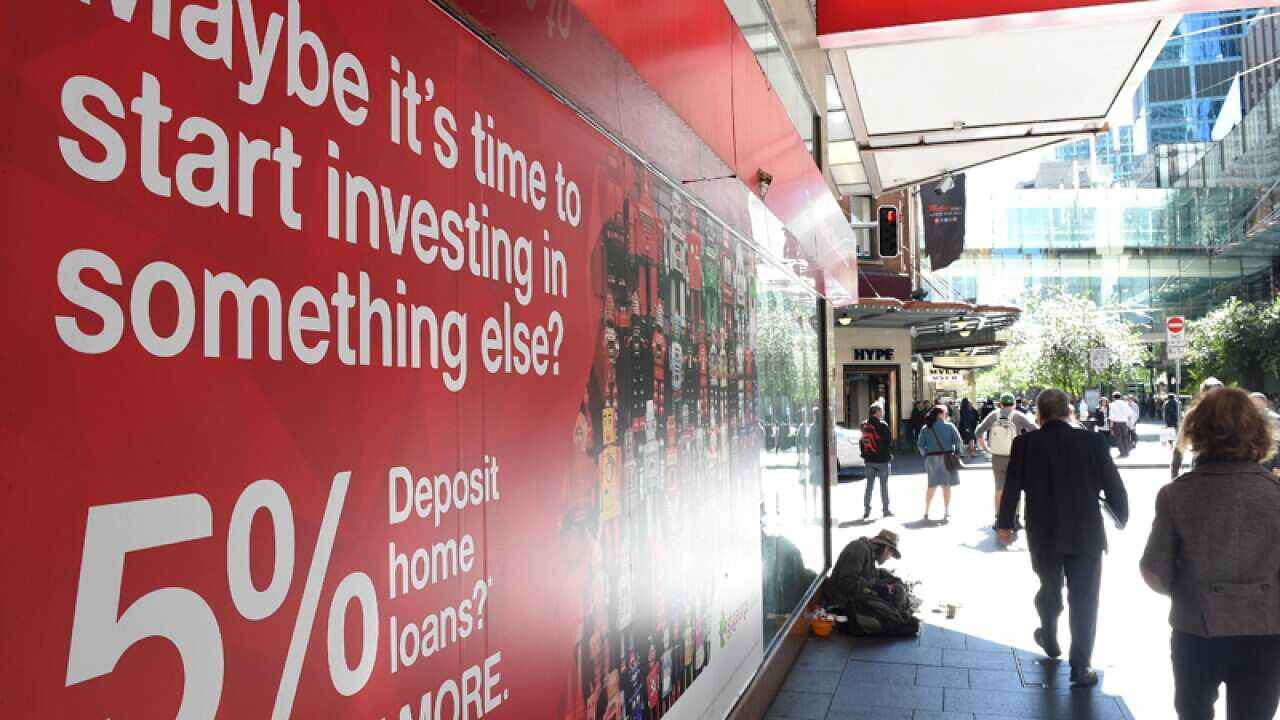
Investor home loans have suffered their largest monthly decline in seven years as borrowers appear to be pulling out of the property market in response to higher interest rates.
And while overall credit has softened too, doubts over the reliability of recent data mean the Reserve Bank will probably take the news with a grain of salt.
The value of loans approved for owner-occupied housing jumped three per cent in September, while approvals for housing investment plummeted 8.5 per cent, and has now fallen for five consecutive months.
All major banks have bumped up their interest rates on investment loans in response to requirements to increase their capital reserves.
CommSec chief economist Craig James said it was the biggest drop for investor loans in seven years, and regulators will be satisfied that their measures are working to slow demand.
News that makes sense
Your trusted source for staying up-to-date with the world around you. Get free daily news updates and analysis, straight to your inbox.
"The Reserve Bank would be happy at the mix of lending in the housing market," he said.
But JP Morgan economist Tom Kennedy said the central bank in a speech last week indicated it was sceptical of the data, and urged banks to refine and improve it.
"There's some other things going on behind the scenes in terms of reclassifying data from investors to owner-occupiers," he said.
RBC Capital Markets fixed income and currency strategist Michael Turner said figures from the banks have been revised to show a much higher level of investor credit outstanding.
"And borrowers now have an incentive to report loans as owner occupier given the relative increase in rates charged for investor lending," he said.
Regardless, demand for overall housing credit has steadied during the past few months, Mr Turner said.
The number of home loans approved rose 2.0 per cent, but the value of total housing finance was down 1.6 per cent in the month, seasonally adjusted data from the Australian Bureau of Statistics showed.
"It implies there'll be slower credit growth ahead, which is usually a sign that price growth is going to moderate," Mr Turner said.
"This would be consistent with anecdotes of a cooling in Sydney and Melbourne and an ongoing mixed state of affairs elsewhere."
ANZ economists said falling auction clearances rates, weaker house price growth and higher mortgage rates in recent weeks point to a soft housing market outlook in 2016.
They said the sharp loss in momentum in recent months will also impact the housing market's contribution to national economic growth.
"(This will) weigh on planned housing construction and provide less of a boost to consumer confidence and retail spending," they said.







