Iran has laid out "red lines" related to its ballistic missile programme, nuclear sites and uranium enrichment ahead of fresh nuclear talks with world powers.
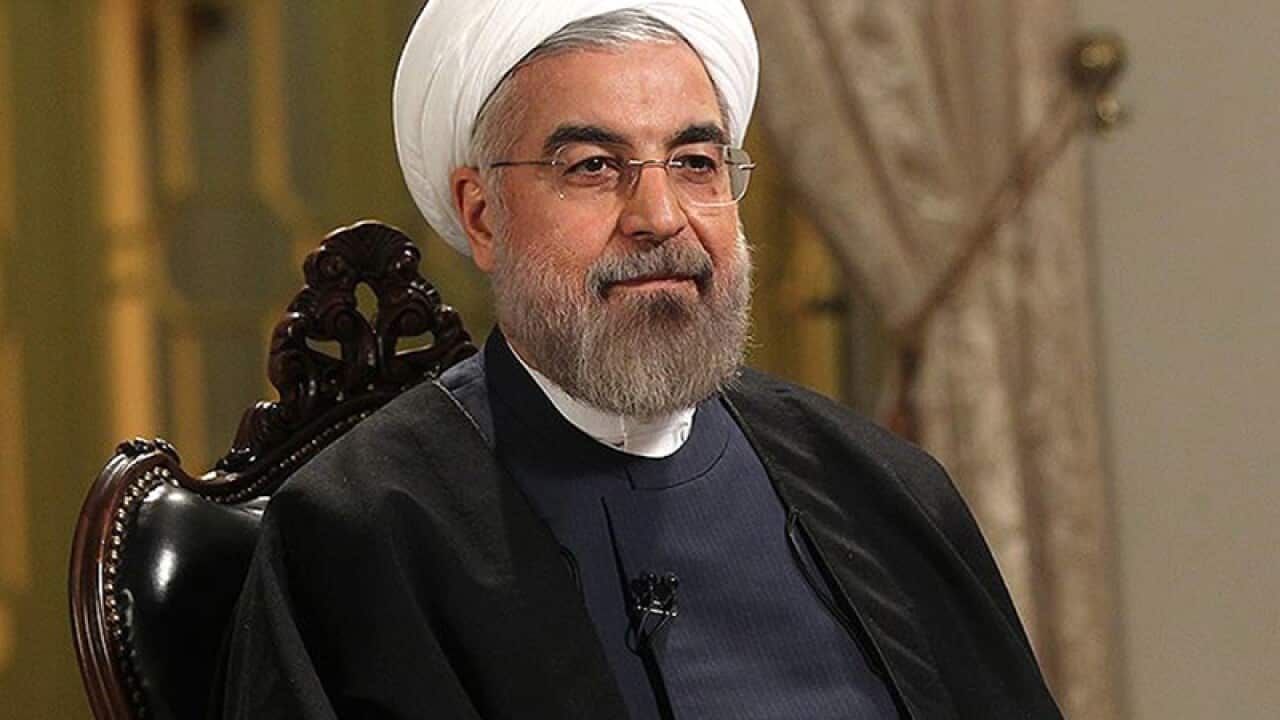
President Hassan Rouhani insisted Iran was "serious" about the negotiations, as his negotiators warned they would not back down on some of the thorniest issues of the decade-long dispute.
Negotiations are set to resume in Vienna on February 18 and 19 between Iran and the so-called P5+1 -- Britain, France, the United States, Russia and China plus Germany.
Building on a breakthrough interim deal reached in November, negotiators hope to eventually reach a comprehensive accord to allay international concerns that Iran is seeking a nuclear weapons capability, allegations denied by Tehran.
Iran made progress in separate but parallel negotiations with the UN nuclear watchdog over the weekend, by agreeing to divulge information that could shed light on allegations of possible past weapons research.
News that makes sense
Your trusted source for staying up-to-date with the world around you. Get free daily news updates and analysis, straight to your inbox.
Under a deal reached in Tehran with the International Atomic Energy Agency (IAEA), Iran will explain its need for sophisticated detonators that could be used to initiate a nuclear chain reaction.
But on Monday deputy foreign minister Abbas Araqchi, who is also a senior Iranian nuclear negotiator, said "the defence-related issues are a red line for Iran.
"We will not allow such issues to be discussed in future talks," he said.
The US lead negotiator in the talks, Wendy Sherman, last week told a Senate hearing that Iran's ballistic missile programme would be addressed in the comprehensive deal.
Sherman also argued that Iran does not require an unfinished heavy water reactor in Arak, nor the underground Fordo uranium enrichment site for its civilian nuclear programme.
But another Iranian nuclear negotiator, Majid Takhte Ravanchi, on Monday reiterated that Iran would not accept the closure of "any of its nuclear sites."
The Arak site is of international concern because Iran could theoretically extract weapons-grade plutonium from spent fuel if it also builds a reprocessing facility.
Foreign Minister Mohammad Javad Zarif, Iran's top negotiator, said Monday the talks in Vienna would be "difficult," while anticipating that a framework for future negotiations would be discussed.
"The biggest challenge is the lack of trust," he added.







