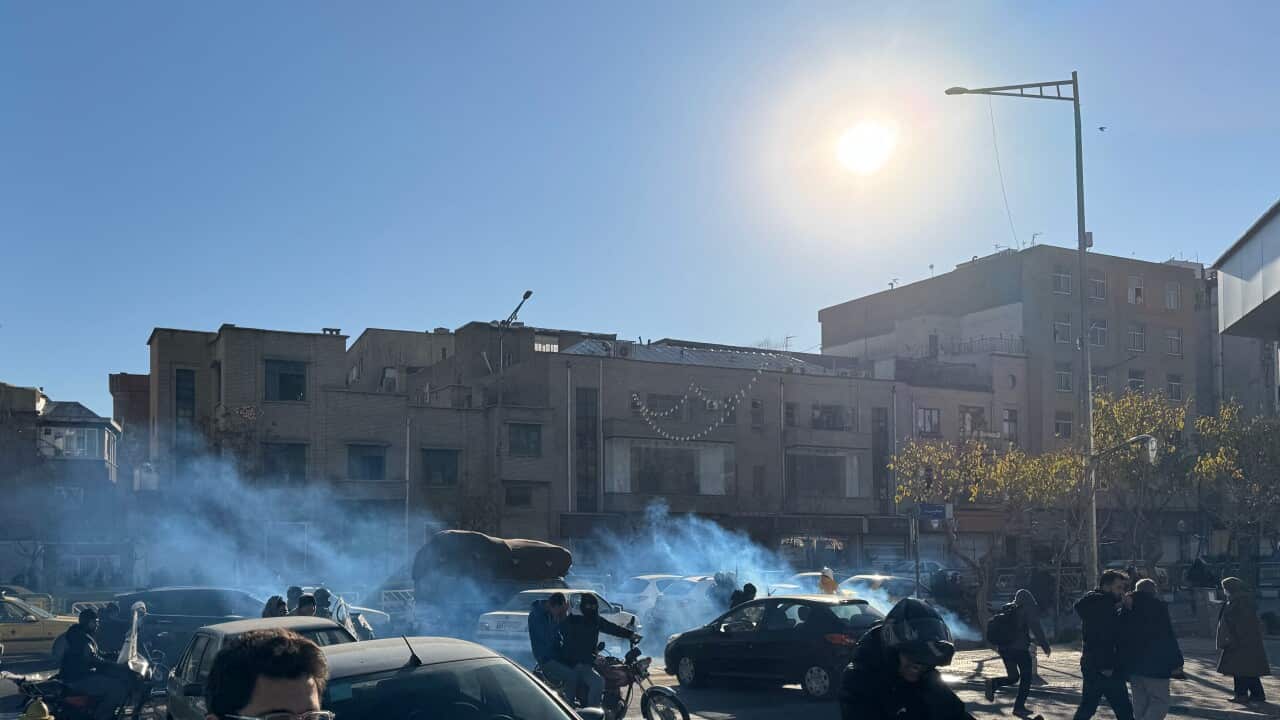
Iranian students staged street protests in Tehran, a day after the capital's shopkeepers demonstrated against economic hardship and won a message of understanding from the president.
According to Ilna, a news agency associated with Iran's labour movement, protests erupted at 10 universities across the country on Tuesday, including seven in Tehran, among the country's most prestigious.
Protests also broke out at the technology university in the central city of Isfahan and institutions in the cities of Yazd and Zanjan, Ilna and state-run IRNA reported.
On Tuesday, security forces and riot police were deployed at major intersections in Tehran and around some universities, while some of the shops closed the previous day in the capital's centre had reopened.
The student action came a day after protests in central Tehran by shop-owners and a day before the temporary closure of banks, schools and businesses in the capital and most provinces to save energy amid the bitterly cold weather.
News that makes sense
Your trusted source for staying up-to-date with the world around you. Get free daily news updates and analysis, straight to your inbox.
Iranian President Masoud Pezeshkian said in a social media post late on Monday he had asked the interior minister to listen to "legitimate demands" of protesters. Government spokesperson Fatemeh Mohajerani said a dialogue mechanism would be set up, including talks with protest leaders.
"We officially recognise the protests ... We hear their voices and we know that this originates from natural pressure arising from the pressure on people's livelihoods," Mohajerani said in comments carried by state media.
The government has not said what form dialogue will take with the leaders of this week's demonstrations, the first major protests since Israeli and US strikes on Iran in June, which prompted widespread expressions of patriotic solidarity.
Why are people protesting?
Iran's rial currency has lost nearly half its value against the dollar in 2025, with inflation reaching 42.5 per cent in December in a country where unrest has repeatedly flared in recent years and which is facing the United States sanctions and threats of Israeli strikes.
Price fluctuations are paralysing sales of some imported goods, with both sellers and buyers preferring to postpone transactions until the outlook becomes clearer.
According to the Etemad newspaper, one trader complained that officials had offered no support to storekeepers battling soaring import costs.
"They didn't even follow up on how the dollar price affected our lives," he complained, speaking on condition of anonymity.
"We had to decide to show our protest. With this dollar price, we can't even sell a phone case, and the officials don't care at all that our lives are run by selling mobile phones and accessories."
The country's economy, already battered by decades of Western sanctions, was further strained after the United Nations in late September reinstated international sanctions linked to the country's nuclear program that were lifted 10 years ago.
On Wednesday, Pezeshkian said Iran is "engaged in a full-scale war" with the West.
"Right now, the enemy has placed most of its hopes on knocking us down through economic pressure. You cannot conquer a nation with bombs, fighter jets, or missiles. To defeat us, they would have to come and face us on the ground," he said.
Western powers and Israel accuse Iran of seeking to acquire nuclear weapons. Iran says its nuclear energy program is entirely peaceful and that it has not tried to build a nuclear bomb.
Economic disparities between ordinary Iranians and the clerical and security elite, along with economic mismanagement and state corruption — reported by state media — have also fanned discontent at a time when inflation is pushing many prices beyond the means of most people.
The currency slid to 1.4 million rials to the US dollar on Tuesday, according to private exchange platforms, a record low after starting the year at 817,500 rials to the dollar.
For the latest from SBS News, download our app and subscribe to our newsletter.







