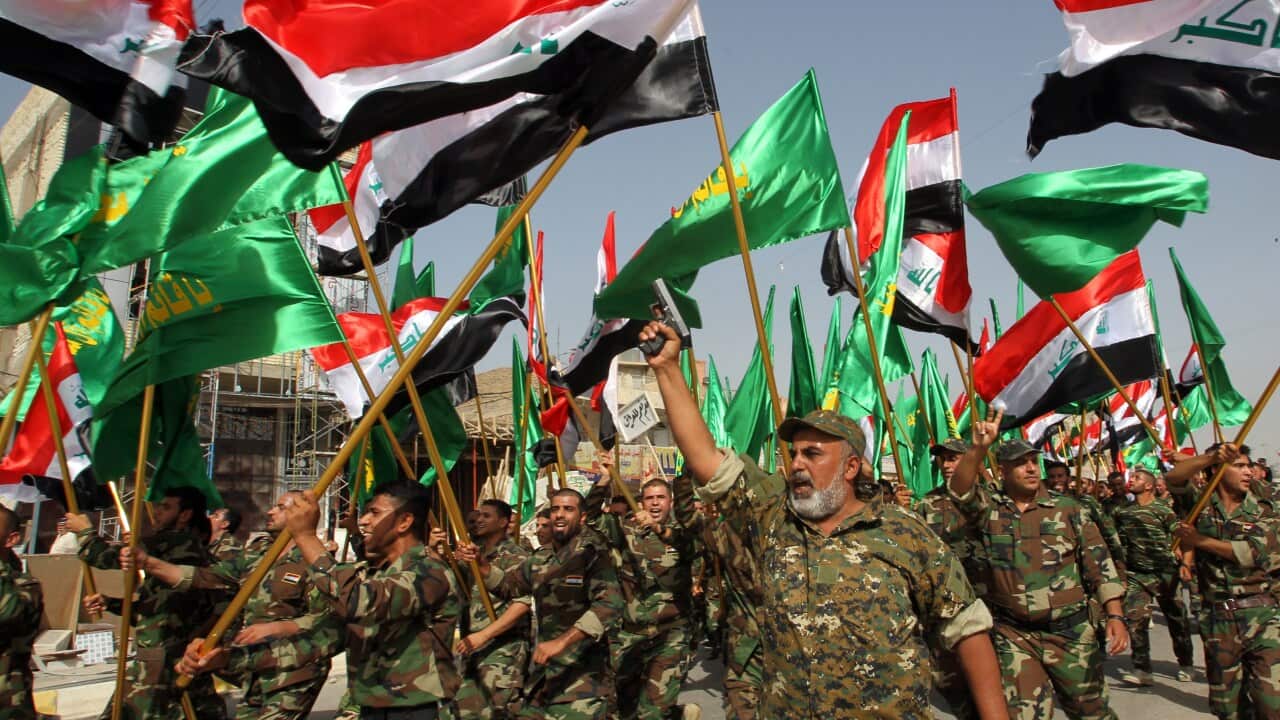
Meanwhile, Washington readied a new diplomatic bid to unite Iraq's fractious leaders and repel insurgents whose lightning offensive has displaced hundreds of thousands, alarmed the world and put Prime Minister Nuri al-Maliki under growing pressure domestically and overseas.
In a sign that the broad alliance of jihadists and anti-government elements behind the offensive might be fracturing, internecine clashes killed 17 fighters on Saturday in northern Iraq.
News that makes sense
Your trusted source for staying up-to-date with the world around you. Get free daily news updates and analysis, straight to your inbox.
In Baghdad, thousands of fighters loyal to powerful Shi'ite cleric Moqtada al-Sadr paraded with weapons in the Sadr City district,, vowing to fight the offensive which was launched on June 9.
Some of the unit leaders carried Iraqi flags, while others held signs with messages including "We sacrifice for you, O Iraq," "No, no to terrorism," and "No, no to America".
Similar parades were held in large southern cities including Basra, Najaf and Kut, all in the Shi'ite heartland.
Iraqi security forces announced they were holding their own in several areas north of Baghdad, but officials said insurgents led by ISIL seized control of one of three official border crossings with Syria.
The Sunni insurgents driving the recent offensive include a host of other groups, such as loyalists of now-executed dictator Saddam Hussein, and have formed a wide alliance.
Analysts say it is unclear if that grouping can hold together given disparate ideologies.
The parades in Baghdad and clashes elsewhere came as US President Barack Obama dispatched Secretary of State John Kerry to Europe and the Middle East in a new push for unity among Iraq's fractious political leadership.
While Kerry is expected to travel to Iraq itself, it is not known exactly when he will do so.
Obama's refusal so far to accede to Iraq's appeal for air strikes on the ISIL-led militants has prompted Baghdad's powerful Shi'ite neighbour Iran to claim Washington lacks the will to fight terror.
Obama, who based his political career on ending the costly eight-year US intervention in Iraq, has insisted that Washington is not slipping back into the morass, but has offered up to 300 advisers and left open the possibility of "targeted and precise military action."
Washington already has an aircraft carrier in the Gulf and is flying manned and unmanned surveillance flights over Iraq, while senior US officials say special forces being sent to advise Iraq could call in air strikes if necessary.
UN aid agencies said they were rushing supplies to Iraq to help more than one million people displaced by the latest violence and unrest earlier this year.







