

There was shock and awe as US-led troops stormed Iraq and the reverberations were soon felt in the Australian boardroom of AWB.
The single-desk wheat exporter received a "haircut" to its contract to supply grain into Iraq after coalition force auditors found it was over-valued in Iraq's favour.
A 10 per cent premium was being paid in the form of trucking and other fees, Victoria's Supreme Court was told on Tuesday, in a practice allegedly in breach of sanctions imposed on Iraq.
"They applied a haircut to many of those contracts, particularly AWB," Australian Securities and Investments Commission counsel Norman O'Bryan SC said of coalition force auditors who arrived in Iraq in 2003.
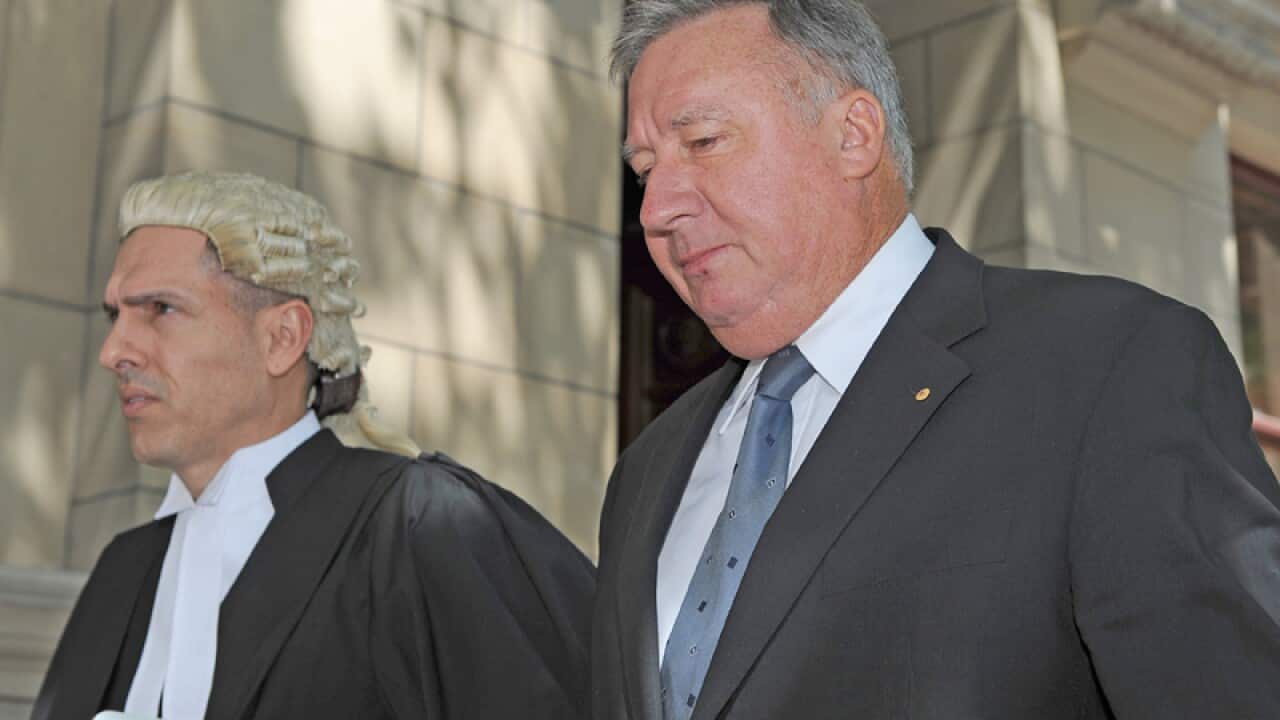
Two former AWB executives - chair Trevor James Flugge and group general manager trading Peter Anthony Geary - are now on trial for breach of their duties over the payments.
A total of $300 million in alleged kickbacks were paid to the Iraqi government in the form of inland transport and after-sales service fees from 1999 to 2003.
The court was told AWB's share of the Iraqi grain market rose from about 50 per cent to 90 per cent while these fees were being paid.
Concerns were raised internally that payment of an inland transport fee would effectively extend AWB's liability for potential grain loss beyond the dock.
This drew an assurance Iraq "did not want anything except for money to be paid into a Jordanian bank account," Mr O'Bryan said.
In another Iraq-related email exchange read out to the court, AWB executives referred to buying a "very large suitcase", presumably to be filled with cash.
Mr O'Bryan said this appeared to be "an explicit, or semi-humorous, instruction about what to do".
He said Flugge had set out to restore Australia's grain supply to levels seen before sanctions were imposed over Iraq's 1990 invasion of Kuwait.
AWB used a 1995-established UN Food For Oil program, which allowed AWB to supply grain into Iraq and to recover its costs from a UN escrow account.
"Mr Flugge was highly successful in re-opening the doors," Mr O'Bryan said.
Flugge was "at the very heart" of AWB's dealings with Iraq, he said, and Geary had a responsibility to act as whistle-blower.
"It's not difficult to draw the inference that they knew full well when they decided to breach these sanctions, as they did a few years later," Mr O'Bryan said.
Flugge left AWB in 2002 but Geary was still working there in 2003 as US-led forces invaded Iraq.
"The invasion ... made no difference in his obligation to blow the whistle," Mr O'Bryan said.
Opening statements in the case are expected to continue until Thursday.







