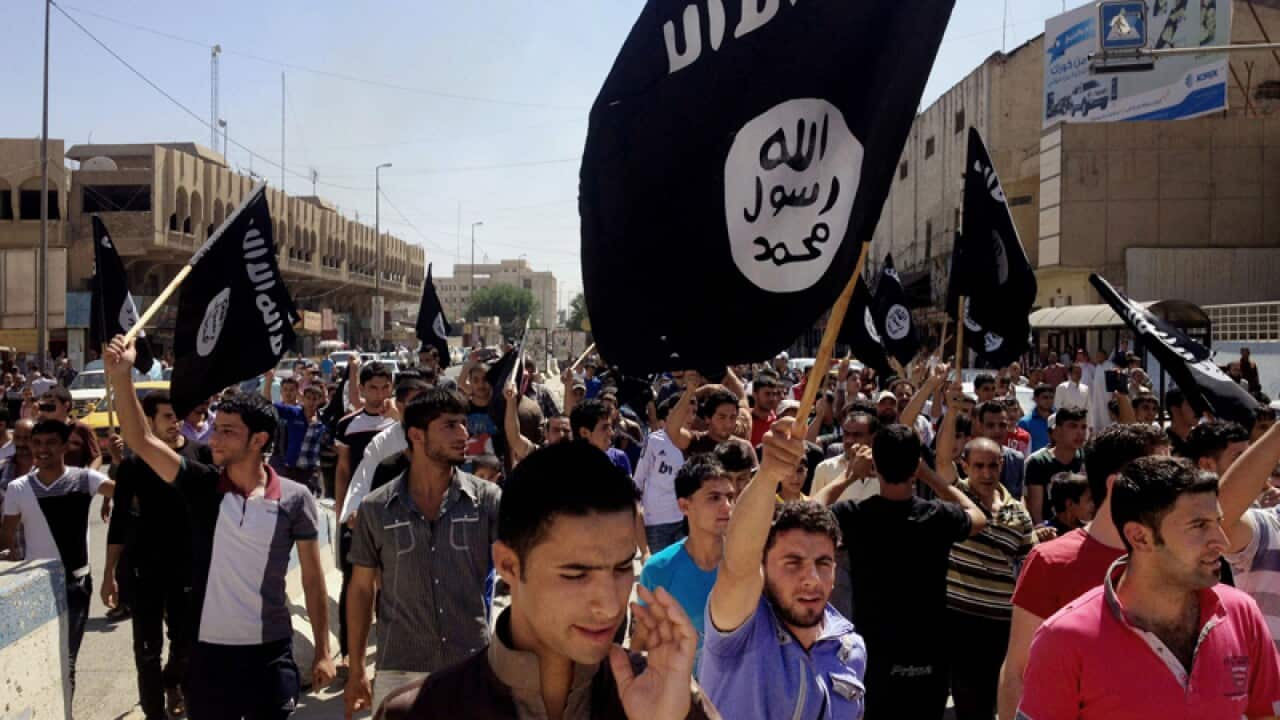
Iraq's new parliament has failed to elect a Speaker as its first session ended in disarray, with MPs due to meet again in a week.
MPs were constitutionally required to choose a Speaker in their first session, followed over a period of weeks by the selection of a new president, who names a presumptive prime minister.
But on Tuesday a number of MPs failed to return after a 30-minute break meant to restore order, and the session broke down into a debate over whether there were enough MPs present to continue.
Eventually, Mahdi Hafez, the MP presiding over the session, said parliament would reconvene on July 8 "if there is the possibility of an agreement".
The legislative chaos comes despite repeated international appeals for unity as Iraq faces a major Sunni militant offensive that has overrun swathes of five provinces north and west of Baghdad.
News that makes sense
Your trusted source for staying up-to-date with the world around you. Get free daily news updates and analysis, straight to your inbox.
Under de facto agreements after past elections, the parliament Speaker has generally been a Sunni Arab, the prime minister a Shi'ite Arab, and the president a Kurd.
Iraqi forces meanwhile have pressed a counter-offensive against executed dictator Saddam Hussein's hometown of Tikrit, one of a string of towns and cities overrun by jihadist-led fighters in a swift advance that left nearly 2000 people dead this month, displaced hundreds of thousands and piled pressure on Prime Minister Nouri al-Maliki.
Maliki's bid for a third term in office has been battered by the offensive and he is no longer seen as the clear frontrunner.
A security source based near Tikrit said reinforcements arrived with tanks and artillery on Monday.
An army officer said troops controlled parts of the outskirts of the city, about 160 kilometres north of Baghdad, which the militants captured on June 11.
The Islamic State of Iraq and the Levant (ISIL, also known as ISIS) announced on Sunday that it was establishing a "caliphate" extending from Aleppo in northern Syria to Diyala province in eastern Iraq, the regions where it has fought against the regimes in power.
The US said the declaration of an "Islamic caliphate" on territory ISIL have seized in Iraq and Syria has "no meaning".
"We have seen these types of words from ISIL before," State Department spokeswoman Jen Psaki told reporters.
"This declaration has no meaning for the people in Iraq and Syria," she said, adding that the militants - who have now renamed their group the Islamic State - were just trying "to control people by fear."
President Barack Obama said he'd sent up to 200 US extra combat-equipped troops with surveillance gear and helicopters to protect the US embassy in Baghdad.
Together with a 275-strong embassy protection force already sent and another 300 US special forces charged with advising the Iraqi army, the deployment will mean nearly 800 US soldiers will be in Iraq, following the sudden advance of ISIL.
"In light of the security situation in Baghdad, I have ordered up to approximately 200 additional US Armed Forces personnel to Iraq to reinforce security at the US embassy, its support facilities, and the Baghdad International Airport," Obama said in a letter to congress.
"This force is deploying for the purpose of protecting US citizens and property, if necessary, and is equipped for combat."
In London, Iraq's Kurds said they will hold an independence referendum within months.
Their leader, Massud Barzani, said on Tuesday the time was right for a vote as Iraq was already effectively partitioned following the lightning gains by ISIL.
"We will hold a referendum in Kurdistan and we will respect and be bound by the decision of our people and hope that others will do likewise," he told the BBC.
Asked whether the vote would take place soon, Barzani added: "I can't fix a date right now but definitely it's a question of months. But of course it must be decided by parliament."
The region would need to establish an independent electoral authority before a vote could take place, Barzani noted.







