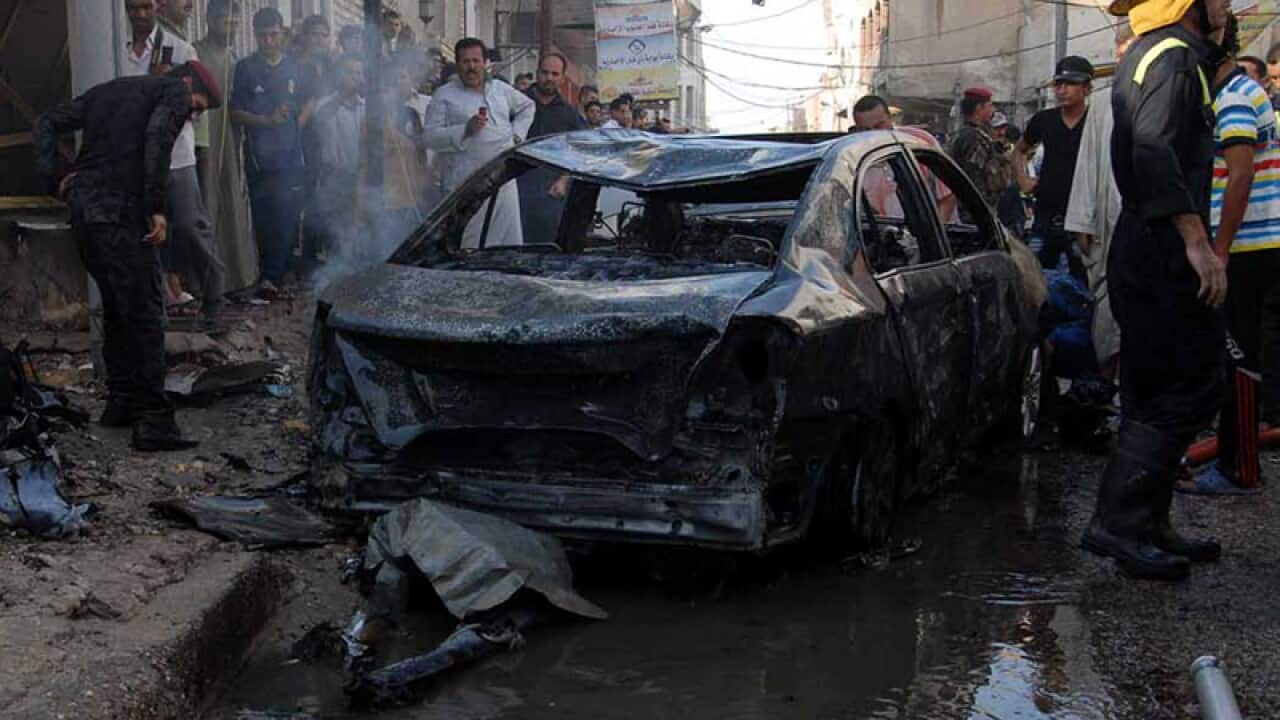
Fresh violence in Iraq has left 35 people dead, including 15 civilians, as the Shi'ite-led government pledges to continue to crackdown on insurgents.
Prime Minister Nouri al-Maliki has vowed to press ahead with a campaign to try to stem the bloodshed, which has claimed more than 3500 lives already this year.
But analysts and diplomats say Iraq is not tackling the root causes of the unrest.
On Tuesday, six car bombs south of the capital killed six civilians and a policeman and wounded 98 people.
Another bomb struck a cafe in a village north of Baghdad, killing five people and wounding 15 others, the latest in a string of attacks targeting cafes in recent weeks.
News that makes sense
Your trusted source for staying up-to-date with the world around you. Get free daily news updates and analysis, straight to your inbox.
Two separate bombings at a livestock market and a police station north of Baghdad killed three people, including a policeman, and wounded nine others.
Gunmen also killed two senior police officers and a civilian in the country's north, while a magnetic "sticky bomb" exploded on a university employee's car, killing him.
Meanwhile, 16 militants were killed north of the capital.
Nine died in an apparent dispute between militant groups, while seven others were killed by security forces north of Baghdad in two separate clashes.
Security forces have mounted some of the biggest operations targeting militants since the withdrawal of US troops at the end of 2011.
A top general said 116 militants were arrested on Tuesday, including dozens of Al-Qaeda-linked fighters.
Security forces destroyed six of the militant vehicles, two training camps and a site where car bombs were being made.
Violence has surged this year to levels not seen since Iraq was emerging from a brutal Sunni-Shi'ite sectarian conflict in 2008.
Analysts and diplomats have linked the increased bloodshed to anger among Iraq's Sunni Arab minority over their alleged ill-treatment at the hands of the Shi'ite-led authorities.







