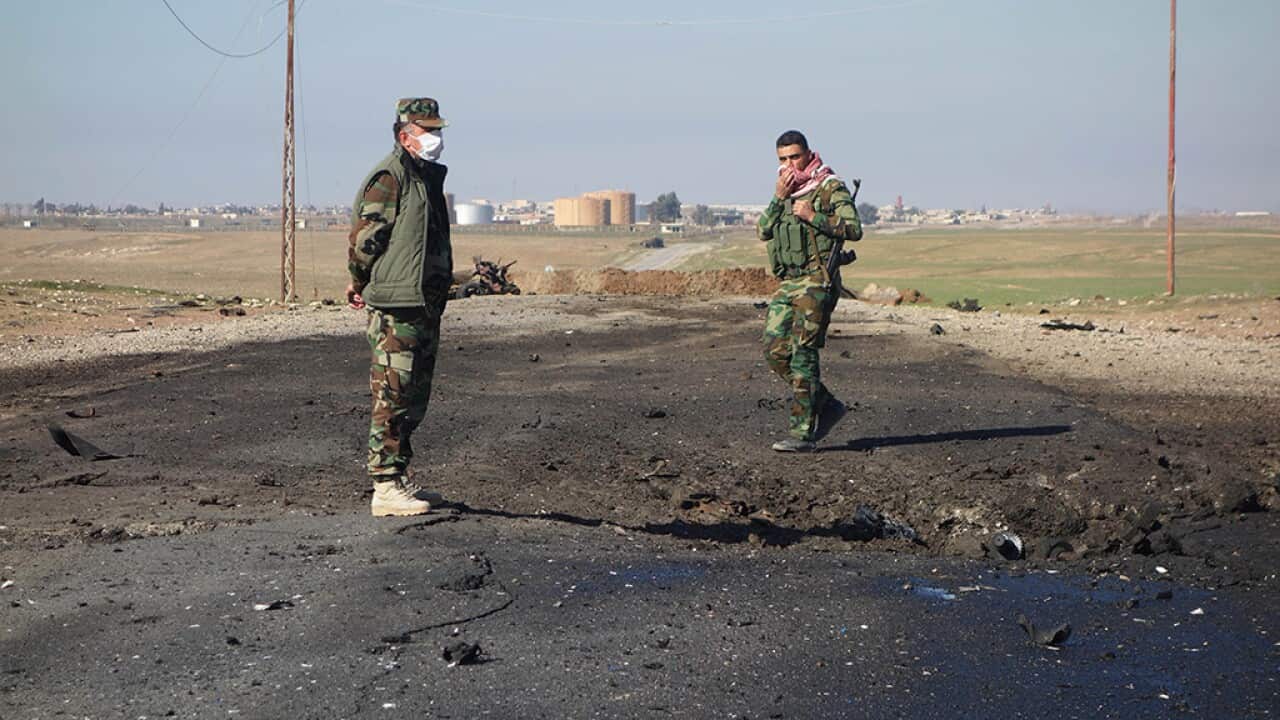
The Kurdish government in Iraq says it has evidence examined by an independent laboratory confirming that the Islamic State group used chlorine gas as a chemical weapon against peshmerga fighters.
The allegation by the Kurdistan Region Security Council, stemming from a January 23 suicide truck bomb attack in northern Iraq, did not immediately draw a reaction from the Islamic State group.
Iraqi officials and Kurds fighting in Syria have made similar allegations about the militants using low-grade chemical weapons against them.
In a statement on Saturday, the council said the alleged chemical attack took place on a road between Iraq's second-largest city, Mosul, and the Syrian border, as peshmerga forces fought to seize a vital supply line used by the Sunni militants.
It said its fighters later found "around 20 gas canisters" that had been loaded onto the truck involved in the attack.
News that makes sense
Your trusted source for staying up-to-date with the world around you. Get free daily news updates and analysis, straight to your inbox.
The Kurds say samples of clothing and soil from the site were analysed by an unnamed lab in an unnamed coalition partner nation, which found chlorine traces.
"The fact ISIS relies on such tactics demonstrates it has lost the initiative and is resorting to desperate measures," the Kurdish government said in the statement.
Chlorine, an industrial chemical, was first introduced as a chemical weapon at Ypres in World War I. While chlorine has many industrial and public uses, as a weapon it chokes victims to death.
In the Syrian civil war, a chlorine gas attack on the outskirts of Damascus in 2013 killed hundreds and nearly drove the US to launch airstrikes against the government of embattled President Bashar Assad.
In October, Iraqi officials claimed Islamic State militants may have used chlorine-filled cylinders during clashes in late September in the towns of Balad and Duluiya.







