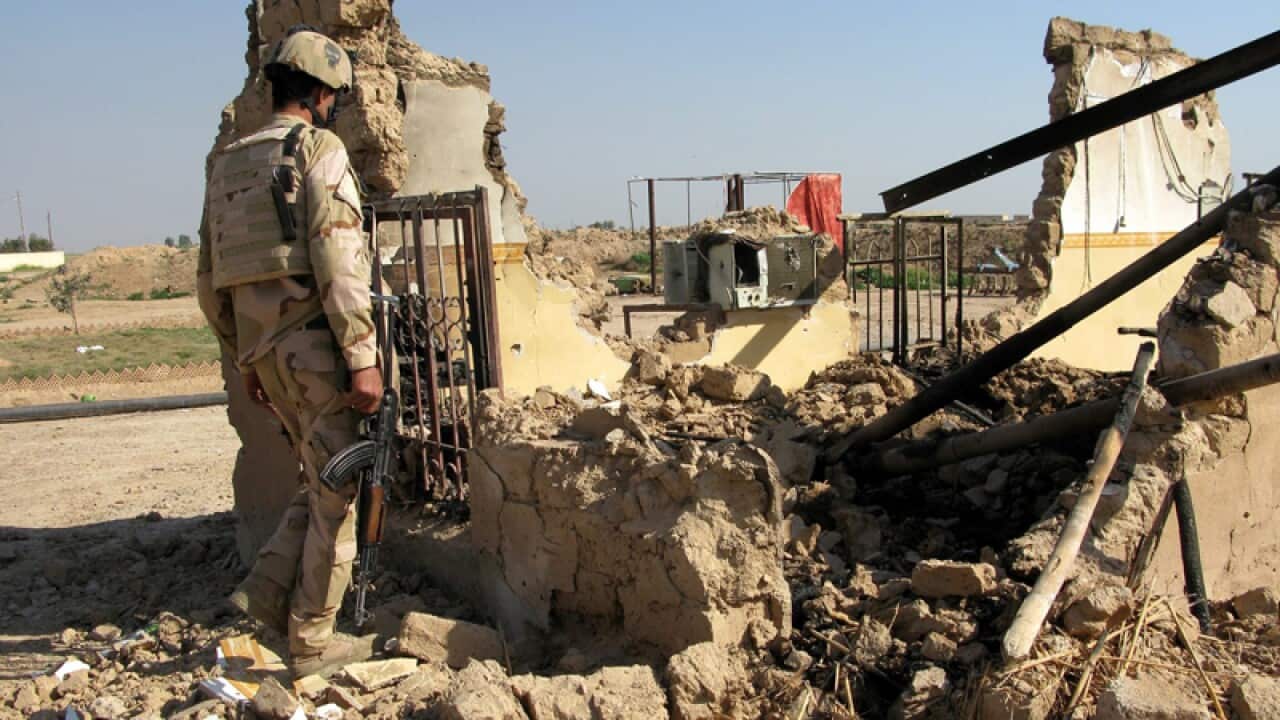
Iraq's offensive to retake Tikrit from the Islamic State group has been stalled because of streets and buildings rigged with booby trap bombs.
Troops, police and militia fairly easily boxed the jihadists in over recent days, but mopping them up is proving to be far harder.
"The battle to retake Tikrit will be difficult because of the preparations (IS) made," said Jawwad al-Etlebawi, spokesman for Asaib Ahl al-Haq, a Shi'ite militia playing a major role in the operation.
"They planted bombs on all the streets, buildings, bridges, everything... Our forces were stopped by these defensive preparations," he told AFP on Tuesday.
"We need forces trained in urban warfare to break in," he said, adding that the jihadists are surrounded.
News that makes sense
Your trusted source for staying up-to-date with the world around you. Get free daily news updates and analysis, straight to your inbox.
The assault on Tikrit, capital of Salaheddin province, began on March 2.
Loyalists had already failed three times retake the city, the hometown of Saddam Hussein, which was captured by IS last summer.
Interior Minister Mohammed Ghabban on Monday said the operation had been halted to avoid casualties and to protect infrastructure.
But it is unclear how anything other than an extended siege would achieve either of those objectives, unless there is additional external support, such as air strikes.
Staff Lieutenant General Abdulwahab al-Saadi, commander for Salaheddin, said his forces in Tikrit needed air support from the US-led coalition.
He said he had asked the defence ministry to request air support, but that none had yet been forthcoming.
The longer the operation drags on, the longer civilians remaining in Tikrit will be caught in the middle.
Adnan Yunis, spokesman for the Red Crescent in Salaheddin, said only a maximum 20 per cent of Tikrit's pre-conflict population is believed to remain in the city.
There are "no more than 30,000, probably quite a bit less," he said.
"They are people who stayed because they do not have enough money to leave, they don't have a car, they have a disability or because they chose to cooperate" with IS, Yunis said.







