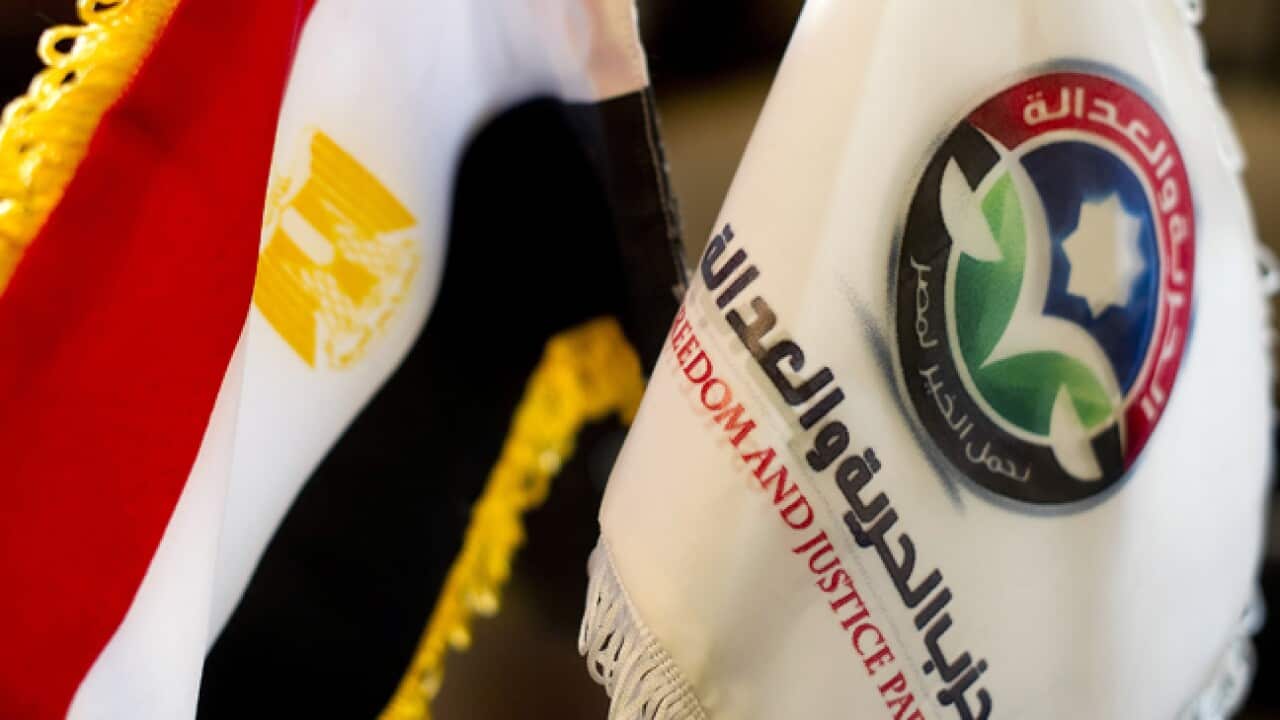
Egypt's Islamists claimed Wednesday they were headed for victory in the opening phase of the country's first post-revolution election after two days of peaceful polling that won international plaudits.
The Freedom and Justice Party (FJP), a front for the Muslim Brotherhood, a moderate group persecuted and banned during the 30-year rule of president Hosni Mubarak, said they were leading in preliminary results.
"After completing the vote count in most polling stations, results we have received show the Freedom and Justice Party in the lead with over 40 percent," an FJP statement said.
News that makes sense
Your trusted source for staying up-to-date with the world around you. Get free daily news updates and analysis, straight to your inbox.
The FJP also claimed that the Al-Nur movement, a hardline group whose members follow the strict Salafi brand of Islam, was in second place -- a trend that if confirmed will alarm secular liberals and the minority Christian community.
PEACEFUL VOTE
On Monday and Tuesday, millions of Egyptians embraced their new democratic freedoms, filing into polling stations in the capital Cairo and second-city Alexandria for the first phase of multi-stage parliamentary elections.
Publication of the results for the areas that voted this week -- only a third of constituencies -- was pushed back from Wednesday evening until Thursday, state television reported without giving reasons.
While the figures are only for the first round of a parliamentary election that will end in March, they will show the political trends likely to shape a country that has not had a free vote in 60 years.
US Secretary of State Hillary Clinton on Wednesday urged Egypt to continue its transition to democracy "in a just, transparent and inclusive manner."
The Muslim Brotherhood, a group at pains to stress its religious tolerance during campaigning, earned respect and recognition among many Egyptians for its opposition to Mubarak and its extensive charitable work.
MUSLIM BROTHERHOOD
Many of the new political parties which have emerged in the post-Mubarak era are unknown to voters and the secular pro-democracy movement that helped overthrow the dictator is divided and disorganised.
"The real surprise is not if the Muslim Brotherhood wins, the real surprise is if it does not win," wrote commentator Tariq al-Hamid in the pan-Arab newspaper Asharq al-Awsat earlier in the week.
"The Brotherhood is a powerful force because it works day and night, on the ground and not through social networking sites," he added, in a swipe at the noisy liberals active on Twitter.
Many of those liberals worry about the group's attitudes to women, its stated desire to see Islamic law instituted in Egypt, and whether its moderate rhetoric is a front for a long-term plan to make the country officially Islamic.
The Brotherhood's success would fit a pattern seen elsewhere in north Africa and the Arab region during a year of wrenching change caused by pro-democracy movements known as the Arab Spring.
In Tunisia, the origin of the Arab Spring, a moderate Islamist party won the first free election. Morocco's recent vote produced a similar result.
MORE PROTEST
Also Wednesday, activists called for two separate demonstrations on Friday -- one against the interim military rulers overseeing the country's transition to democracy since the February revolution, and one to support them.
The two protests reflect split opinions among Egyptians, some of whom fear that the army leaders are determined to stay in power, while others are fed up with the instability caused by recent turmoil and unrest.
Forty-two people were killed and more than 3,000 injured last week in violent anti-regime protests around Tahrir Square, the central Cairo square where hundreds of thousands massed to force Mubarak from power.
The election this week, which saw Egyptians vote enthusiastically and in large numbers, appeared to have broken the cycle of protests and a demonstration called in Tahrir last Sunday was poorly attended.
The US State Department spoke of the "success" of the start of the election, while UN Secretary General Ban Ki-moon sent his congratulations for the "generally calm and orderly" conduct of the poll.
The vote on Monday and Tuesday in Cairo and Alexandria and other areas was the first of three stages of an election for a new lower house of parliament. The rest of the country follows next month and in January.
After each round there will be a run-off vote, and then a further three rounds of voting for the upper house of parliament from January.







