Israel says it is suspending contacts with European Union bodies involved in peace efforts with the Palestinians after the bloc started requiring the labelling of exports from Israeli settlements in the West Bank.
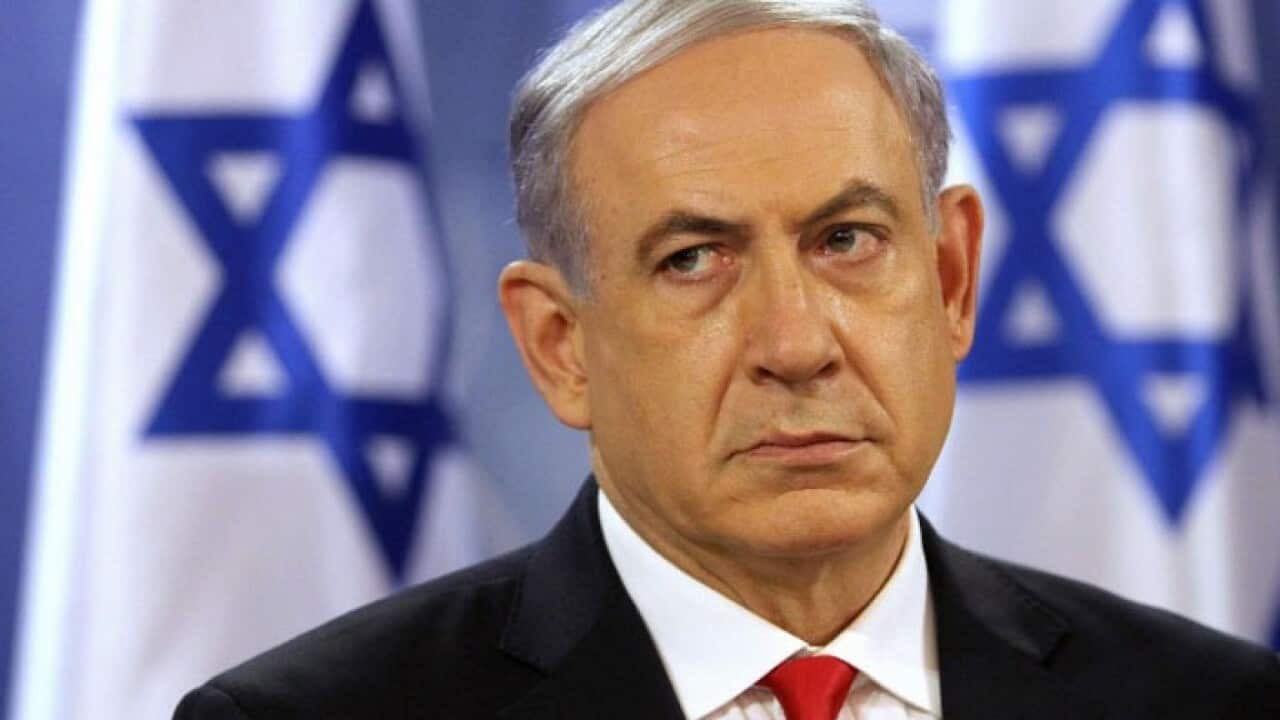
Prime Minister Benjamin Netanyahu, who is also the foreign minister, on Sunday ordered the ministry to carry out "a reassessment of the involvement of EU bodies in everything that is connected to the diplomatic process with the Palestinians", a ministry statement said.
"Until completion of the reassessment, the Prime Minister has ordered a suspension of diplomatic contacts with the EU and its representatives in this matter."
The ministry added that contacts with individual EU countries - it named Germany, France and Britain - would not be affected.
A ministry official said Israel would cease assisting EU sponsored projects intended for the Palestinians but no specific instances or bodies were named.
News that makes sense
Your trusted source for staying up-to-date with the world around you. Get free daily news updates and analysis, straight to your inbox.
The EU published new guidelines on November 11 for labelling products made in Israeli settlements, a move Brussels said was technical but which Israel branded "discriminatory" and damaging to peace efforts with the Palestinians.
Drawn up over three years by the European Commission, the guidelines mean Israeli producers must explicitly label farm goods and other products that come from settlements built on land occupied by Israel if they are sold in the European Union.
The EU's position is that the lands Israel has occupied since the 1967 Middle East war - including the West Bank, East Jerusalem and the Golan Heights - are not part of the internationally recognised borders of Israel.
As such, goods from there cannot be labelled "Made in Israel" and should be labelled as coming from settlements, which the EU considers illegal under international law.
The development of settlements has been one of the obstacles to negotiations between Israel and the Palestinians, with US-backed peace talks stalling in April 2014.
Israel's economy ministry estimated the impact of the decision at about $US50 million ($A69.15 million) a year, affecting fresh produce such as grapes and dates, wine, poultry, honey, olive oil and cosmetics made from Dead Sea minerals.







