In brief
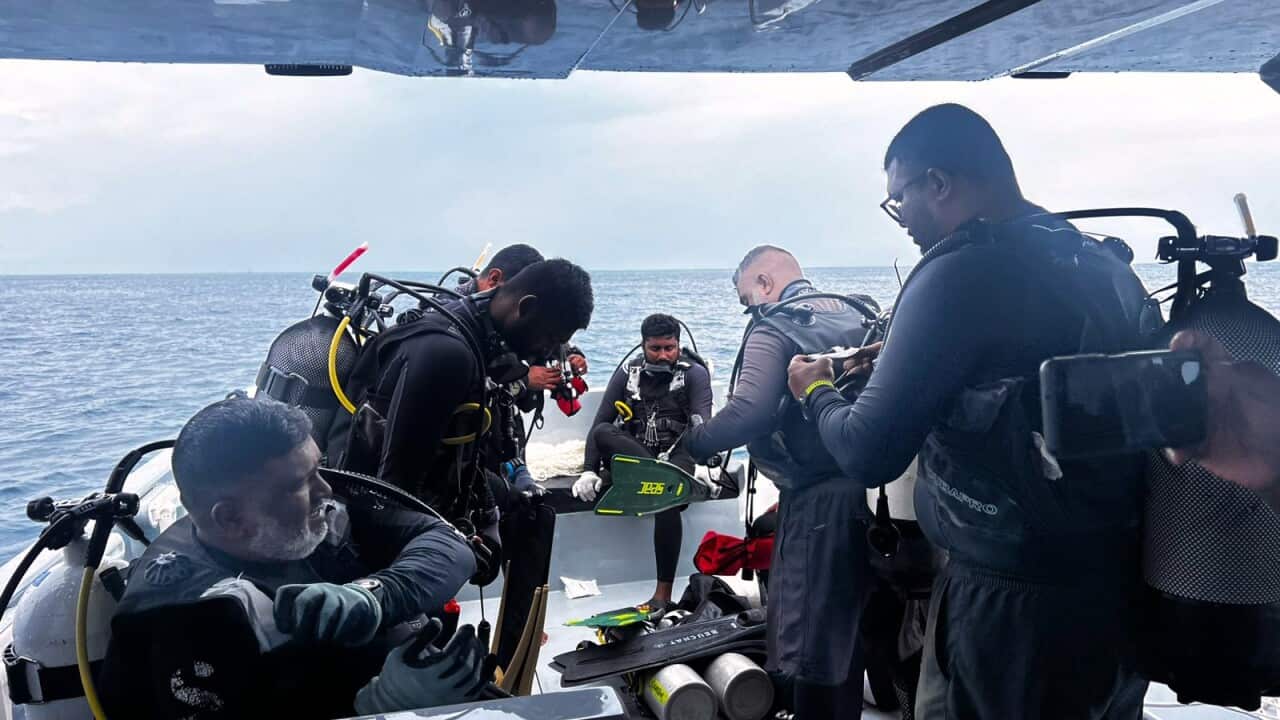
- The bodies of four Italian divers have been found in the Maldives following a days-long search.
- A rescue diver also died over the weekend while searching for the bodies.
The bodies of four Italians who drowned in the Maldives' worst diving disaster were found in an underwater cave on Monday night, Maldivian and Italian officials said, after an international recovery effort.
The bodies were found four days after a group of five Italians failed to return from a dive in the Indian Ocean tourist destination on Thursday, but have not yet been recovered.
Another body was found on Thursday, while a Maldivian National Defence Force (MNDF) rescuer died from decompression-related complications after surfacing during the search on Saturday.
The search was suspended after the death of MNDF diver staff sergeant Mohamed Mahudhy but resumed on Monday with assistance from Italy, Britain and Australia.
Three Finnish experts from the Divers Alert Network, an international dive safety group, were also involved.
News that makes sense
Your trusted source for staying up-to-date with the world around you. Get free daily news updates and analysis, straight to your inbox.
"The bodies of four missing divers have been located inside the Vaavu Atoll cave during a joint search and recovery operation," the MNDF said in a statement.
The foreign ministry in Rome also confirmed that the bodies of the four missing Italians had been located.
The MNDF said further dives will be "carried out in the coming days to recover the bodies".
Chief government spokesperson Mohamed Hussain Shareef told Agence France-Presse that the four bodies were found in a cave that was much bigger and deeper than first thought.
"They were all found pretty much together in the third segment of the cave, which is bigger than what we initially thought," Shareef said.
"The plan is to recover two of the bodies tomorrow and the other two possibly the day after."
Who were the divers?
The group that entered the cave on Thursday was led by Monica Montefalcone, 51, a University of Genoa professor and marine ecologist who was a regular diver in Maldivian waters in the Indian Ocean.
The other divers included Montefalcone's daughter Giorgia Sommacal, biologist Federico Gualtieri, researcher Oddenino, and diving instructor Gianluca Benedetti. He had lived in the Maldives for seven years.
The instructor's body is the only one that has been recovered so far, from a depth of 60m.
Investigations into the divers' deaths
Maldivian authorities are investigating multiple possible factors behind the deaths of the divers, including whether they descended far deeper than expected, Shareef said.
He said the government had given the group the necessary permit to research soft corals in the Devana Kandu site.
"What we didn't know was that it was cave diving," Shareef said. "Because, as divers will tell you and appreciate, it's a very different discipline with its own set of challenges and risks involved, and particularly at that depth, there are any number of things that could have gone wrong."
Montefalcone's husband Carlo Sommacal said in interviews to Italian media that his wife would have never put her daughter or others at risk. He described her as "one of the best divers in the world" who had carried out about 5,000 dives and was "always conscientious" and "never reckless".
"I’m sorry, I wasn't there, and I'm no expert, and from what I’m seeing and reading, even the experts don't have definite answers but are merely making hypotheses — lots of them," he told Reuters news agency in a WhatsApp message.
What makes cave diving so dangerous?
Highlighting the difficulties of diving at that depth, a Maldivian rescuer died last week while attempting to recover the bodies. Divers Alert Network said its expert divers had to use advanced technical systems, including closed-circuit rebreathers that recycle exhaled breathing gas to locate the bodies.
Shafraz Naeem, a Maldivian diving veteran who has explored the Devana Kandu cave system over 30 times on a deep-exploration permit and now consults with the country's defence forces and police, said the entrance to the cave is about 55m deep, and that light reaches only the first chamber — it is pitch dark after that.
Experts say that as a diver goes deeper, the pressure around them rises, which means each breath delivers more oxygen into the lungs and bloodstream, even if they are breathing normal air.
If this exposure is too high or lasts too long, oxygen begins to over-stimulate the central nervous system and damage tissues.
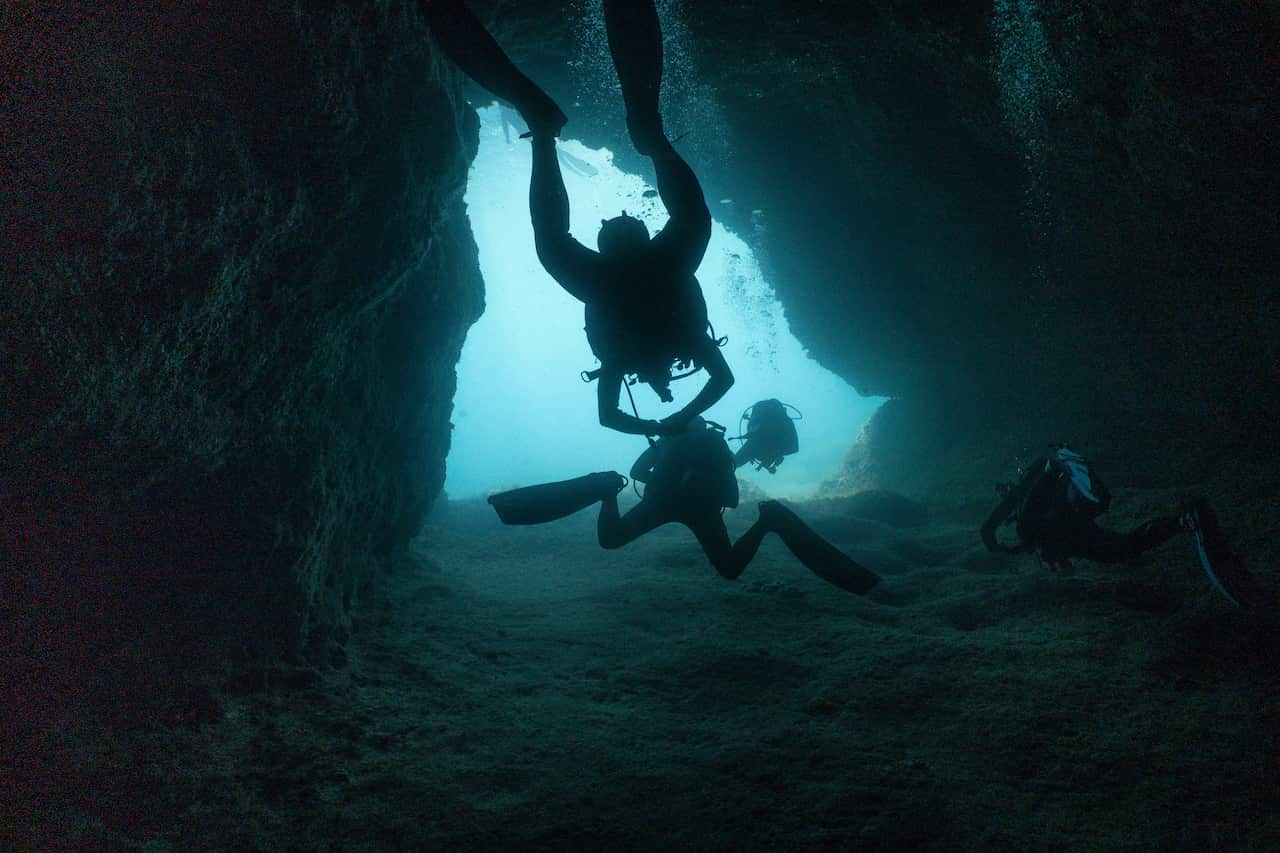
"It is incredibly dangerous to conduct dives at these depths on compressed air," Naeem said.
"Theoretically, oxygen toxicity starts to occur on compressed air at about 55 metres. That is very risky and very dangerous. You never know when oxygen toxicity will hit you."
But Riccardo Gambacorta, former diving instructor of one of the victims, Muriel Oddenino, said he did not believe that the Italians died because of oxygen intoxication.
"My personal opinion is that an unexpected incident may have occurred underwater. They essentially did not anticipate a certain situation," he said.
Were permits missing?
Shareef said the government has suspended the operation of the boat used by the divers "because the regulations here say that if you want to take divers on expeditions, you need a dive school permit, which they didn't have, sadly."
The boat operator of the MV Duke of York, Abdul Muhsin Moosa, said the vessel had permission for recreational depth of up to 30m.
"We are sharing these details with the government, as well," he said, adding that the divers were briefed on arrival at the boat about Maldives' recreational diving limits and that they are not allowed to go beyond 30m.
For recreational dives up to 30m, normal air is compressed with 21 per cent oxygen and 79 per cent nitrogen, but for deeper dives the oxygen content has to be above 32 per cent, experts said. For depths reaching at least 50m, divers are recommended to use at least two cylinders of specialised air each, they said.
It was not immediately clear if strong currents had any role in pushing the divers below those depths. The cave was at a depth of about 60m.
Tourism is a key source of revenue for the low-lying Maldives, a nation of 1,192 small coral islands and atolls scattered some 800km across the equator in the Indian Ocean.
Its pristine beaches, clear turquoise waters and coral reefs attract divers and snorkellers from around the world, who often stay at secluded resorts or on live-aboard dive boats.
Several fatalities have been reported in recent years, but diving and water sports-related accidents remain relatively rare.
For the latest from SBS News, download our app and subscribe to our newsletter.







