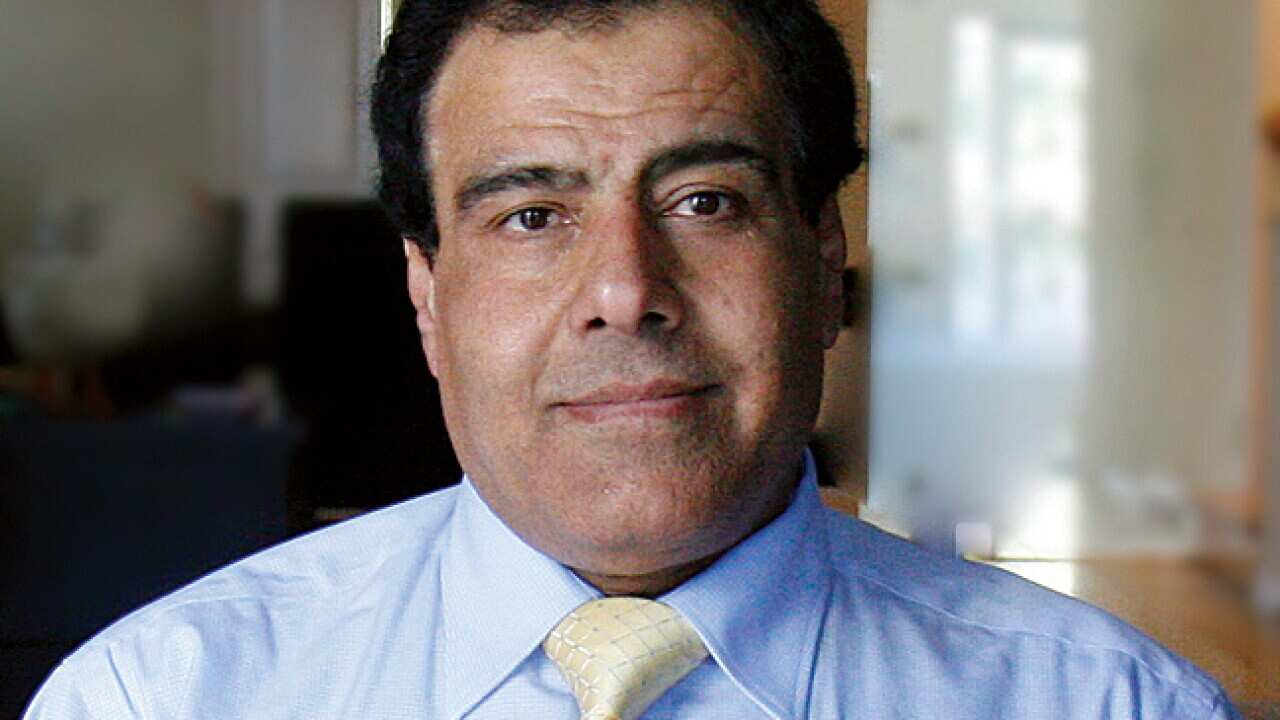
If you think there is no hope for peace in the world, especially in the Middle East, then you must meet Izzeldin Abuelaish. Or at least read his book 'I Shall Not Hate'.
Dr Abuelaish is a Palestinian medical doctor who was born and raised in the Jabalia refugee camp in Gaza.
Three of his four daughters were killed during the Israeli incursion into Gaza in January 2009, just one year after his wife died of leukaemia.
News that makes sense
Your trusted source for staying up-to-date with the world around you. Get free daily news updates and analysis, straight to your inbox.
Despite that, he believes that hate is never the right response to war. Rather open communication, understanding and compassion are the tools to bridge the divide between Israeli and Palestinian interests.
“All can live in harmony,” he says. “And all can reach their full potentials spiritually, emotionally, physically and intellectually.”
As we sat down, I asked him to tell me about his childhood in Gaza. Dr Abuelaish gave me such an all-encompassing answer -- about life and death, suffering and striving to become a better person -- that I understood that as a child he already had a special outlook on the world.
“I was born in Gaza, but where in Gaza? In a refugee camp.
“And the world 'refugee' – it has meaning. That my parents one day… they had a hope, to have a place, to have a state.
“It's one of the most difficult times for anyone to be homeless, to be a refugee, where as a child you feel deprived to live in abject poverty, deprivation, suffering. Fighting to live and survive, as if you were born just to suffer.
“And still hundreds of millions of children are living in their countries but they are refugees. They are suffering.
“I believe this man-made suffering, which was done to me and to others until now is not from God, it's human-made. Under the observation and the witness of the world,” he continued.
Dr Abuelaish feels for humanity as a whole, and calls on the conscience of the ones who living in abundance to become engaged in society and do something about the world's problems.
“How can we watch this suffering in this world without acting, rejecting it, refusing to see it and to ask ourselves what can we do to change this suffering if we want to live in a peaceful world and live a happy normal life?
“We all were created from Adam and Eve and became nations from tribes for one goal: to know each other. And knowing is not just to know the name or the face but to feel connected.
"To show respect, to show passion. To defend. And to help. That's knowing. To know the core and be connected. Heart-to-heart, mind-to-mind, human-to-human.
“To be human and to behave as a human and to realise that another's suffering is my suffering. To feel it and to feel angry that I am not going to accept it.
Dr Abuelaish believes that anything is possible, and that bringing about change in the world starts inside the heart of each individual.
“What makes the evil and devil acts flourish and spread in this world is good people, who are talented and they are humans full of passion, to do nothing. For the good side of the world, if it's not accompanied by action, it's useless.
“So I can say it's a matter of action to do something to change what's happening in this world.
Dr Abuleish has been an important figure in Israeli-Palestinian relations for years, working in Israeli hospitals, and treating Israeli and Palestinian patients.
I asked him when he decided to become a doctor. His answer, again, caught me by surprise.
“I dreamed -- not planned -- to become a doctor.
"To decide, you need the means to achieve it but I dreamed and it's good to dream and I recommend people to dream.
"And to dream big. Not to dream small dreams.
“And to achieve these dreams it's possible but it needs determination, the resistance and to be focused, and most importantly to work hard. At the end dreams are close to reality, and can become real.
Dr Abuelaish received a scholarship to study medicine in Cairo and then a diploma in Obstetrics and Gynecology from the Institute of Obstetrics and Gynaecology at the University of London.
From 1997 to 2002 he completed a residency at the Soroka University hospital in Beer Sheva, Israel followed by a subspecialty in fetal medicine in Italy and Belgium and a Masters in Public Health from Harvard.
He was a respected doctor in lsraeli hospitals and worked there for many years, before moving with his children to Toronto, Canada.
“We don't discriminate inside the borders of hospital. 'This is my brother, this is my friend'. All of them are equal and we want the best for all of them to be saved and be cured and that is what is needed to be practiced outside the border of the hospital.
“Medicine has one face has one culture, has one value. It's a human value and a human face and a human culture; to save and to give.
“That's our message. To give respect, equality and care to others”.
The goal of his foundation, Daughters for Life, reflects the deep gratitude he feels towards the Egyptian government for the scholarship that started his career.
Daughters for Life aims to get governments involved in funding scholarships in their universities for Middle Eastern students, regardless of faith or nationality.
"Even the Australian government could be involved," he said.
The foundation was set up in honour of the three daughters he lost in Gaza on September 16, 2009.
“I couldn't believe it was my house to be shelled. I don't want anyone imagine or to put himself in my position of to see what I have seen.
"Seconds after I left my daughters' room, where we used to live, [there was] shelling from everywhere; the house was shaking; the children were frozen, from firing, from bombing, from all directions. And to go to see my daughters that I left, these beautiful proud daughters.
“They became parts, spreading everywhere. Wounded, torn, disfigured. Swimming in blood".
But it didn't take him to long to call upon all the strength he had and pull forward.
“From the first moment when I saw them, I was blessed to be medical doctor. To have my life.
"To be a Muslim with faith that this tragedy came for a good cause. It must be for good and to be invested for good.
“And I am determined to tell others: In every bad thing we see in life there's something good and it's in our hands to make this good.
"So I am determined and I will spend my life -- and I am sure my children will follow that path -- to make of their sisters' tragedy something good for humanity," he told me.
And so Dr Abuelaish's life will be lived in the name of peace. His message is that peace can be achieved, and that we should all dream a bit bigger for ourselves and this world.
“Many people think of peace as the absence of war. It is not. This definition is mainly political. In many countries there are no wars but people are not living in peace.
“Peace is where people feel safe, secure, healthy and happy... The human peace, not the political peace. And that is what we want to promote. The individual, family, community, national peace and, at the end, the global peace.
"Peace starts with the individual. When anyone of us is feeling secure and safe and happy, his family feels the same. If someone is sick, he's not in peace, because his mind, his soul, his spirit is sick. His family are not in peace, his community his friends, will be worried about him.
Peace of mind is what humanity should work towards, Dr Abuelaish says.
"Happiness is not about how much I own, how much do I earn. Happiness is how much I share with others.
“And if you want to feel and to give this happiness, go beyond yourself, smash and destroy this ego and individual interest. Smash physical, mental barriers, which are artificial -- you have created them."
Watch the full interview:







