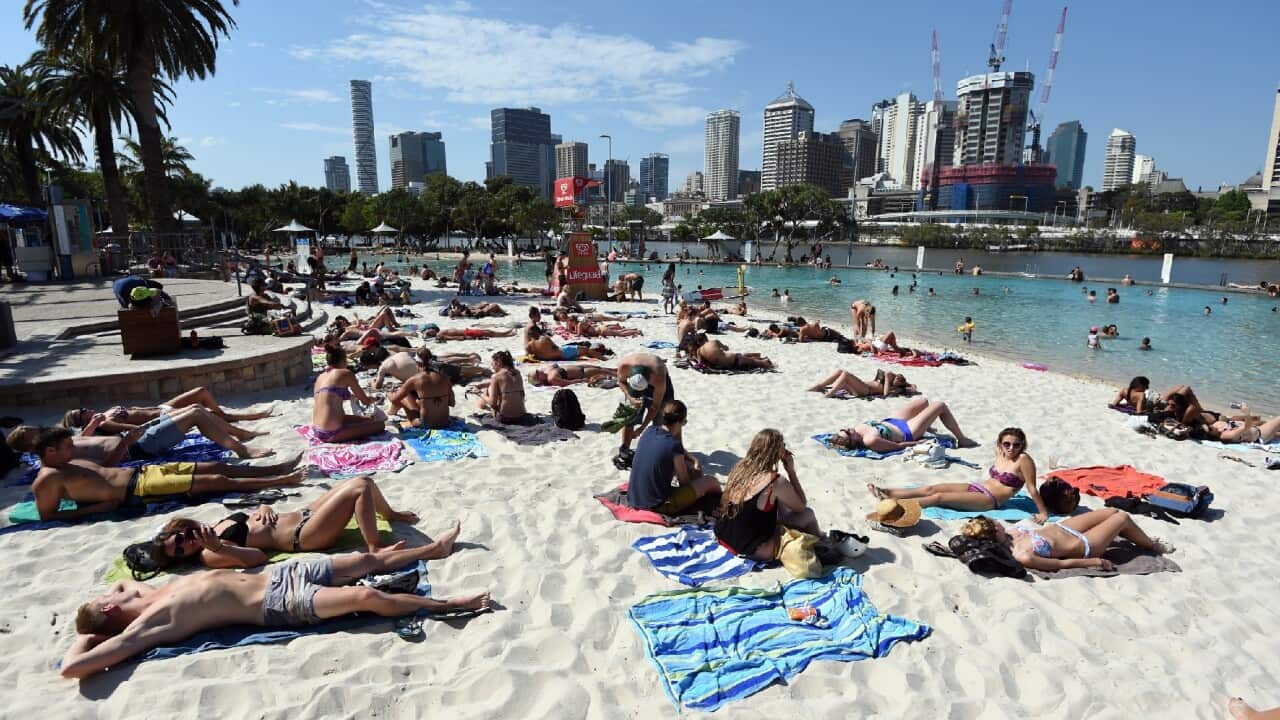
People celebrating Australia Day should be mindful of Australia’s biggest natural killer, heat.
January 27, the day after Australia Day, has been the most common day for people to die from heat for more than 150 years.
A report published in May last year says heat has killed at least 5,332 people in Australia between 1844 and 2010.
That's more people than all other natural hazards combined, including bushfires, storms and floods.
The scientist who made the data available to SBS, Lucinda Coates from Risk Frontiers, said there was no explanation for the anomaly the day after Australia Day.However, scientists at Risk Frontiers have previously considered that some Australians have celebrated Australia Day with the assistance of alcohol.
News that makes sense
Your trusted source for staying up-to-date with the world around you. Get free daily news updates and analysis, straight to your inbox.
"Further work is needed to explore any connection between this and heat-dehydration deaths," the Risk Frontiers scientists said.
In January and February 2009, 432 deaths were related to heat, the research paper published last year says.
The people who compiled the report found no heat-related deaths in winter months.
Australian Medical Association NSW president Saxon Smith said heat deaths spiked around January and February, when heatwaves were more common.
People with pre-existing illnesses were most at risk, he said.
However, he said there were simple ways to keep safe in the hot weather.
Keeping in air conditioned spaces was smart, Dr Smith said.
"Go to shopping centres," Dr Smith said was an option.
Dr Smith is a former emergency ward doctor, who would often see people with medical conditions coming in dehydrated and delirious.
He suggested a hot day may be a good chance to spend time with family who have medical conditions, in a home with air conditioning, so people do not have to be alone on hot days when they may be at risk of complications.
Melbourne general practitioner, Doctor Sandeep Bhagat, serves Melbourne’s south eastern metropolitan areas.
He said heat stress could affect anyone.
“Be sensible about it,” Dr Bhagat said.
While everyone should think about how to stay safe on a hot day, certain groups should be particularly careful, Dr Bhagat said.
Elderly people
Health effects due to heat stress were a major concern for Dr Bhagat’s patients, who are in their late stages of life.
Many older Australians will take diuretics, which are used to treat high blood pressure by getting rid of salt in your body.
To do this, the drug also extracts more water from blood.
“We don’t want people losing more fluids in their urine,” Dr Bhagat said
“One of the things we do this time of year is we redraw their medications.”
Athletes
From elite athletes to junior cricketers, people exerting energy on a hot day have a greater risk of dehydration.
“The young athletes and kids especially,” Dr Bhagat said.
People lose fluid through sweat, however, drinking after you start sweating will not be enough to stay hydrated.
People planning to do physical activities the next day should drink water the night before, Dr Bhagat said.
“If you know you’re going to go out in the sun for a period tomorrow, start drinking the day before,” he said.
“You need to have a full reservoir,” Dr Bhagat said.
Pregnant and lactating women
Pregnant women are effectively drinking water for two people, Dr Bhagat said.
Women who lactate lose fluid.
For more information on how to stay safe in hot weather, visit the Victorian Government's website.







