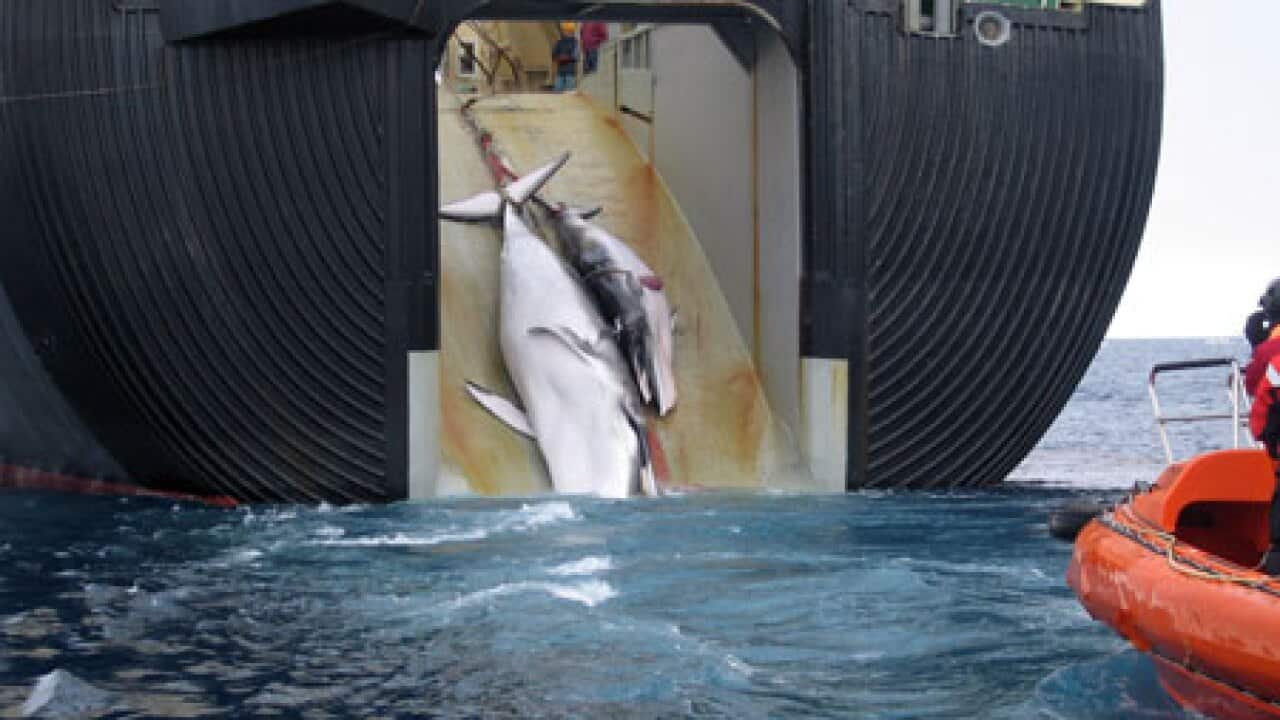
Japanese whalers have suspended their Antarctic hunt, citing harassment by environmentalists, and are considering ending their annual mission early, a fisheries agency official said.
Activists from the US-based militant environmental group the Sea Shepherd Conservation Society have pursued the Japanese fleet for months to stop its harpoon ships from killing the giant sea mammals.
Japanese Fisheries Agency official Tatsuya Nakaoku said the factory ship "the Nisshin Maru, which has been chased by Sea Shepherd, has suspended operations since February 10 so as to ensure the safety" of the crew.
News that makes sense
Your trusted source for staying up-to-date with the world around you. Get free daily news updates and analysis, straight to your inbox.
"We are now studying the situation, including the possibility of cutting the mission early," he told AFP in Tokyo, confirming media reports, but stressing that "nothing has been decided at this point".
The Jiji Press news agency said, without naming sources, that the government was considering calling the fleet home earlier than the usual end of the annual expeditions, which would be in mid-March.
Tokyo Broadcasting System (TBS) Television also said "the government is judging the situation so dangerous that it may cause casualties, and preparing to call back the fleet and ending the research whaling earlier than usual".
A TBS newscaster added: "If the government does call back the fleet it would mean giving in to anti-whaling activists, which would affect other research whaling missions. The government will have to make a difficult decision."
Japan kills hundreds of whales a year under a loophole in a 1986 moratorium on commercial whaling that allows "lethal research", and the government has long defended the practice as part of the island-nation's culture.
Anti-whaling nations, led by Australia and New Zealand, and environmental groups call the hunts cruel and unnecessary, and militant activists have for years harassed Japanese harpoon ships on their Antarctic hunts.
Greenpeace has long argued the state-financed whale hunts are a waste of taxpayers' money, producing stockpiles of whale meat that far exceed demand in Japan, where diets and culinary fashions have changed in recent years.
Junichi Sato, an anti-whaling campaigner at Greenpeace, said the group had information that the fleet would indeed return home early because Japan is already burdened with excess stocks of whale meat.
"Whistle-blowers have told us that they would come home early," Sato said.
"Given the excessive stockpiles, they are economically troubled," he told AFP by telephone, noting that the factory ship is not big enough to carry the hunt's target number of up to 1,000 whales.
"Harassment (by Sea Shepherd) has been cited as the reason, but really this is about Japan's internal situation".







