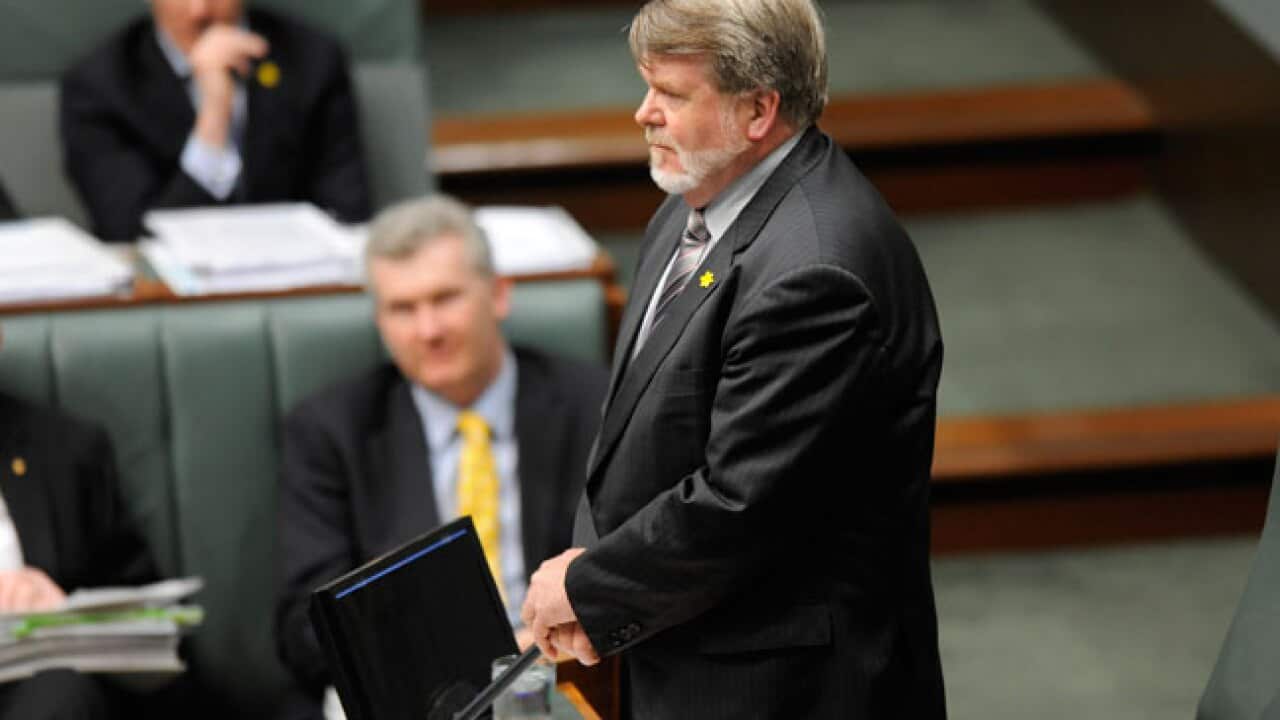
They say the best umpires are never seen.
On that measure, Harry Jenkins, who resigned suddenly on Thursday, wasn't a great Speaker.
But umpiring sport is nothing compared with keeping control of 149 ego-driven, passionate, posturing politicians while enforcing complicated and often arcane standing orders that run to 126 pages.
News that makes sense
Your trusted source for staying up-to-date with the world around you. Get free daily news updates and analysis, straight to your inbox.
And doing it in a hung parliament, as he has since the 2010 election, made it doubly tough.
At times, as he wrestled with the unruly, he tended to dominate proceedings. He was certainly no hidden, silent umpire.
Opposition Leader Tony Abbott, in a short, spontaneous tribute, said Jenkins was an adornment to parliament with his good humour, impartiality, forebearance and patience.
All true. But it was the good humour, quick wit and his actor's control of vocal tone that distinguished him from most of his predecessors.
Speakership was in his DNA. His father, Dr Harry Jenkins, was Speaker from from 1983 to 1986.
Jenkins, who succeeded his father as MP for the safe Melbourne seat of Scullin in 1986, became part of the Speaker's panel from 1993 and Speaker after Labor was returned to power in 2007.
The job, though never easy, was relatively straightforward in that parliament where Labor had a healthy majority.
But it all changed after the 2010 election that left the balance of power in the hands of the oddly assorted cross bench after the so-called parliamentary "new paradigm" had been negotiated with Labor.
Jenkins was left to interpret and enforce new rules he'd had no hand in developing in the face of an unusually aggressive opposition that felt both cheated of power and within a single vote of throwing Labor out.
He was on the verge of resigning in May after he "named" Liberal frontbencher Bob Baldwin, the precursor to suspending him for 24 hours.
The resulting division was lost by a vote when independent Rod Oakeshott voted against suspension.
Interpreting the result as a vote of non-confidence in him, Jenkins was about to quit.
Abbott, recognising the impossible position the Speaker was in, headed him off by successfully moving a vote of confidence in him.
But the incident damaged his authority and thereafter he was very wary of naming MPs, however badly they behaved. However he handed out one-hour sin binnings, which didn't require a vote, freely.
Compared with most previous speakers, who tended to be somewhat stiff and remote in their manner, Jenkins cut a rather avuncular figure.
His voice could caress. "The member for New England," he'd say, his tone oozing amazement that independent Tony Windsor could offend.
His warnings could be folksy. When government and opposition MPs shouted insults across the chamber, he'd suggest that they might prefer to continue their dialogue over a cup of tea outside.
But he could roar for silence and snap at MPs - most commonly Christopher Pyne and Bronwyn Bishop - he felt were trying to put one over him.
The feisty Pyne, the manager of opposition business, reckoned he and Jenkins had a love-hate relationship. The love bit was usually less on show.
Most of the testing times came during question time and he frequently appealed to MPs to change the rules, especially about argument and relevance, if they didn't like them.
He had no hesitation in disciplining government MPs.
Treasurer Wayne Swan regularly and even Julia Gillard occasionally were rebuked for their more egregious refusals to answer questions relevantly.
The rebukes were vintage Jenkins - formulations like "The prime minister understands her obligation to be directly relevant."







