Johnny the sea turtle has travelled more than many people do. But the journey that took him
from the Gulf of Mexico to Europe and back isn't over yet.
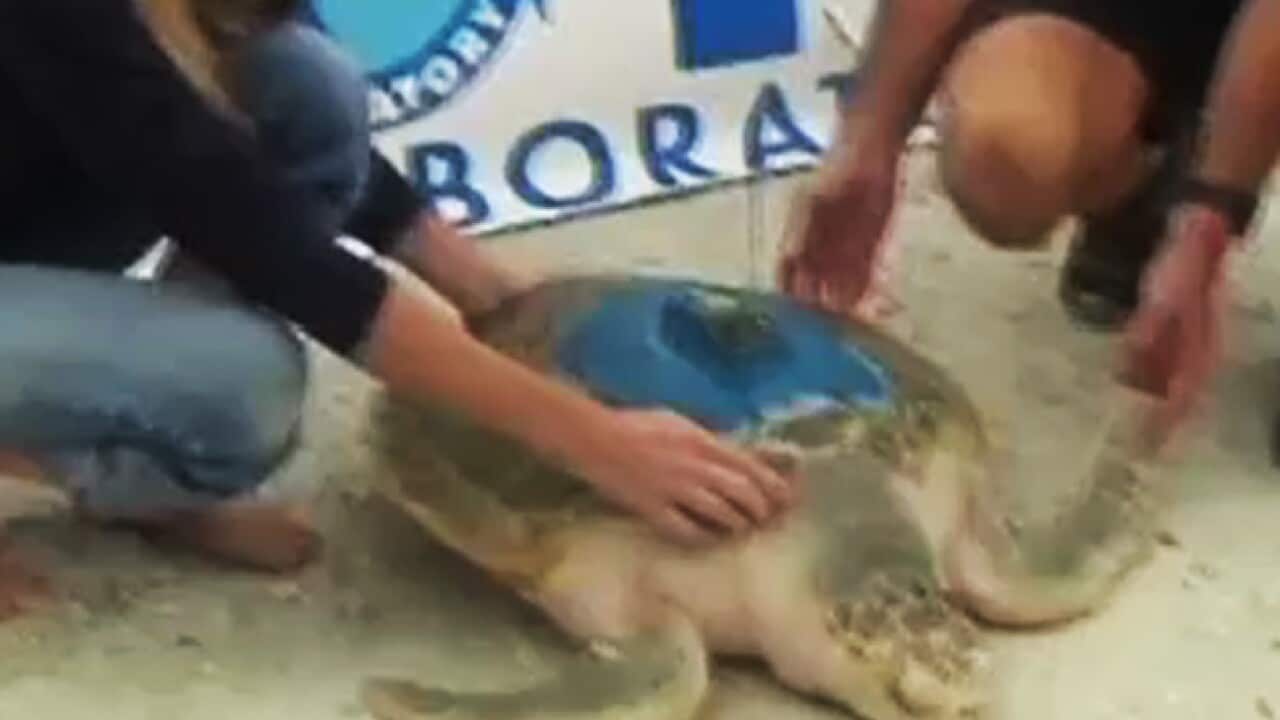
The 31kg rare Kemp's ridley turtle was released into the Gulf on Tuesday morning near Sarasota. About 300 people stood on the beach to bid Johnny farewell as he swam off into the surf off Lido Key.
News that makes sense
Your trusted source for staying up-to-date with the world around you. Get free daily news updates and analysis, straight to your inbox.
The endangered creature was found stranded on a beach in The Netherlands in 2008, thousands of kilometres from its usual sea habitat. Marine experts think the turtle - which normally swims, feeds and breeds in and around the Gulf of Mexico - got swept up in the powerful Gulf Stream and was carried off to Europe.
"It just had the misfortune to get in the current and go with the flow," said Tony Tucker, the manager of Mote Marine Laboratory's Sea Turtle Conservation and Research Program in
Sarasota.
But experts didn't give up on the turtle, which was found cold and disoriented in 2008.
Rescuers in The Netherlands named the creature Johnny - though its sex is unclear - and made sure the turtle received good care at the Rotterdam Zoo. Johnny was later sent to an aquarium in Portugal, Oceanario de Lisboa, and afterward for rehabilitation at Zoomarine, another site in Portugal.
The turtle travelled so much that the Portuguese experts named it "Johnny Vasco da Gama", after the Portuguese explorer Vasco da Gama, who opened a sea route from Europe to India at the end of the 15th century.
About three years later, the turtle was flown to Miami and then trucked to Sarasota by the Florida Fish and Wildlife Conservation Commission. There, Johnny was outfitted with a satellite tracking system that will allow scientists to monitor its future travels.
Tucker said that Johnny could face some obstacles, including a patch of red tide algae along Florida's southwest coast about two hours from where it was released. Marine biologists are also concerned that Johnny could swim off the coast of Louisiana near
the site of a big offshore oil spill in 2010.
Regardless of where Johnny swims, experts will track it via the antenna attached to its shell that will send a signal to a satellite whenever the turtle surfaces for air.
The turtle's progress can be monitored at www.seaturtle.org/tracking/index.shtml?tag-id113650







