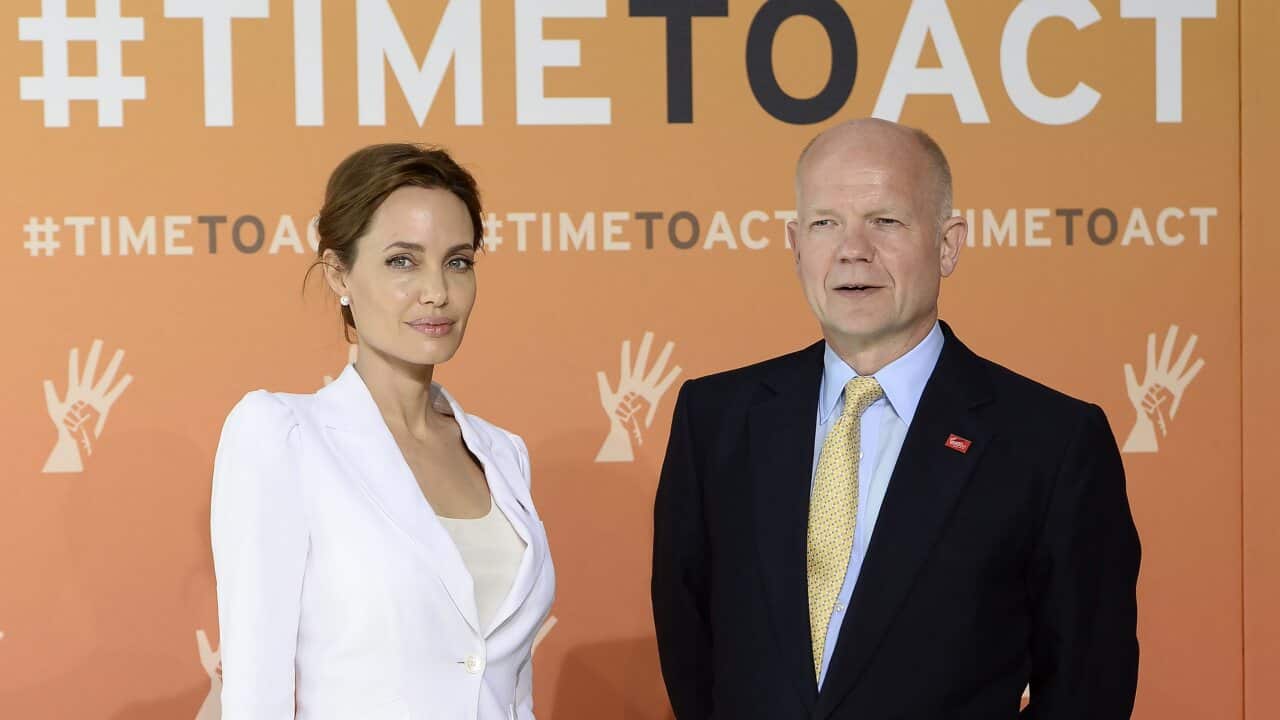
The former politician will be representing Australia at the End Sexual Violence in Conflict summit, a four-day event held in London this week.
Angelina Jolie, the Special Envoy for the UN Commissioner for Refugees, and Foreign Secretary William Hague are co-chairing the event, the largest ever on the issue.
It follows the launch of the Declaration of Commitment to End Sexual Violence in Conflict, which sets out practical and political commitments to end the use of rape and sexual violence as a weapon of war.
Since its launch in September 2013, more than two thirds of all members of the United Nations have endorsed the declaration.
In opening the Summit on Tuesday, Ms Jolie said rape as an inevitable part of conflict was a myth.
“It is a weapon of war, aimed at civilians,” she said.
“It has nothing to do with sex and everything to do with power… As an international community, we are responsible for that."
"We need to shatter that culture of impunity and make justice the norm, not the exception, for these crimes.”
Ms Jolie said real commitment was needed to hold perpetrators to account, calling for training for soldiers in addition to increased support for survivors.
UN Women Australaia spokeswoman Jacky Sutton told SBS that the summit, combined with recent high profile incidents such as the kidnapping of students by Boko Haram, had led the world to say "enough is enough".
SBS reporter Peggy Giakoumelos speaks with UN Women Australia
Representatives from more than 100 countries will join hundreds of experts and survivors for the summit, which aims to strengthen prosecutions for rape in conflict through the launch of an International Protocol.
World leaders including UN Secretary General Ban Ki-moon and US Secretary of State John Kerry will address the summit, which also features more than 140 free public events.
Writing for News Corp this week, Ms Stott Despoja said spoke of her experiences in recording the trauma of rape during travels to the former Yugoslavia in 1999.
“World Vision asked me to visit Albanian refugee camps in Kosovo to help document cases of sexual violence," she said.
"... We headed into Tirana, which looked ravaged after years of fighting in the region, and went straight out to talk to people. It was harrowing. I could barely speak listening to their stories.”
Share


