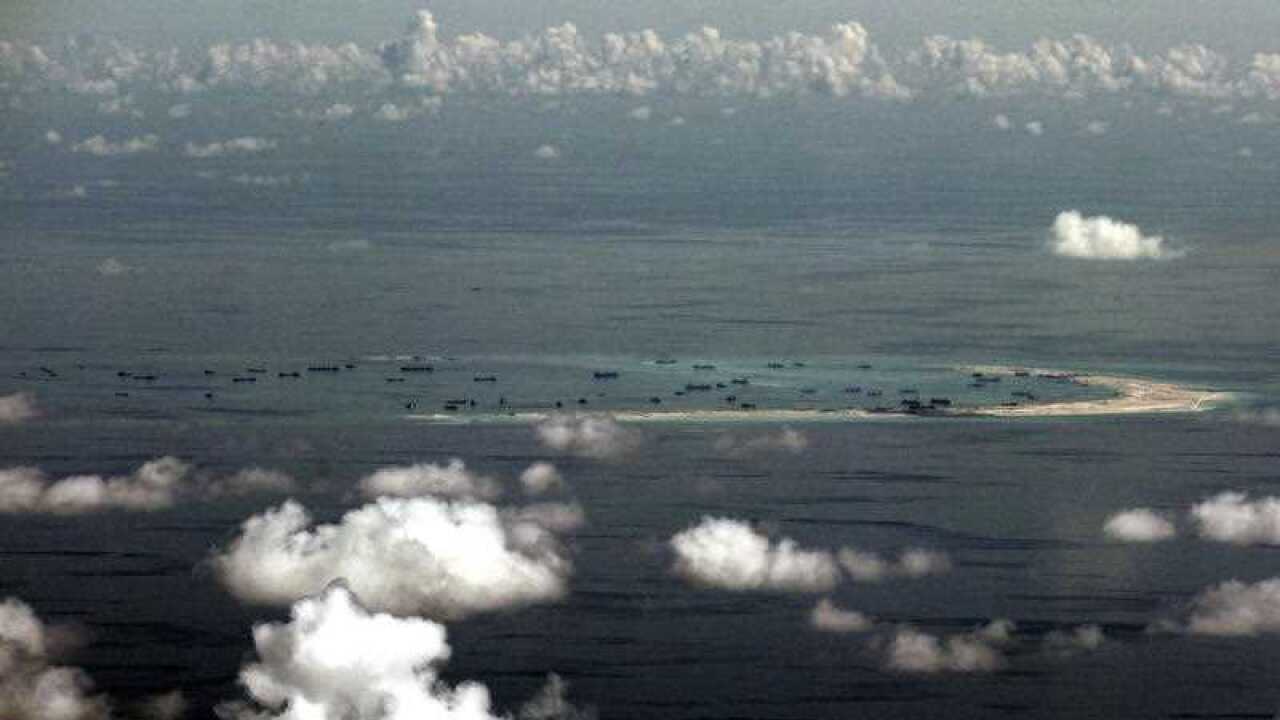
Australian Foreign Minister Julie Bishop has pointed to a potential arms race in Asia and described tensions in the South China Sea as a significant cause of concern.
In a keynote speech at the US Studies Center and Center for a New American Security in Washington DC on Tuesday, Ms Bishop detailed the dramatic rise of military spending by China, India and other Asian nations, and Russia's talk of beefing up its presence in the Pacific.
She referred to a reported 200 per cent increase in the volume of arms transfers into South East Asia since the end of the Vietnam War and China's rise to become the world's second largest military spender.
"Rising territorial tensions, particularly in the South China Sea, has led to speculation that we are witnessing an arms race taking place in Asia," Ms Bishop, in the US as part of the G'Day USA program, said on Tuesday.
Russia, Ms Bishop added, has been talking up a pivot to Asia.
News that makes sense
Your trusted source for staying up-to-date with the world around you. Get free daily news updates and analysis, straight to your inbox.
One of US President Barack Obama's major strategic moves has been America's pivot away from the Europe and the Middle East and to the Asia-Pacific.
Ms Bishop said on current planning, a large-scale revamp of Russia's Pacific Fleet would see it grow from its smallest to its largest naval deployment over the next decade.
"As part of an overall military build-up, to cost about $US600 billion ($A860 billion), this (Russian) fleet would have new ballistic-missile submarines, attack submarines and upgrades to its surface fleet," she said.
Australia was using all of its diplomatic assets and resources, including "our hard and soft power capabilities and influence", to build a stronger, connected and more prosperous region.
The US remains Australia's indispensable partner, but the foreign minister also spoke about military co-operation Australia has developed with China.
"While it is prudent to take a clear-eyed view of developments, it would be wrong to assume that we are headed for an inevitable regional conflict," she said.
"First, while countries in the region are spending more on military and defence in real terms, I believe that is as much a function of economic growth as it is about strategic hedging.
"Economic integration is a powerful buffer against conflict."







