
IN BRIEF
- A new FIFA rule bans players from covering their mouths during a confrontation.
- Socceroos midfielder Jackson Irvine has supported the rule.
It was, to an average observer, another typical football scene: play had stopped for a foul, and several players were huddled in the same spot on the pitch.
But the brief moment in the Paraguay-Türkiye FIFA World Cup clash on Saturday will now go down in the history books of football.
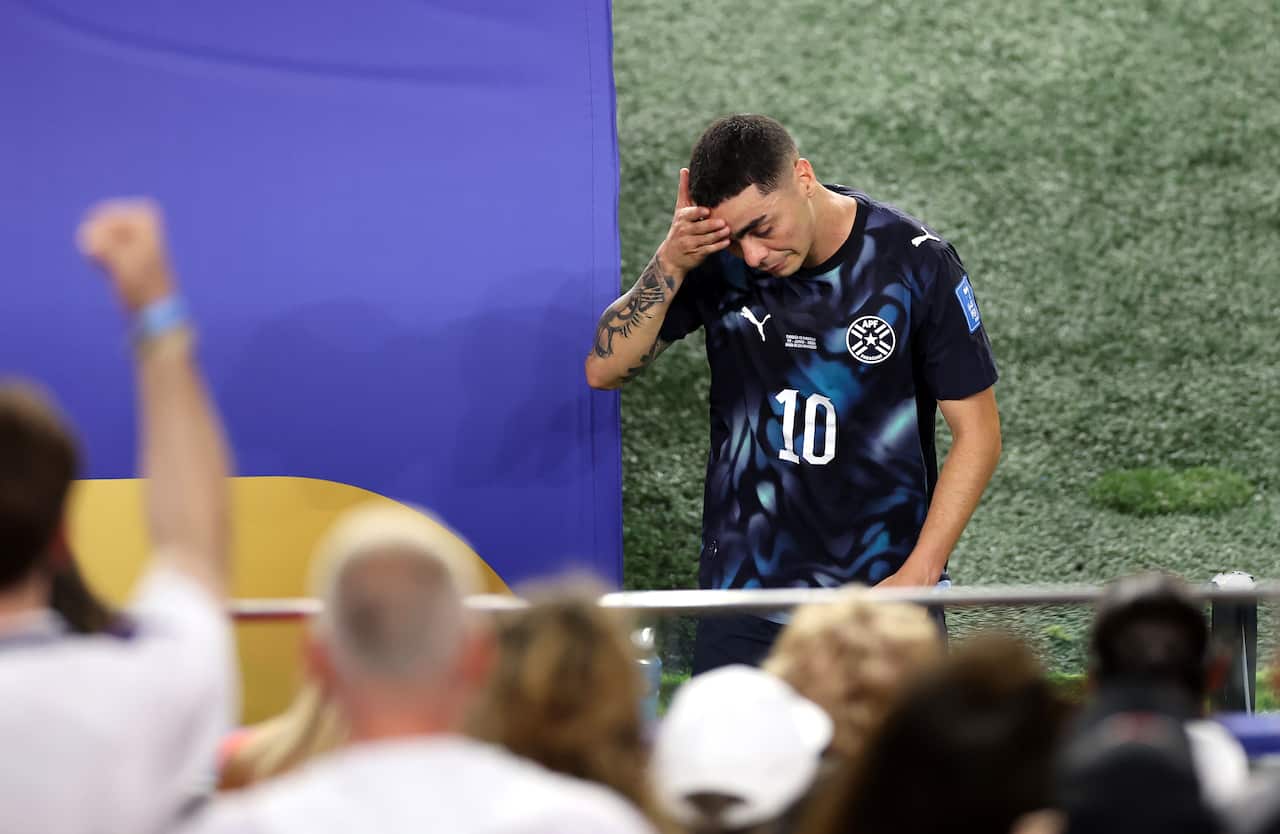
In the chaos, Türkiye's player Mert Müldür rushed over to the referee and pointed at Paraguay's Miguel Almirón.
Then the video assistant referee intervened, the referee watched the scene on the pitch-side monitor, and it was clear: Almirón put his right hand over his mouth while appearing to say something to Müldür.
Almirón was then shown the first-ever red card for a football player for covering his mouth during a confrontational moment —the first real test for one of football's newest rules.
News that makes sense
Your trusted source for staying up-to-date with the world around you. Get free daily news updates and analysis, straight to your inbox.
Paraguay ended up winning the game, but the controversy around the new rule — announced at the World Cup, as part of FIFA's anti-racism campaign — has just started.
What is the new mouth covering rule?
A new FIFA rule bans players from covering their mouths during "confrontational situations" to combat discriminatory and inappropriate behaviour.
It was approved by the self-regulatory body, the International Football Association Board, in April, which stated: "Any player covering their mouth in a confrontational situation with an opponent may be sanctioned with a red card."
Simply put: cover your mouth during a confrontation, with a hand, arm or shirt, during a World Cup, and you're off, no matter what you have said.
Why is it called the 'Vinícius law'?
The FIFA-proposed law came after a UEFA Champions League match in February, in which Benfica player Gianluca Prestianni was accused of making discriminatory slurs to Real Madrid's Vinícius Júnior under the cover of his shirt.
After the game, Vinícius reported he had been radically abused by Prestianni, saying in a post on Instagram: "Racists are, above all, cowards. They need to put their shirts in their mouths to demonstrate how weak they are."
Prestianni, who denied the accusation, was given a six-match suspension by UEFA for discriminatory conduct that was deemed homophobic.
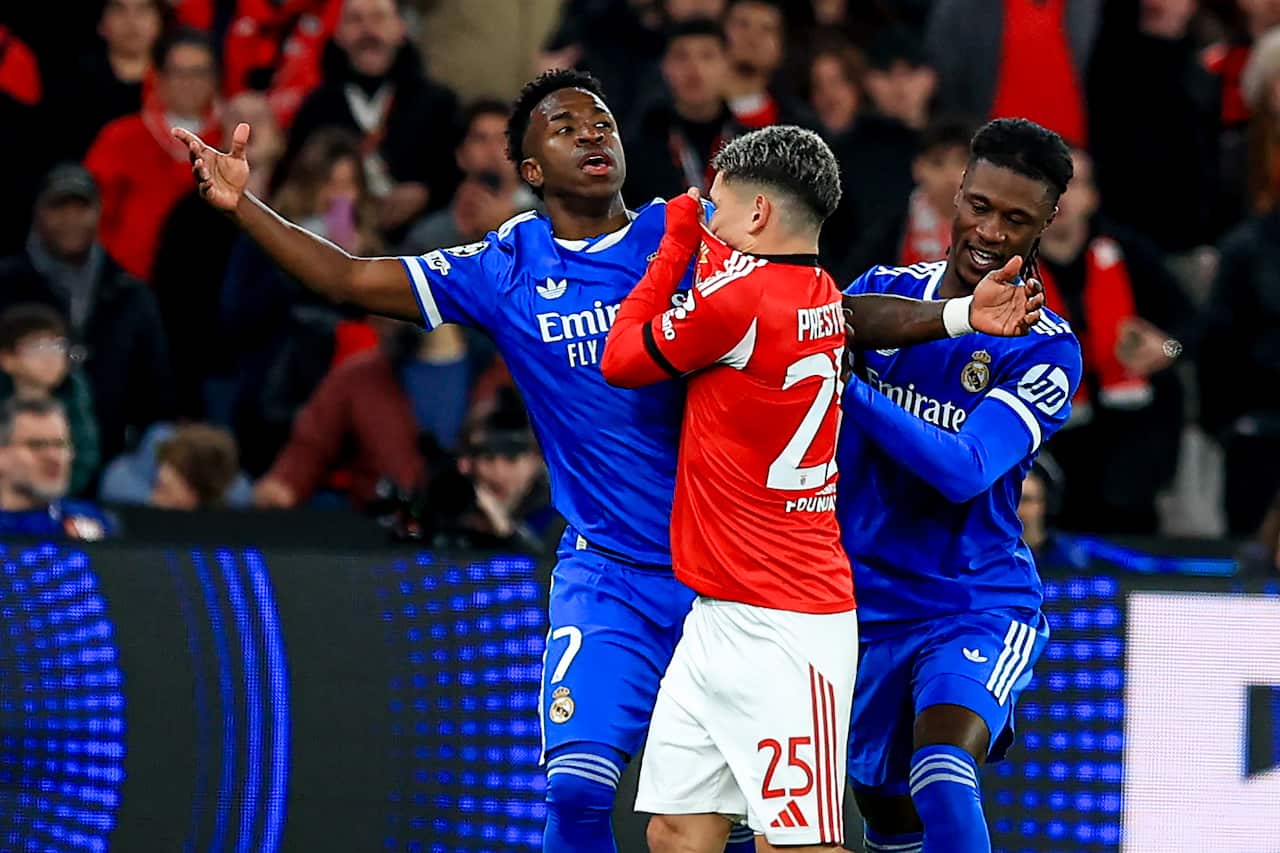
In March, FIFA president Gianni Infantino said "if a player covers his mouth and says something, and this has a racist consequence, then he has to be sent off".
"There must be a presumption that he has said something he shouldn't have said ... If you don't have something to hide, you don’t hide your mouth when you say something. That's it, as simple as that," he told Sky News.
What does the football community think of the rule?
There are mixed opinions.
Just after their match against Türkiye, Paraguay coach Gustavo Alfaro said he accepted that the rules had been applied, but questioned whether the offence should have warranted only a yellow card.
"The fear I have is that football loses its essence ... let's not become slaves to the rule book," he said.
When asked about the red card incident, Socceroos midfielder Jackson Irvine backed the rule, saying "it's clear".
"If you're saying something to someone that you don't want to be seen, then I think it's safe to say that. You can't be seen saying it, then it shouldn't be said," he added.
"We were all told about it, so it is what it is."
French defender Lucas Digne said: "The rule applies as soon as a player insults someone or is suspected of insulting someone. I think that’s absolutely right.
"If he doesn't follow the rules and speaks rudely to an opponent, then yes, a red card is justified. That said, sometimes we might put our hands (over our mouths) because we’re discussing tactics with the coach or something like that."
What did Almirón say to Muldur?
It is still unclear what Almirón told Müldür when covering his mouth, and he hasn't yet clarified it. After the match, he posted on his Instagram story, celebrating Paraguay's 1-0 win, but didn't mention the red card.
"I want to thank the effort of my teammates today, giving everything in each ball, thank you, thank you, thank you, I'm proud to be part of this squad," he said.
England defender Dan Burn, his former teammate at Newcastle United, said the hand covering is "more habit with" Almirón.
"I've seen him do that a lot over the years in games, and I do think it's one of those things where ... it's going to take a little while for some players to get used to that," he said.
How serious is racism in football?
Racism and discrimination have been one of the main challenges facing international football in recent years.
The anti-discrimination and inclusion charity, Kick It Out, reported that, for the 2024-25 football season, it received 1,398 reports of discrimination, including racism.
Some football experts, however, believe the rules are not enough.
"Racism is something that's been a plague to the game for a long time. And sadly, it's not been decreasing despite a lot of policies and announcements by FIFA over the many years," Francis Awaritefe, the chair of Professional Footballers Australia, told SBS News.
"A lot of the time, they are, in my view, PR. They're just public relations exercises to give the impression that FIFA is actually doing something serious about racism and discrimination.
He said the recent rules, like the red card for covering the mouth, are "just marginal stuff".
"You need to look at it overall in a big piece, that racism isn't just around people saying bad words about someone else," he said.
"There's also a societal component to this around the fact that we live in a racialised society and racism is systemic, it's structural, it's historical, and it's cultural."
— With additional reporting by the Australian Associated Press and Reuters news agency.
For the latest from SBS News, download our app and subscribe to our newsletter.







