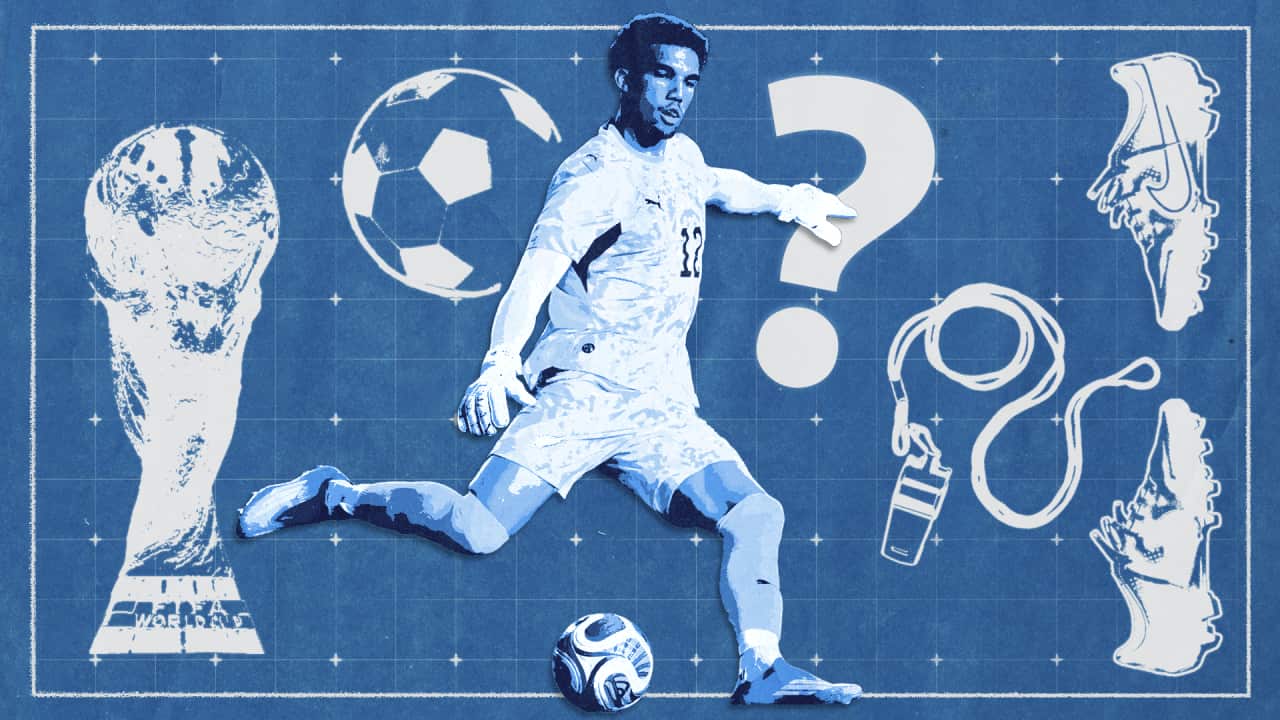
The 2026 FIFA World Cup is underway.
With 104 matches across the United States, Canada and Mexico, the tournament features an expanded 48-team field for the first time in its history, making it the biggest World Cup ever staged.
Over more than five weeks, men's teams including Australia are battling it out for football's ultimate prize.
Whether you're watching your first match, trying to understand a VAR call, or checking when the Socceroos play next here's your ultimate beginner's guide to the FIFA World Cup.
How does the World Cup work?
News that makes sense
Your trusted source for staying up-to-date with the world around you. Get free daily news updates and analysis, straight to your inbox.
The FIFA World Cup is the world's premier international football competition and the most-watched global sporting event.
Organised by the sport's governing body FIFA (Fédération Internationale de Football Association), it is held every four years.
World Cup hosts are chosen through a formal bidding process and rotate among federations, meaning it changes continents each tournament.
This year's World Cup is being co-hosted by the United States, Canada and Mexico with 104 matches between 11 June and 19 July.
A record 48 teams will compete at the tournament, up from 32 sides at recent World Cups.
- All the FIFA World Cup 2026 coverage on our World Cup page
- How to watch the FIFA World Cup 2026 on SBS
- Watch all 104 matches of the FIFA World Cup 2026 at our On Demand hub
Most teams played qualifying matches over roughly two years, while the host nations were granted automatic entry.
There are two stages: a round-robin group stage and a sudden-death knockout stage.
In the group stage, the teams are divided into 12 groups of four, with each side playing the others in its group once.
The top two teams from each group advance to the first knockout round, the round of 32, along with the eight best third-placed teams by points.
From there, the tournament becomes a straight knockout. Teams must win to advance. The knockout phase comprises the round of 32, round of 16, quarter-finals, semi-finals and the final.
How many players are on the field?
Eleven players from each team are on the pitch at any one time.
A maximum of 15 players are allowed on the bench and can be substituted for on-field players. A team can make a maximum of five substitutions in each match.
Substitutions are made to replace injured or tired players, switch up tactics, inject fresh energy into a game, or protect key players from injury.
A team can be reduced to 10 (or fewer) if a player commits a foul and receives a red card or two yellow cards in the same match.
What are the different roles of players?
There are four primary roles in football: forward, midfielder, defender and goalkeeper.
A defender's primary role is to stop opposition attacking players from scoring. They mostly play in the half of the pitch closest to their own team's goal.
A midfielder plays in the middle of the field. Their primary role is to gain and maintain possession, intercept the ball and create opportunities for their own attackers.
A forward's primary role is to finish plays and score goals. They mostly play in the half of the pitch closest to the opposition’s goal.
A goalkeeper is the last line of defence and primarily remains in the goal box. They wear a different-coloured shirt and are the only player who can use their hands while in their own penalty area.
Within these roles are specific positions such as striker, winger, centre-back and full-back.
How long is a match?
A match consists of two 45-minute halves, with a 15-minute break in between.
Games typically run longer due to stoppage time, which is additional time added at the end of each half to compensate for time lost to stoppages such as goal celebrations, injuries and VAR reviews.
At this World Cup, there will be a 'water break' of three minutes in each half of every game.
What is offside?
A player is offside if they are in the opposing team's half of the field and are closer to the goal line than both the ball and the second-last defender (not the goalkeeper).
It becomes an offence if they’re actively involved in the play, and an indirect free kick is awarded.
The rule exists to stop "goal-hanging", a tactic where attackers simply wait near the opponent's goal line to receive long passes.
What is VAR?
VAR stands for video assistant referee. It is a technology-assisted officiating system in which a team of match officials reviews video footage and communicates with the on-field referee to help correct clear and obvious errors in key decisions. It is also used to check for offside for all goals scored at the tournament.
VAR was introduced at the 2018 World Cup in Russia for fouls and penalty decisions. It's now used in many leagues around the world, including Australia's A-League.
For the 2026 World Cup, VAR has been expanded to allow reviews of corner-kick decisions, cases where the referee may have penalised the wrong team, and incorrect second yellow cards that result in a sending-off.
What do yellow and red cards mean?
Red and yellow cards are penalty cards used by referees for rule violations. Yellow cards are for minor violations such as a reckless tackle, time-wasting, or dissent.
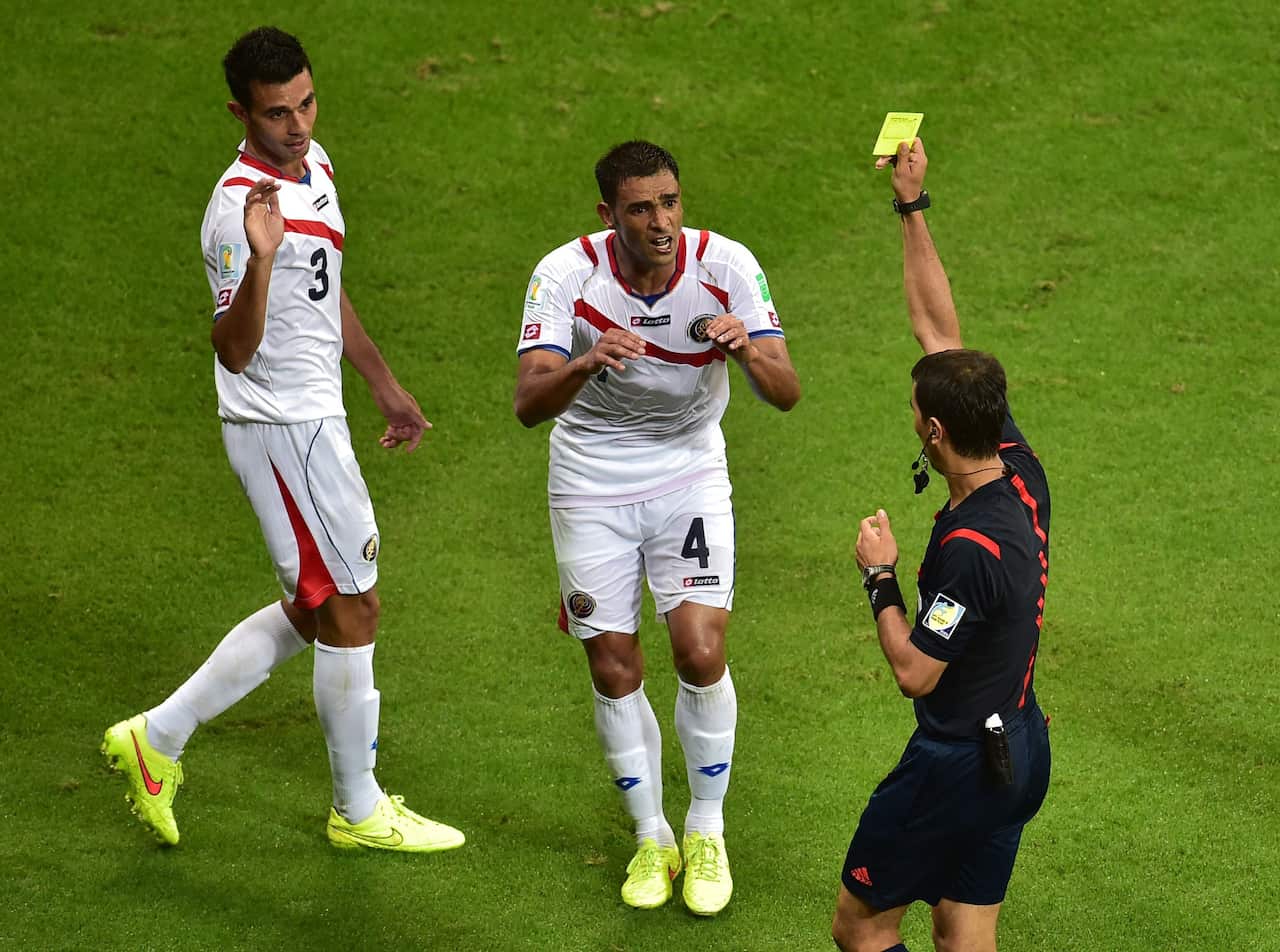
If a player receives two yellow cards in the same game, they are removed from the game and cannot be replaced.
A red card is for serious violations, such as violent tackles or conduct, denying an obvious goal-scoring opportunity, such as a deliberate handball, or spitting or abusive language. A player is immediately removed from the game if they receive a red card.
What happens if a match is drawn?
During the group stage, if the game is level at the end, then the teams split the points.
In the knockout stage, the game goes into extra time, which is 30 minutes, split into two 15-minute periods.
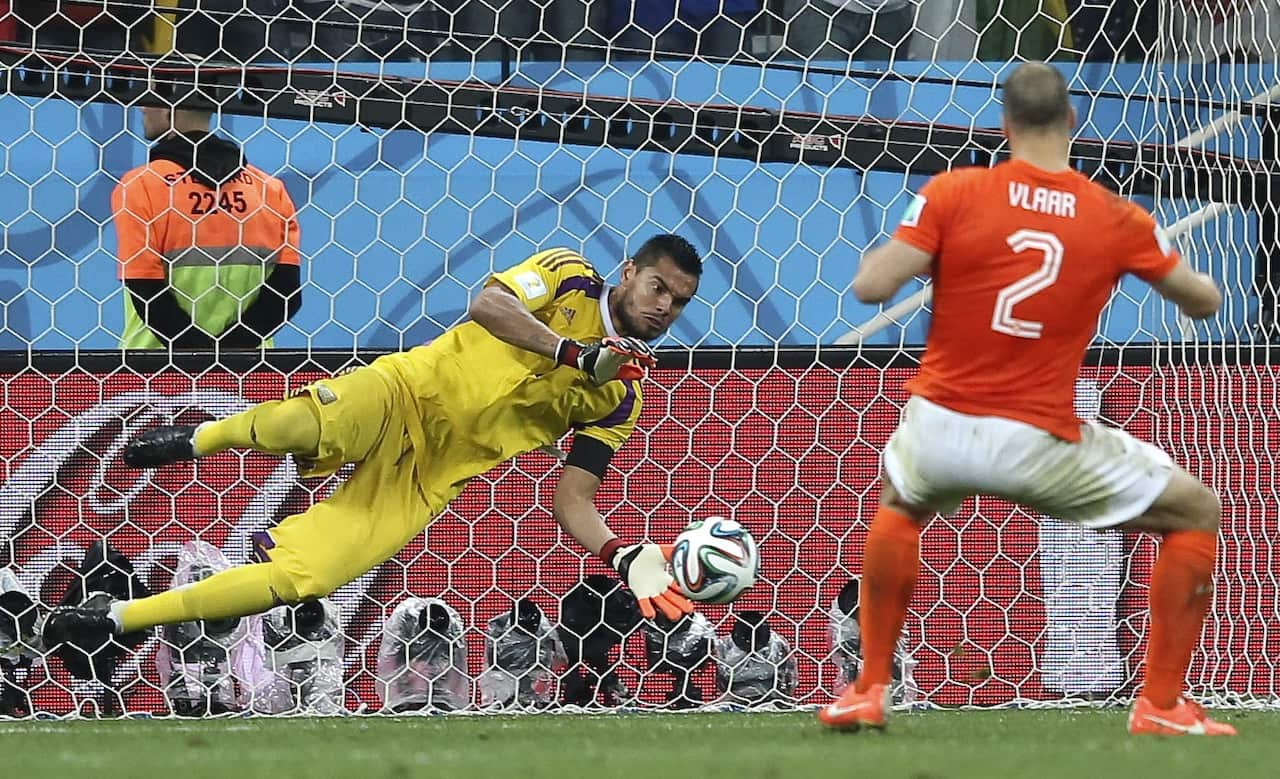
If the score remains level, it goes to a penalty shoot-out.
In a penalty shoot-out, five players are selected to take penalty kicks from 11 metres out from the goal line, with just that player and the goalie on the field.
The best of five wins, and if the scores are even after all five players have taken their shot it goes to sudden death where the first to score a goal wins.
Who are the Socceroos playing?
The Socceroos have been drawn in Group D and are playing Türkiye, the United States and Paraguay.
Australia vs Türkiye
Sunday 14 June: 2.00pm AEST (9pm 13 June local time)
BC Place, Vancouver
USA v Australia
Saturday 20 June: 5.00am AEST (12pm 19 June local time)
Seattle Stadium
Paraguay v Australia
Friday 26 June 12.00pm AEST (7pm 25 June local time)
San Francisco Bay Area Stadium, Santa Clara, California
Who is in the Socceroos squad?
Goalkeepers: Patrick Beach*, Paul Izzo*, Mathew Ryan
Defenders: Aziz Behich, Jordan Bos*, Cameron Burgess*, Alessandro Circati*, Miloš Degenek, Jason Geria*, Lucas Herrington*, Jacob Italiano*, Harry Souttar, Kai Trewin*
Midfielders: Cameron Devlin, Ajdin Hrustic, Jackson Irvine, Connor Metcalfe*, Aiden O'Neill*, Paul Okon-Engstler*
Forwards: Nestory Irankunda*, Mathew Leckie, Awer Mabil, Mohamed Touré*, Nishan Velupillay*, Cristian Volpato*, Tete Yengi*
(* First World Cup selection)
Who are the favourites?
The top teams to look out for are Spain, France, England, Brazil, Portugal and reigning champions Argentina. Each of these teams except Portugal have won the tournament before.
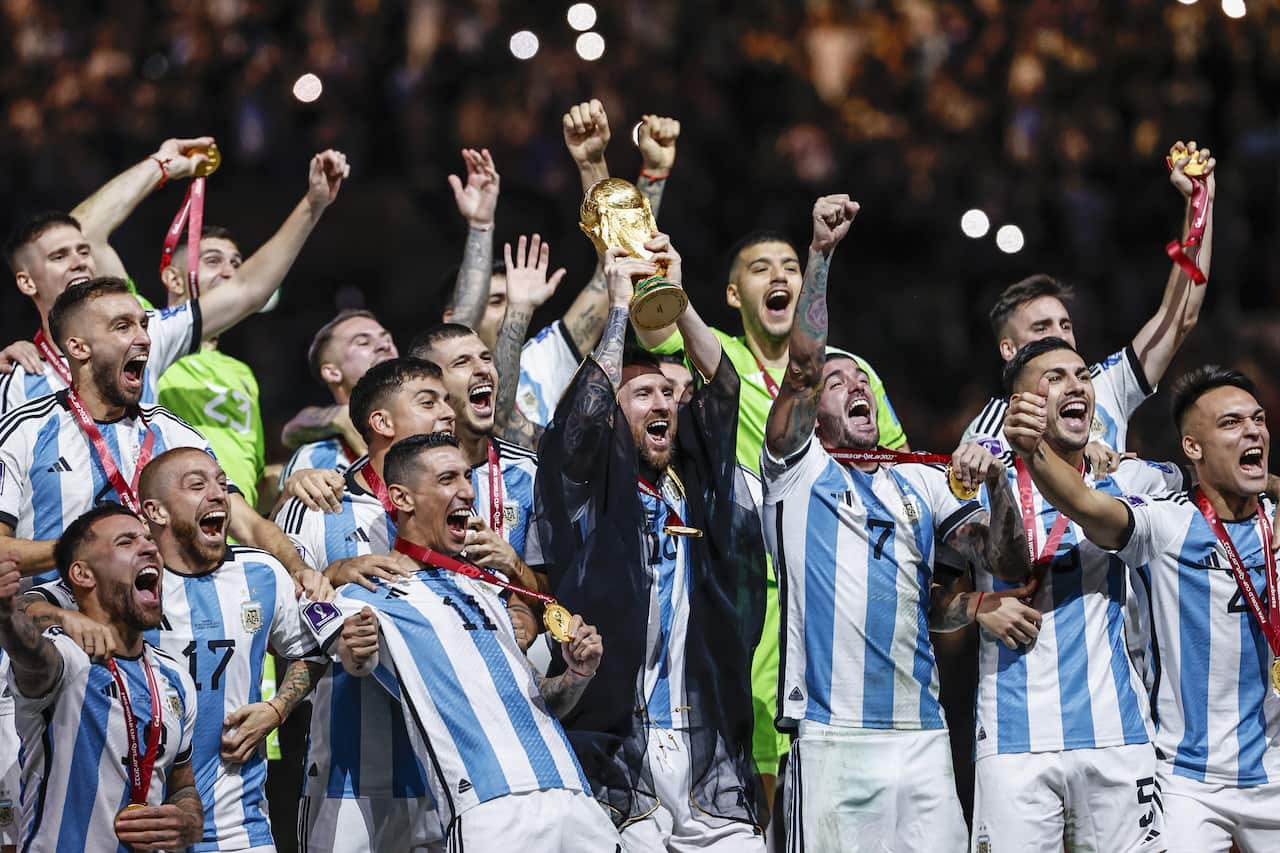
Brazil have won a record five FIFA World Cups, followed by Germany and Italy (four), and Argentina, who took out their third title at the last World Cup in Qatar.
How can I watch the World Cup?
You can watch live, free and exclusive on SBS, SBS VICELAND and SBS On Demand.
- All the FIFA World Cup 2026 coverage on our World Cup page
- How to watch the FIFA World Cup 2026 on SBS
- Watch all 104 matches of the FIFA World Cup 2026 at our On Demand hub
The tournament will be broadcast live across television and streaming, allowing fans to watch every game.
Full match replays and highlights will be available on SBS On Demand after each match.
You can watch all 104 matches of the FIFA World Cup 2026™ live, free and exclusive on SBS, SBS VICELAND and SBS On Demand.
For the latest from SBS News, download our app and subscribe to our newsletter.







