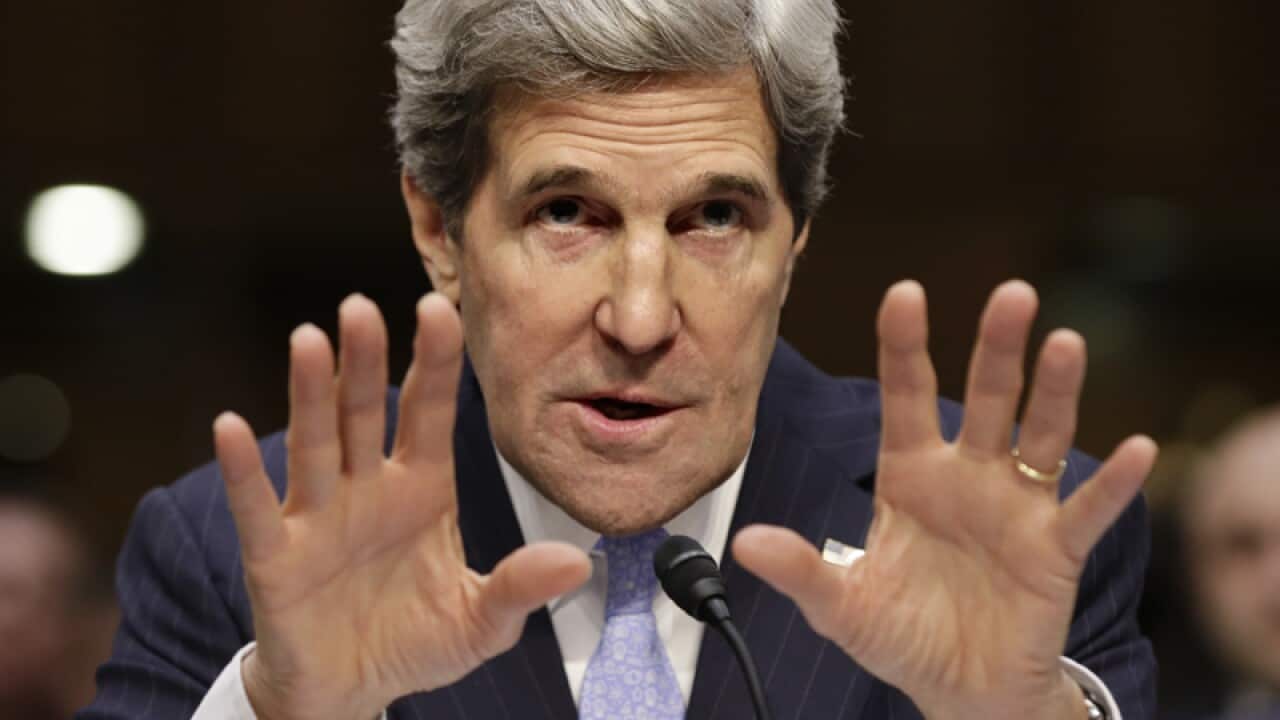
US Secretary of State John Kerry will travel to Geneva to join talks on Iran's disputed nuclear program, fuelling hopes a historic agreement might be within reach.
French Foreign Minister Laurent Fabius was also rushing to Geneva on Friday to join the negotiations, which have raised the prospect of the first breakthrough in a decade in limiting Iran's nuclear efforts.
Tehran and world powers ended a first day of talks on Thursday, with Iranian Foreign Minister Mohammad Javad Zarif saying a deal could be reached "before we close these negotiations".
Negotiators from Iran and six global powers are meeting for two days in Geneva to broker an agreement that could see Tehran freeze its nuclear efforts in exchange for some relief from sanctions that have battered its economy.
Western powers suspect Iran's uranium enrichment may be aimed at developing nuclear weapons, a claim Tehran denies.
News that makes sense
Your trusted source for staying up-to-date with the world around you. Get free daily news updates and analysis, straight to your inbox.
Kerry will go to the Swiss city "in an effort to help narrow differences in negotiations" and at the invitation of EU foreign policy chief Catherine Ashton, a senior US State Department official said.
Kerry met with Israeli Prime Minister Benjamin Netanyahu at Tel Aviv airport on Friday, flying in especially from Amman.
"This is a very bad deal. Israel utterly rejects it," Netanyahu told reporters before beginning the talks, and said Iran was getting "the deal of the century".
Iran's Zarif was due to meet early Friday with Ashton, who is chairing the talks on behalf of the P5+1 group of world powers - UN Security Council members Britain, China, France, Russia and the US, plus Germany.
Zarif cancelled a planned trip to Rome to stay on in Geneva.
Iran's lead negotiator, Deputy Foreign Minister Abbas Araqchi, said Zarif was staying because talks "have entered a complicated, difficult and intensive" phase.
Iran is anxious for relief from crippling economic sanctions that have cut oil revenues by more than half, caused the value of the rial to plunge and pushed inflation above 40 per cent.
The West is also keen to seize a rare opportunity to build bridges with Iran after decades of hostility, opening the door to engaging with Tehran on other issues such as the conflict in Syria.
US President Barack Obama said in an interview with NBC News that the agreement being fleshed out would keep the bulk of sanctions on the Islamic Republic in place, and any relief could be reversed.







